Plasma Sphere Explains Magnetars and Radio Bursts express
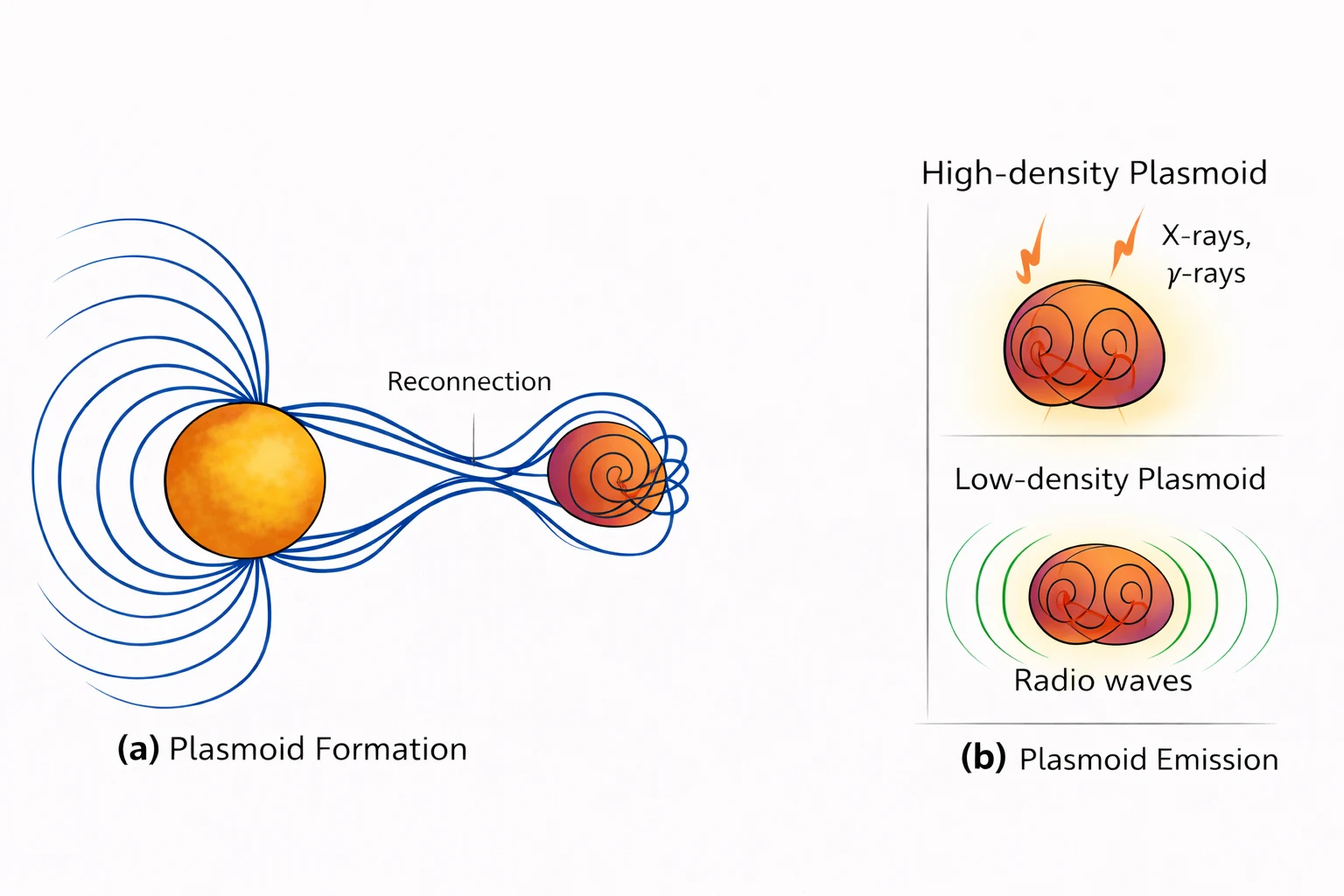
A magnetar is a neutron star with a magnetic field a quadrillion times stronger than Earth's. Sometimes it ejects a blob of plasma, like a tiny balloon with thousands of invisible springs bouncing around inside. The material flies apart at nearly the speed of light, and the flare itself outshines an entire galaxy in a tenth of a second.
What happens next depends on the sphere's density. If it's denser than the surrounding space, it creates an X-ray or gamma-ray burst — a giant magnetar flare. But if the sphere is thinner, yet its magnetic field is wound up tighter, it gives rise to a fast radio burst, a radio wave that can cross half the universe. These signals baffled astronomers for a long time. The more tightly the magnetic field is wound inside the sphere, the slower it expands.
This simple model, for the first time, ties two cosmic wonders together with unified physics. The first pulsar — a cousin of magnetars — was discovered by Jocelyn Bell Burnell; today her successors are unraveling the secrets of the most powerful explosions in the universe.
A magnetar flare can outshine all the stars in a galaxy combined in just a tenth of a second.
Like in the movie 'Contact,' fast radio bursts were initially mistaken for alien signals.