The Universe Is Not Standing Still: Dark Energy Is Changing express
The Universe is expanding, and it's doing so faster and faster. This acceleration is driven by mysterious dark energy. For a long time, it was thought to be as constant as a textbook constant. But new data from DESI, an instrument that captures spectra of millions of galaxies, hint that dark energy may have been stronger or weaker in different epochs.
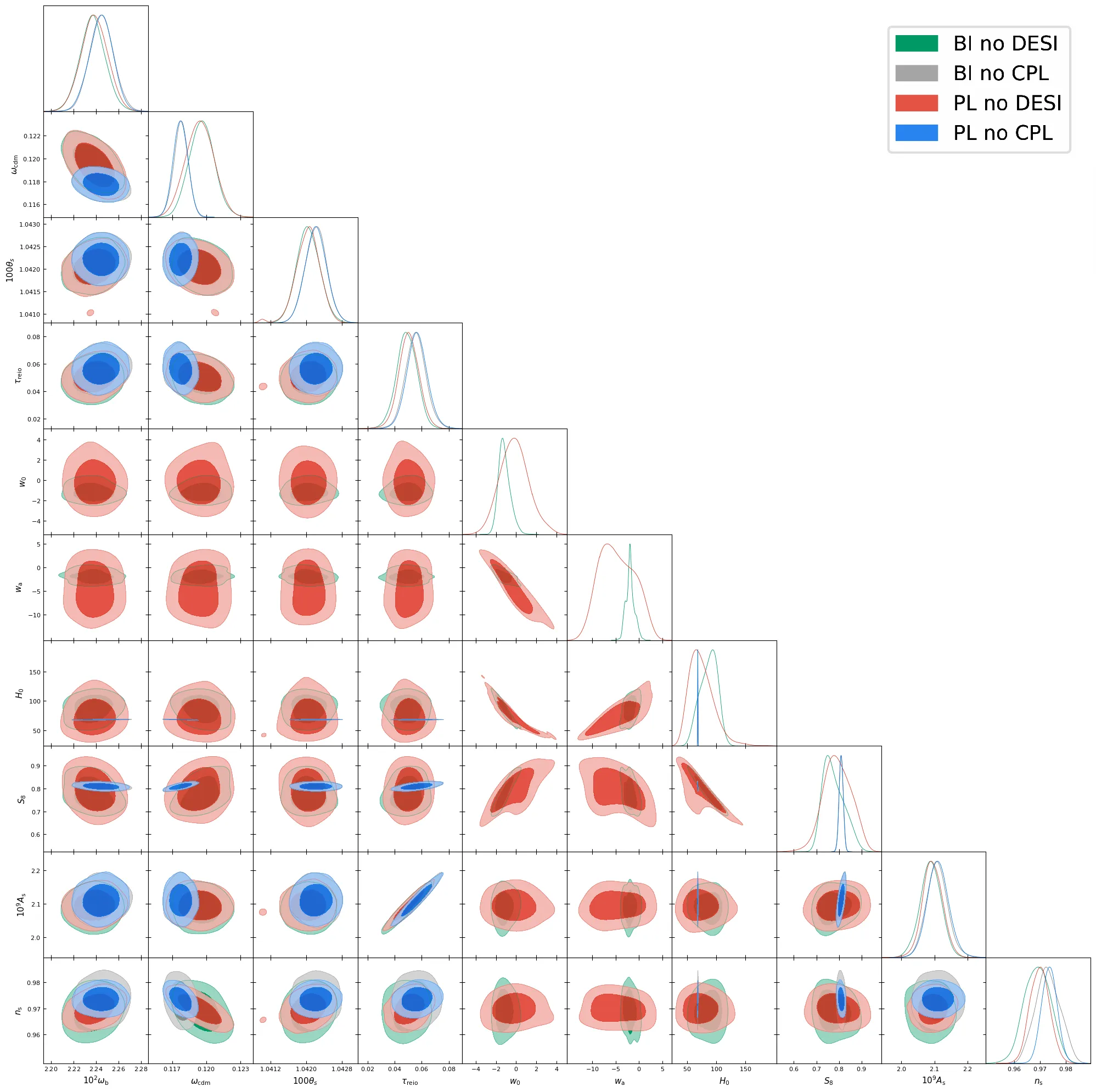
The authors of the study tested how this variability fits into a cosmological model with a bounce — a scenario where the Universe didn't originate from a point but contracted and re-expanded without a singularity. They compared a model with constant dark energy and one with evolving dark energy. It turns out that the evolving dark energy model agrees better with the data: it gives an expansion rate (the Hubble constant) of about 65 km/s per megaparsec — closer to supernova measurements than previous estimates.
Including weak gravitational lensing and spatial curvature tips the scales even further in favor of evolving dark energy. This is an important step toward resolving the "Hubble tension"—the discrepancy between the expansion rate measured from the early Universe and from nearby objects.
The Hubble constant has units of "velocity per distance": 65 km/s per megaparsec means that a galaxy at a distance of 3.26 million light-years is receding from us at 65 km/s.
In the series "The Expanse," dark energy plays a role in the fate of the protomolecule and the rings, a fictional take on its variability.