Invisible Vortices Sculpt Supermassive Black Holes express
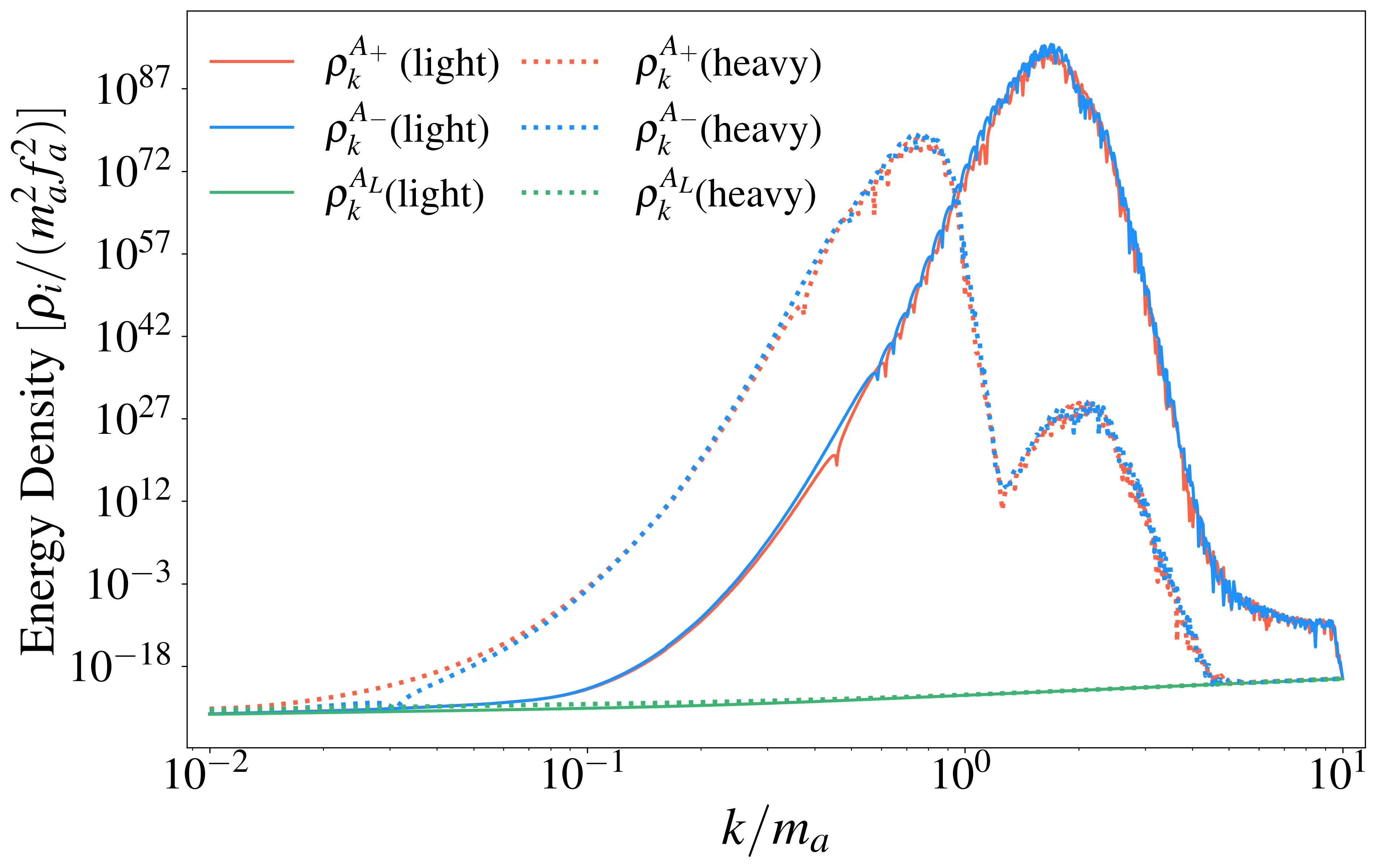
Supermassive black holes at the centers of galaxies appeared so quickly after the Big Bang that astronomers are scratching their heads. The solution lies in the trembling of an invisible axion field. This field, light as cosmic jelly, together with dark light gave birth to whirlpools in the fabric of spacetime.
These whirlpools acted like a giant blender: they prevented clouds of dark matter from fragmenting and whisked away angular momentum, forcing material to fall straight into the center. Without them, the collapse would have descended into chaos.
Thus, clumps collapsed into black holes with masses up to a hundred million suns. These 'seeds' could range in size from a few light-years to thousands. The most amazing part: axions, a hundred trillion trillion times lighter than an electron, through their collective trembling created gravitational funnels as powerful as entire star clusters.
Original abstract
as written by the authors arXiv:2601.04145v1
We propose a mechanism for the generation of gravitationally bound dark photon halos during the matter-dominated era. Coupled to an ultralight axion field through a parity-violating Chern-Simons term, dark photons can be produced by the tachyonic instability of axion coherent oscillation. The dark photons with a net helicity lead to a metric vorticity and can generate chiral substructures. For axion masses in the range $$10^{-28} \, \mathrm{eV} \lesssim m_a \lesssim 10^{-22} \, \mathrm{eV}$$, the resulting inhomogeneities collapse to form halos with masses spanning $$M_{\rm halo} \sim 10^5 \, M_{\odot}$$ to $$10^{11} \, M_{\odot}$$, with halo sizes ranging from $$O(1)$$ to $$O(10^{6}) \, \mathrm{pc}$$. During halo collapse, the induced vorticity could mediate efficient angular-momentum transport, which enables monolithic collapse and provides primordial seeds for the early formation of supermassive black holes.
Axions may be a hundred trillion trillion times lighter than an electron, but their collective trembling creates gravitational funnels the size of a star cluster.