X-ray photons find each other express
In a dark room, two flashlights shine on a wall. Usually, their beams simply add up, and the spot becomes brighter. But if the flashlights emit light in special packets, photons, then under certain conditions they can behave differently. Instead of independently hitting different spots, two photons 'agree' and only come out together, as a pair, from a single output.
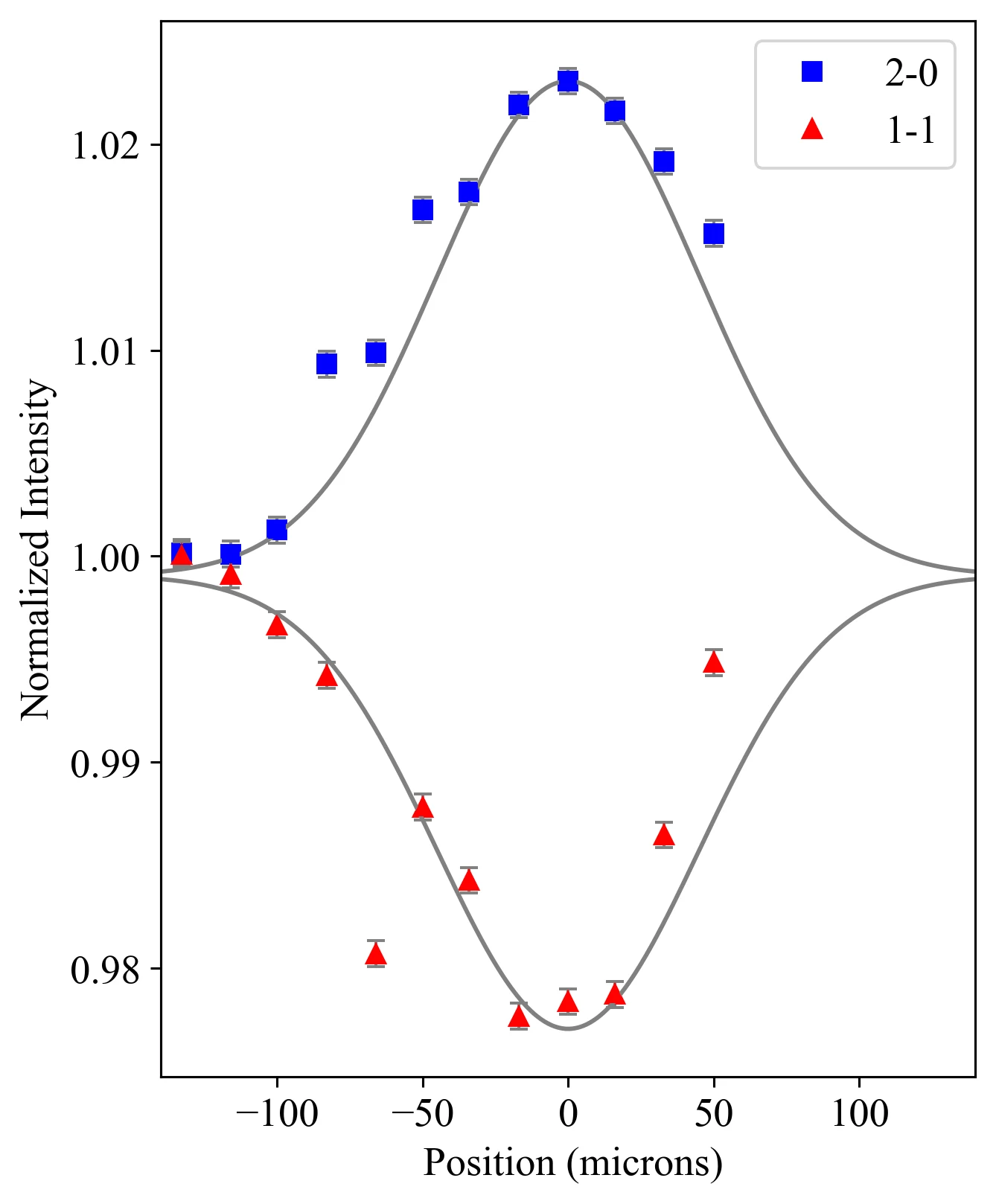
This is exactly the effect that has been seen for the first time with X-rays. Scientists took a very bright source — a synchrotron, where electrons race around a ring and emit X-rays. The beam was split into two paths using silicon crystals, then brought back together. At the output, detectors caught each photon individually. It turned out that photons do not arrive one by one: they appear in pairs in the same detector. This is quantum interference — an effect known for visible light, but shown for the first time for hard X-rays.
This result is a step toward quantum optics in the X-ray range. It could enable the creation of pairs of entangled photons that remain connected over any distance. This would be useful for ultra-precise measurements, quantum communication, and new imaging methods.
Two flashlights in a dark room now shine not just together: their light has acquired a new quality that can be harnessed.
Original abstract
as written by the authors arXiv:2601.07694
We have observed Hong-Ou-Mandel interference of high-brightness synchrotron x-rays with a Mach-Zehnder interferometer, yielding two-photon states of potential interest for x-ray quantum optics.
The energy of a single X-ray photon from a synchrotron is about 10,000 times greater than that of a visible-light photon. If visible light had such energy, it would punch through walls like a bullet.