Light-matter interaction control is the ability to deliberately manipulate how light and matter affect each other, particularly in materials just a few atoms thick or in individual molecules. In such systems, light can be absorbed, emitted, or redirected in ways that depend on the material's structure, its environment, and even the quantum state of its electrons. This control is central to designingoptoelectronic devices, sensors, and quantum technologies.
History
The field grew from early studies of excitons in semiconductors in the 1930s, but the modern era began with the isolation of graphene in 2004 and subsequent work on other 2D crystals. Molecular photoswitches were developed in the late 20th century, with azobenzene derivatives being among the first widely studied.
How it works
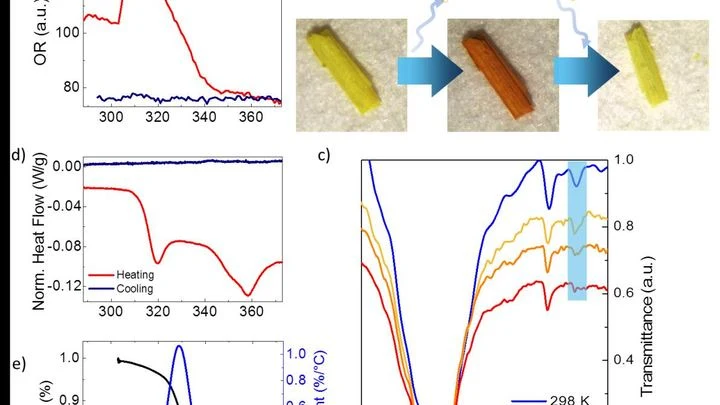
The mechanism relies on tuning the energy levels of electrons in a material so they match or mismatch the energy of incoming photons. In 2D materials like transition metal dichalcogenides, excitons (bound electron-hole pairs) dominate the optical response; their binding energy and dynamics can be altered by electric fields, strain, or surrounding dielectrics. For molecular switches, light triggers a reversible structural change that shifts absorption or emission, effectively turning the interaction on or off.
A single molecule can emit light that is visible to the naked eye when excited properly, a phenomenon exploited in single-molecule fluorescence microscopy.
Earth's magnetic field is not constant: it trembles from the solar wind, from distant thunderstorms, and from the subway running nearby. To notice these tremors, you need an instrument that doesn't tremble itself. Physicists have built such an instrument from ytterbium atoms cooled to nearly absolute zero.
A beam of light enters frosted glass and fades — nothing unusual. But physicists have long known how to make light pass through without losing a single photon. This trick is called electromagnetically induced transparency: two light waves cancel each other at the right point, and absorption disappears. Now a similar feat has been pulled off with atoms.
Light loves symmetry: in an open channel, it flows equally both ways. To steer it one way, physicists often use magnets. A new approach does without, using rotation — just the speed of a vinyl record — and interference from two atoms. Rotation changes the “pitch” of light for different directions, just as a siren’s tone shifts when a car approaches or recedes.
Light is a stream of photons. In a special waveguide, resembling a narrow corridor, a 'gatekeeper' atom usually lets them through one at a time. This phenomenon is the domain of single-particle spectroscopy.
Inside every cell, there's a network of thin tubes — microtubules. They act as both scaffolding and rails: they hold the cell's shape and transport cargo. These tubes are built from the protein tubulin and naturally glow faintly under ultraviolet light. Scientists wondered: can we make this glow stronger or weaker on demand?
The key to control is the amino acid tryptophan.
Atoms in a beam travel at different speeds, like runners on a track. A regular laser pulse only pushes those moving at one speed, but the new one acts like a coach giving commands to the whole group at once. This approach involves more atoms in the measurement.
Light and atoms, like dancers, can move in sync or out of step. When their interaction is anisotropic (that is, direction-dependent) the dance gets trickier. In a new study, physicists considered a model where many atoms (qubits) collectively interact with an anisotropic light field, and each component is connected to a thermal reservoir.
In a molecule resembling chlorophyll and built from carbon, a metal atom at the center acts as a toggle. Shifting it by fractions of a nanometer can make the molecule glow, quench, or boost its brightness a hundredfold.
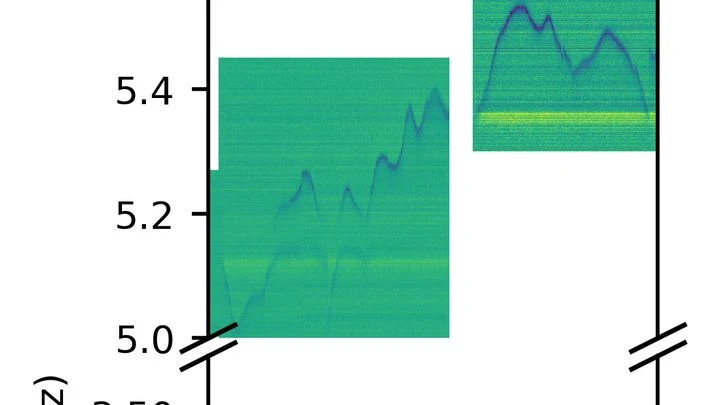
In a superconducting resonator, light doesn't just bounce around: it embraces the qubit so tightly that their joint dance can no longer be described by old textbooks. The researchers took an indium arsenide nanowire, turned it into a superconducting qubit, and placed it inside a microwave resonator.
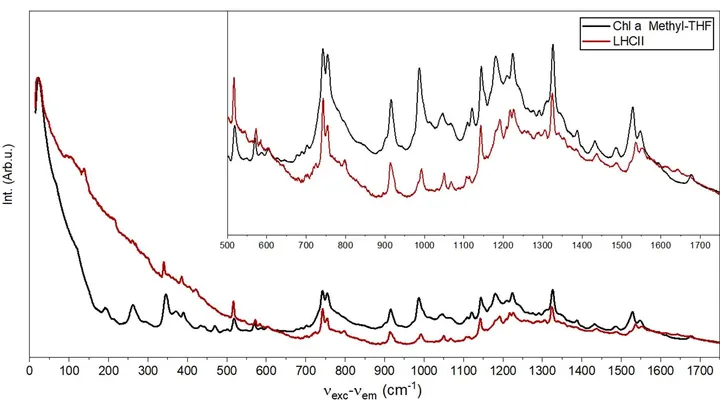
When a sunbeam hits a leaf, a relay race begins inside it. The energy of light passes from one chlorophyll molecule to the next until it reaches the reaction center — the place where the chemistry of life kicks off. This relay runs with astonishing accuracy: nearly every quantum of light finds its way.
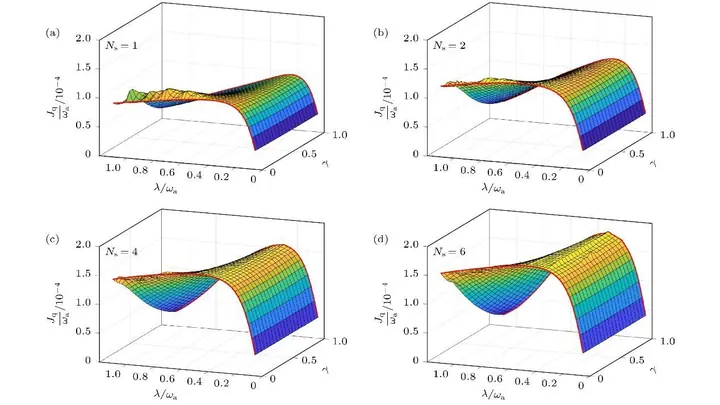
Quantum sensors are like an orchestra where musicians play in unison: their entangled states let them pick up signals that ordinary instruments can't. But as soon as you start accumulating the signal, the nonlinear interaction, like a conductor who suddenly starts beating time erratically, ruins the music.
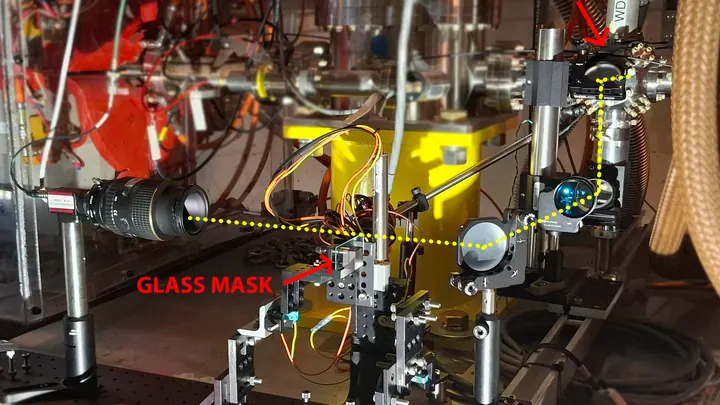
In giant particle accelerators, particles fly at nearly the speed of light and smash head-on. But sometimes one beam is slightly denser than the other, like someone stepping onto a packed escalator the wrong way. Then collisions become uneven, and detectors start 'flickering,' throwing off measurements.
An ordinary chemical reaction is like a ball rolling down a hill: it has one natural path. But if you place molecules in a tiny mirrored box, an optical microresonator, the light inside starts to interfere with the ball's motion. It can nudge it, hold it back, or even split its trajectory.
In a new study, physicists traced exactly how this happens.
In the air of factory floors and laboratories, invisible solvent molecules drift. One of them, acetonitrile, has a faint smell, but at high concentrations it can harm health. Typical sensors for it are bulky and expensive, but here we have a thin crystalline film that responds on its own to the presence of vapor.
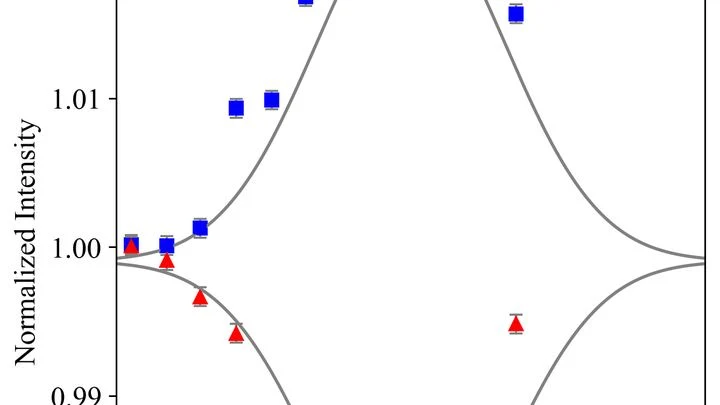
In a dark room, two flashlights shine on a wall. Usually, their beams simply add up, and the spot becomes brighter. But if the flashlights emit light in special packets, photons, then under certain conditions they can behave differently. Instead of independently hitting different spots, two photons 'agree' and only come out together, as a pair, from a single output.
A turnstile lets you through only forward, and not a step back. Physicists have implemented a similar principle on a tiny semiconductor chip for single photons — particles of light.