Microwaves in a Diamond Anvil express
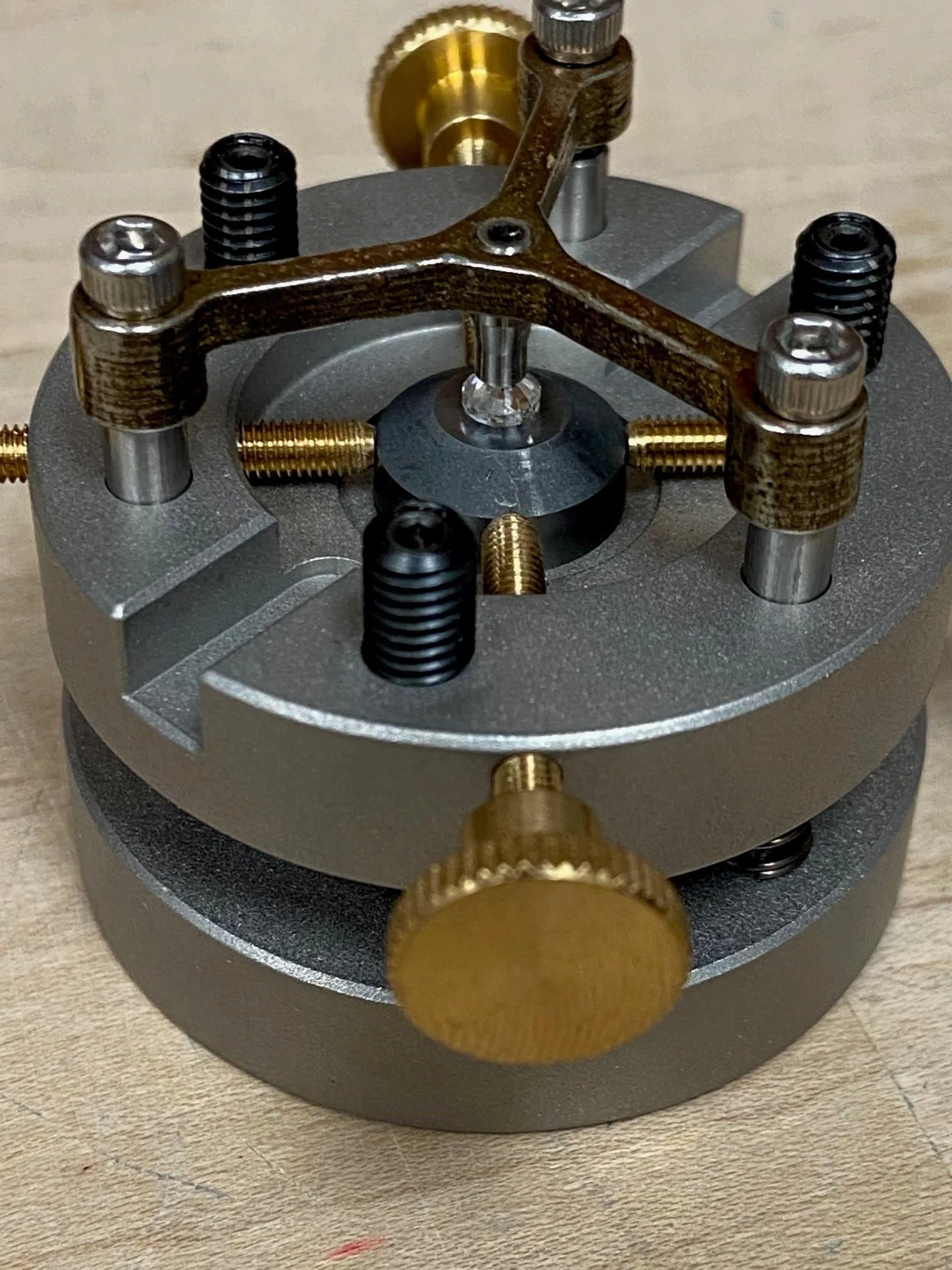
In a diamond anvil cell, pressure squeezes a material as if it were buried hundreds of kilometers deep inside the Earth. Inside this chamber, tiny diamond sensors, color centers, respond to microwaves and report on the magnetic fields and temperatures around them. But getting microwaves to the sensor through the narrow gap between the diamonds is like trying to send a radio signal through a keyhole.
The authors carved a narrow slot into a chamber component, creating a miniature antenna that directs microwaves straight at the sensor. Compared with a plain wire, the signal is stronger and spreads more evenly across the entire working area. They tested it at pressures up to 48 gigapascals — nearly half a million atmospheres.
Now it's possible to monitor many sensors scattered across a sample at once, seeing how pressure changes the material at different points. This is a step toward mapping magnetic fields and temperatures inside compressed materials, like taking a snapshot of the invisible forces that govern matter in the depths of planets.
A pressure of 48 gigapascals is comparable to the weight of several elephants standing on a coin.