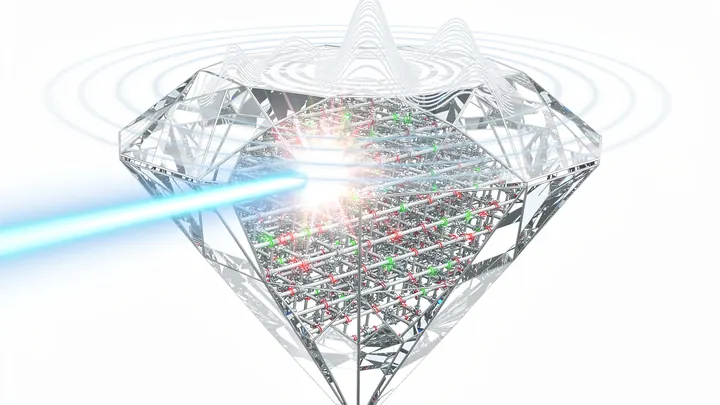
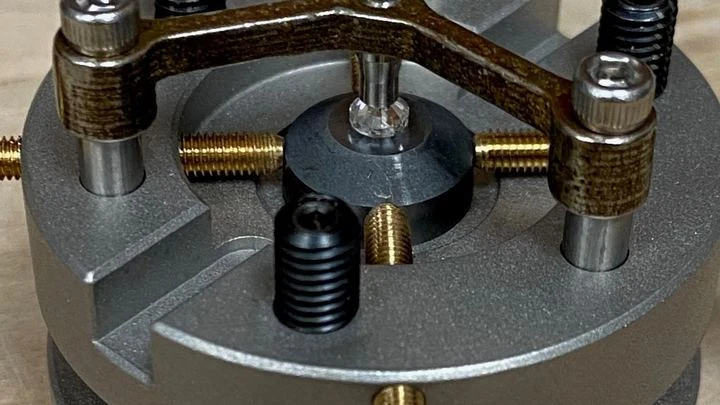
NV center sensing uses nitrogen-vacancy (NV) centers in diamond—atomic-scale defects where a nitrogen atom sits next to a vacant lattice site—as highly sensitive quantum sensors. These centers have spin states that are exquisitely sensitive to magnetic and electric fields, temperature, and pressure, and they can be read out optically at room temperature. This makes them ideal probes for nanoscale imaging of magnetic fields, from the spin dynamics of individual molecules to the magnetic fields of skyrmions.
History
The use of NV centers for sensing was pioneered in the late 1990s and early 2000s, with key developments by groups such as Jörg Wrachtrup and Fedor Jelezko, who demonstrated single-spin detection and coherent manipulation.
How it works
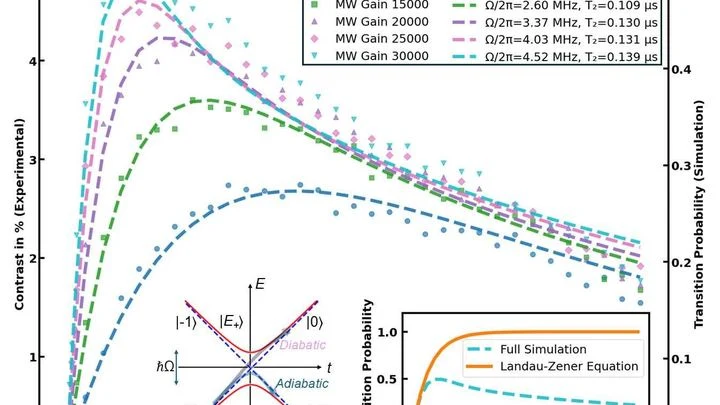
The NV center's electron spin has a ground state that can be manipulated with microwaves and read out with laser light. When an external magnetic field is present, it shifts the energy levels of the spin states (Zeeman effect), which changes the intensity of the emitted fluorescence. By measuring this change, one can determine the magnetic field strength with high precision. The centers can be placed within nanometers of a sample, enabling high-resolution magnetic imaging.
In practice
NV centers are used in high-resolution magnetometry for biological imaging, in quantum information processing as qubits, and in diagnostics, such as the diamond DNA chip for rapid medical testing.
Fun fact
NV centers can detect the magnetic field of a single electron spin, which is about a billion times weaker than the Earth's magnetic field.
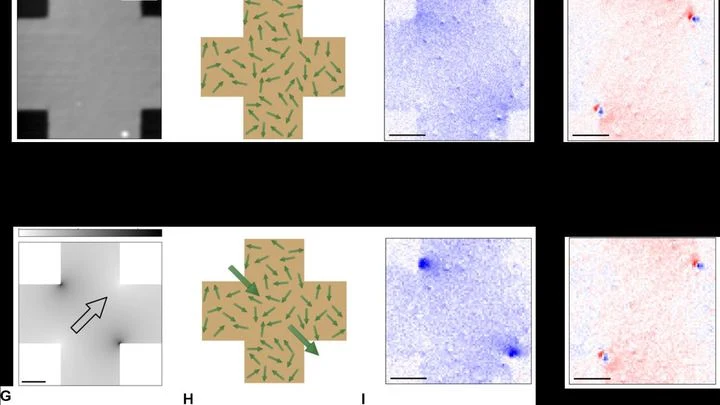
Surf doesn't roll onto the shore as an even front. It comes in tongues of foam that merge and split apart. Magnetic fields inside materials behave much the same way: they breathe in waves, and until now nobody had seen them whole.
An aluminum sphere the size of a large globe sits in a neutron beam and answers each hit with a precise note. Inside the sphere there is nothing but nitrogen and eleven tiny steel balls, each the size of a pinhead. When a neutron enters the sphere, it knocks a particle out of a nitrogen atom, and that jolt turns into an electrical signal.
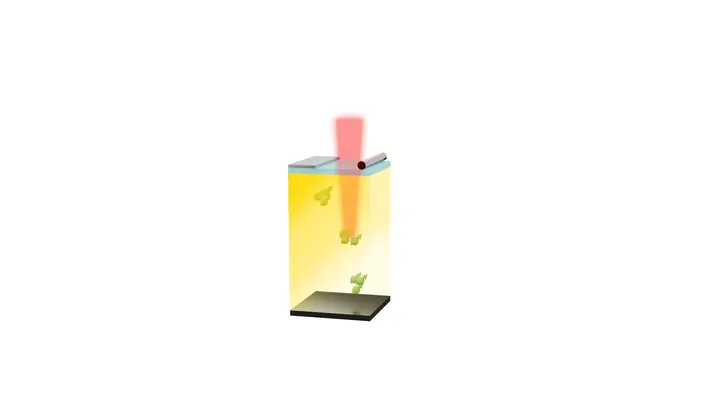
A tiny diamond, invisible to the naked eye, sits on a chip and senses heat like no ordinary thermometer can. Hidden inside it are two defects: places where a carbon atom is replaced by a nitrogen atom, with a vacancy nearby.
A metal made of five different atoms is like a soup with bits of carrot, peas, potato, onion, and meat floating in it. Each bit is its own element: chromium, vanadium, titanium, niobium, and tantalum. Such an alloy is called high-entropy: there is no single order, and the atoms are mixed almost randomly.
Earth's magnetic field is not constant: it trembles from the solar wind, from distant thunderstorms, and from the subway running nearby. To notice these tremors, you need an instrument that doesn't tremble itself. Physicists have built such an instrument from ytterbium atoms cooled to nearly absolute zero.
A tiny defect in a diamond crystal is like a sensitive microphone picking up the faintest magnetic fields. That's how sensors based on nitrogen-vacancy centers work (where a nitrogen atom and a neighboring vacancy form a quantum system). To hear the whispers of individual molecules, the sensor is placed right at the surface.
Building a quantum network node is like teaching a dancer to balance on a carbon thread over an abyss. One leg must spring lightly from the wire, hurling photon-messengers into the external world. The other must grip the rope tightly, guarding precious quantum information.
In the depths of a diamond crystal, studded with NV centers, a symphony slumbers. Each defect is like a tuning fork, ready to respond to a passing acoustic wave. But alone, their voices are barely audible: the spin-phonon coupling is weaker than a whisper. A maestro is needed, one who can turn timid vibrations into a resounding choir.
Deep underground, iron glows white-hot, and the pressure is so intense that an ordinary instrument would be crushed flat. To peer into this world, physicists built a special microscope based on tiny diamond defects (so-called NV centers).
A tiny defect in a boron nitride crystal behaves like a microscopic indicator bulb. Shine light on it, and it glows, with the shade shifting with temperature: the warmer it gets, the redder the glow.
Ordinary magnetic sensors lose sensitivity as they shrink. But scientists turned a tiny diamond into a light-based compass. Unlike jewelry diamonds, what matters here isn't purity but artificially created defects — these are what turn the crystal into a compass.
Trying to count people in a dark room by the sound of their breathing hits a wall of background noise — individual breaths are inaudible. Scientists working with quantum spins in solids face a similar challenge. Each spin (the electron's magnetic moment) has its own "voice," but it is drowned out by the technical noise of the instruments.
In diamond, as in any crystal, defects are common — empty sites or foreign atoms. When they capture an electron, they can glow or become magnetic, which is valuable for quantum devices. But the electron is easily lost, and to keep it, boron has to be added to the diamond — sort of like constantly warming up an engine so it runs in the cold.
In a dark room, a glass bead the size of a dust grain hangs on a laser beam. Beneath it are two mirrors: one aluminum, one silver. If axions (light, invisible particles that could make up the mysterious dark matter) whiz by, they exchange with the mirror atoms, and the bead shifts ever so slightly.
In diamond quantum devices, there's a tiny defect — the nitrogen-vacancy center (a nitrogen atom plus a vacancy where a carbon atom should be). It acts as a switch that spontaneously flips back and forth: it can carry an extra electron or not, and this determines whether it emits light or not.
A tiny diamond with a defect — a nitrogen atom next to a vacancy in the crystal lattice. This defect, the NV center, acts like a magnetic needle: under green light, it glows red, and the brightness of that glow depends on the direction of its magnetic field.
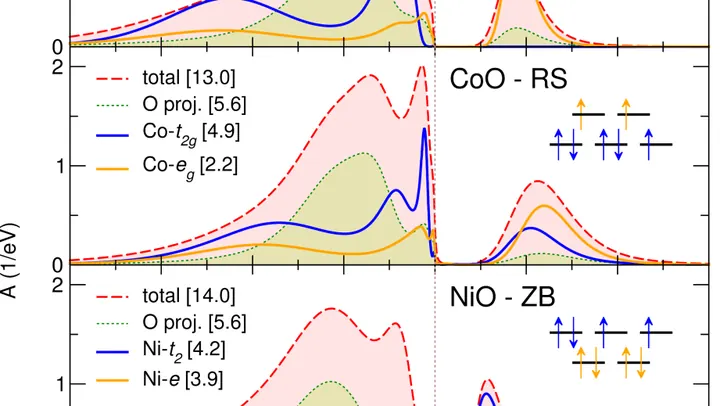
If you change not the composition but only the arrangement of atoms, you can make the same material conduct electricity or absorb light differently. That's exactly what the authors did with nickel and cobalt oxides. In one case, atoms are stacked like balls in a cubic box: each metal atom is surrounded by six oxygen atoms (rock salt structure).
In a tiny magnet, information is encoded not in which way the arrow points, but in how the directions of its atoms alternate. In antiferromagnets, these arrows cancel each other out, so the material appears non-magnetic from the outside. The data is there, but you can't read it the usual way: the state is like a note written in invisible ink.
In the crystal lattice of diamond, defects occasionally appear: a nitrogen atom grabs a foreign spot, and next to it gapes a void. Such a flaw turns into a supersensitive diamond compass: its magnetic needle quivers at the slightest external field. Paradoxically, a blemish that lowers a stone's value has become a coveted tool for physicists.
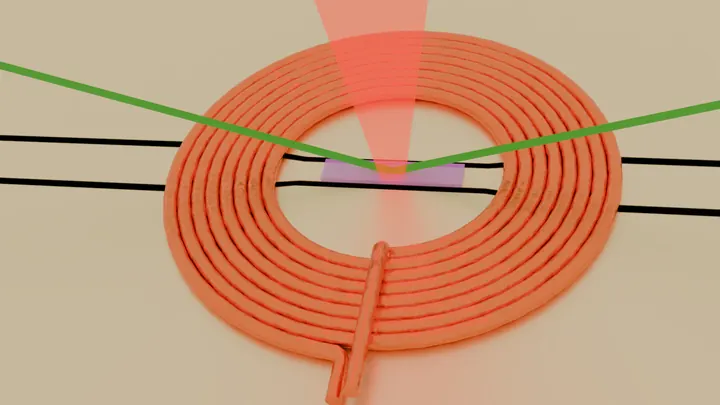
Inside a glass capsule the size of a pea, rubidium atoms float. A laser beam puts them into a special state — Rydberg — where the electron flies far from the nucleus, making the atom extraordinarily sensitive to external fields.
A power transistor made of silicon carbide operates under voltages thousands of times higher than what comes out of a wall outlet. If the field inside it becomes uneven, the device burns out. Previously, this field was invisible: it is too strong for ordinary sensors, and the device must remain under voltage.
Inside a piece of diamond hides a tiny defect — a nitrogen atom next to a vacancy. This defect catches magnetic fields like an antenna catches radio waves and responds with flashes of light. Such sensors already measure temperature inside living cells and find defects in microchips.
In laboratories where atoms are cooled to near absolute zero, even a tiny change in the magnetic field throws off all the settings. Conventional sensors, Hall plates or coils with ferrite cores, sit a few centimeters away from the vacuum chamber because they themselves create interference.
A fridge magnet attracts a paperclip: we can feel that field with our hands. Now shrink that field by a billion times. Atoms inside our bodies emit such weak signals, and they are very hard to catch.
Scientists built the sensor from special molecules that themselves behave like tiny magnets.
A tiny defect in a diamond crystal works like a sensitive antenna. When a magnetic field oscillates nearby, this defect, a nitrogen vacancy, responds by glowing. Previously, to hear the signal, you had to accumulate many repeated measurements, like listening to a whisper with your ear pressed against a door. Now a single short "look" suffices.
A pinch of diamond dust dropped into a glass of liquid acts like hundreds of tiny magnetic compasses. When molecules with unpaired electrons, known as paramagnetic, appear nearby, the needles of these compasses start to quiver. From that quiver, you can tell what the molecule is and how much of it is there.
A magnetic field is invisible, but you can make it 'glow' using tiny defects in diamond — nitrogen-vacancy centers. Each such defect acts as a miniature compass, telling you which way the field points. The problem is that there are many of these compasses, and reading them all in sequence is like transcribing every letter in a thick book by hand.
A tiny defect in diamond is like a microscopic ear, able to pick up the magnetic 'breath' of the heart. Such sensors work at room temperature and are no bigger than a grain of sand.
Conventional blood sugar sensors rely on enzymes — proteins that recognize glucose. But enzymes are finicky: they spoil from heat, moisture, and time, like cut flowers wilting without water.
Here, instead of enzymes, a non-living material does the job: nickel oxide, grown as tiny flowers on a sheet of graphite paper.
Magnetic fields are all around us, from the compass in your phone to the MRI machine at the hospital. To measure them with high precision, you need special materials that respond to the slightest changes in the field. One such material is molecular crystals, where electron spins, think of them as tiny tops, can hold their state for a long time.
In a diamond anvil cell, pressure squeezes a material as if it were buried hundreds of kilometers deep inside the Earth. Inside this chamber, tiny diamond sensors, color centers, respond to microwaves and report on the magnetic fields and temperatures around them.
A magnetic field is invisible, but you can make it 'glow'. To do that, take a tiny diamond with defects — places where a carbon atom is replaced by nitrogen and a neighboring lattice site is vacant. These defects, like sensitive compass needles, respond to the slightest changes in the magnetic field and emit light of varying brightness.
A tiny diamond, smaller than a dust speck, hovers inside a magnetic trap made of microchips. Inside the crystal is a single defect acting as a beacon. Scientists coax the diamond into being in two places at once, like a magician’s ball that honestly rests under two cups.
This isn't just a trick.
A conductor leads an orchestra of billions of musicians while still hearing each one individually. That's roughly the challenge physicists face when trying to make light and electron spins in solids work together.
Tiny defects in a boron nitride crystal act as ultra-sensitive magnetic sensors. But their signal resembles a radio with a mistuned antenna: instead of a clear note, you get a broad, noisy range.
In a dark room, a tiny diamond glows red when a green laser hits it. This glow isn't just for show: it's a signal: its brightness changes when a magnetic field is nearby. Inside the diamond sit defects — nitrogen atoms with an empty neighboring site. They act like sensitive needles that rotate under the influence of a magnet.
A cell doesn't just lie on a surface: it probes it, pulls it, and pushes it. Until now, instruments could only detect direct forces: how hard a cell presses or stretches its support. But if you grab a cell by the "shoulders" and give it a slight twist, it responds by rotating, and until recently, no one could measure that rotation.
Heat an ordinary quartz watch by ten degrees, and it will start losing seconds each day. Atomic clocks are more precise, but they take up an entire cabinet. Diamond with a tiny defect, a nitrogen vacancy, promises atomic-clock accuracy in the volume of a grain of sand.
Every cell is a miniature tuning fork. A sharp magnetic pulse makes it 'ring', and the decay of that sound depends on what's inside: viscosity, density, composition. A tiny diamond with a structural defect acts like a hypersensitive microphone, picking up magnetic echoes from individual cells.
In the 1930s, Fritz Zwicky, observing the Coma cluster, noticed anomalously high galaxy velocities: their motion pointed to a huge hidden mass gravitationally binding the system.