Light Makes Carbon Balls Superconduct at Room Temperature express
An ordinary superconductor works only in nature's freezer — at temperatures below minus one hundred degrees. The carbon-ball material K₃C₆₀ is no exception: without cold, it resists current like a crowd in a narrow corridor. But physicists noticed something strange: if you shine a laser on it, it starts conducting without loss even in warmth. True, before, you needed a powerful beam that nearly melted the sample.
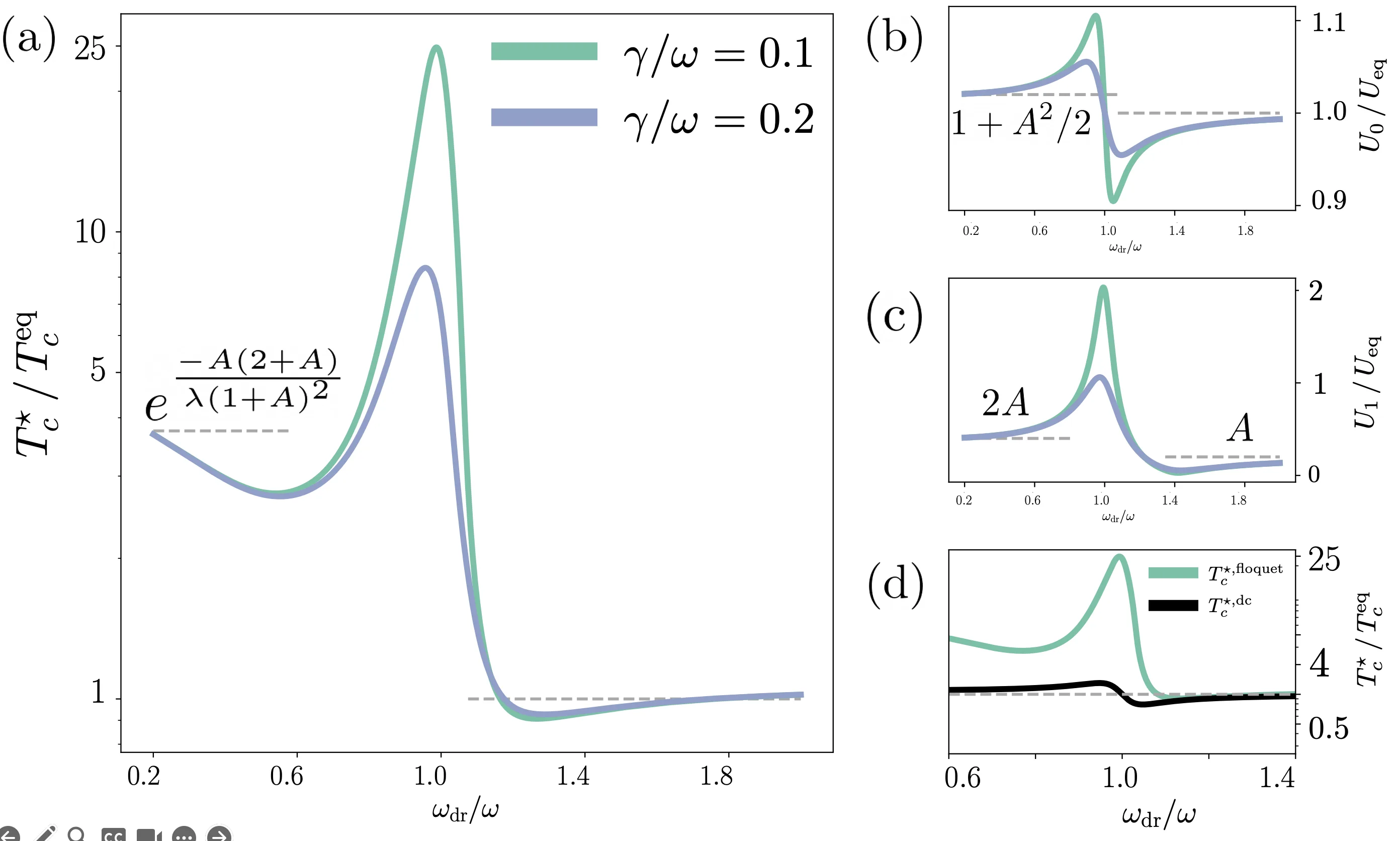
New work explains how to get by with a weak flash. Inside the material, there are ball-shaped molecules made of sixty carbon atoms that vibrate at a certain frequency, like bells ringing in time. If you match the light to that frequency, it shakes these bells harder. The vibration transfers to electrons: they start moving in pairs, holding tightly to each other, and current flows without resistance. The key is hitting resonance, like pushing a swing at the right moment.
Calculations on a simple model confirm: when light hits resonance with the molecules' vibration, the bond between electrons strengthens severalfold. Because of this, electron pairs don't break apart even at room temperature. Previously, it was thought that very strong light was needed for such an effect, but now it's clear — the right frequency matters more than power. It's like opening a lock not with a sledgehammer but with a small key.
The practical benefit is huge: superconductors without cold could transmit electricity without loss, make maglev trains cheaper, and speed up computers. For now, the effect lasts only moments after the flash, but understanding the mechanism is the first step toward extending it. Light that shakes molecules could be the very key that opens the door to a world of warm superconductivity.
Carbon balls K₃C₆₀ are called fullerides: their molecules look like soccer balls stitched from pentagons and hexagons.