Ancient Quiet Galaxies: Age Revealed express
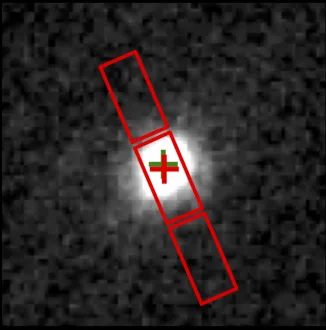
A galaxy is like a city where no new houses are being built. Stars are no longer born there, and the old buildings tell you when construction was bustling. Astronomers peered into 14 such 'ghost towns' on the edge of the visible universe: their light has been traveling to us for 11–12 billion years. Using the James Webb Space Telescope JWST, they captured spectra, splitting the light into colors like a rainbow, to learn the composition and age of the stars.
It turns out that the heavier the galaxy, the earlier its stellar construction ceased. A tenfold difference in mass shifts the age by about 2 billion years. It's as if in one city houses stopped being built in 1900, while in a poorer one, only in 2000. This pattern was known for nearby galaxies, but now it has been found in the early universe as well.
The chemical composition of stars in these ancient galaxies resembles that of later ones. But when scientists tried to measure the exact amounts of individual elements, different methods gave different answers. To sort this out, sharper spectra are needed, like trying to count windows in a city through a fogged-up glass.
Light from these galaxies has been traveling to us for 11–12 billion years — almost the age of the universe. We see them as they were when the Sun did not yet exist.