A black hole can turn into a wormhole express
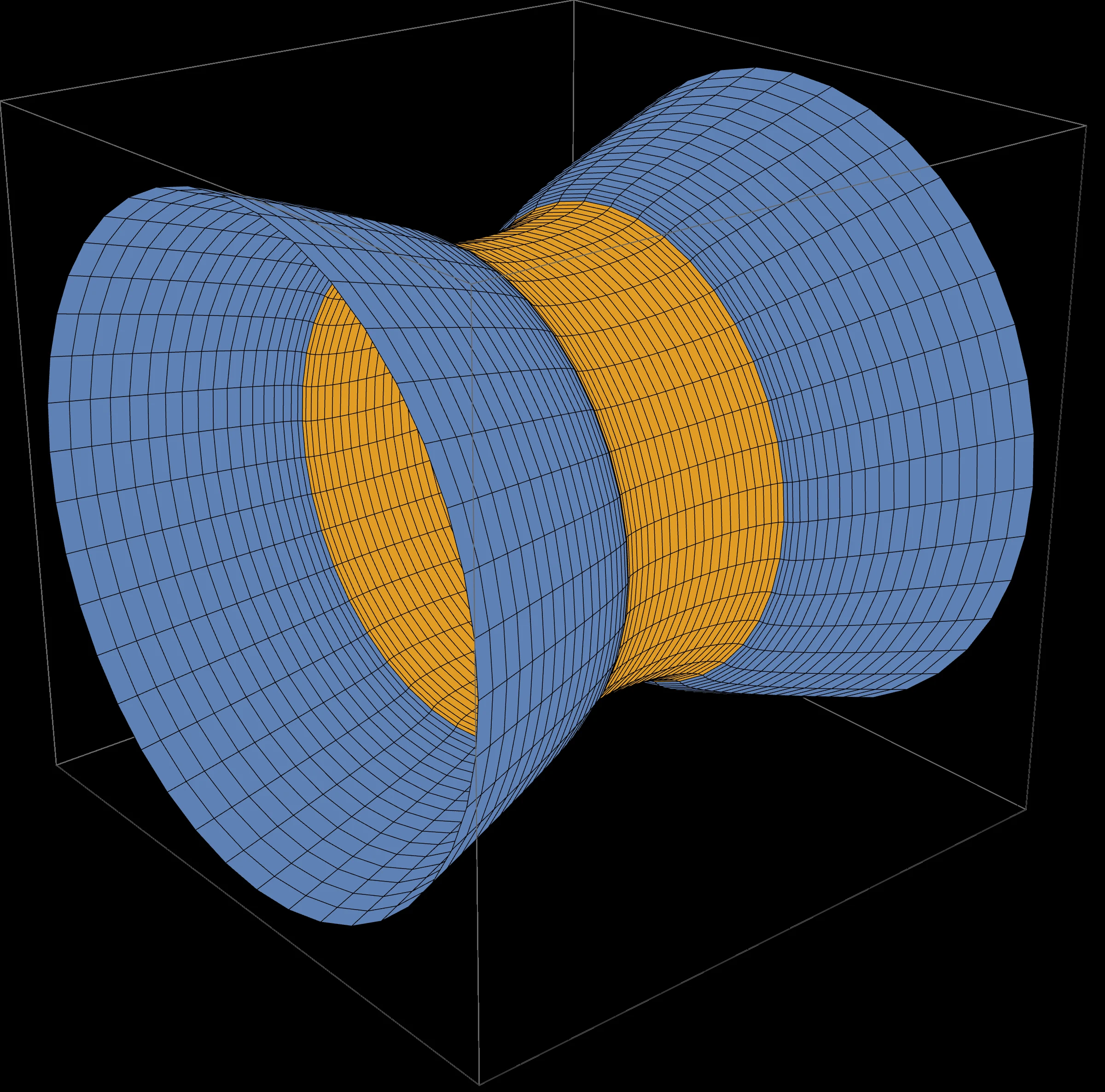
An ordinary black hole is a bottomless pit from which not even light can escape. However, physicists have found a way to turn this pit into a through-tunnel — a wormhole. Taking as a basis the black hole model that Karl Schwarzschild derived in 1916 from Einstein's equations, scientists added an unusual ingredient — negative energy. This substance has antigravity: it doesn't attract, but pushes space apart.
By colliding two streams of such energy, moving at the speed of light, you can cause a black hole to be reborn into a warped passage connecting distant regions of space. The main surprise: to keep the tunnel from collapsing, its throat must be wide enough — a narrow sleeve would crumple under its own weight, while a spacious one remains gaping, like a mountain ridge pierced through.
Such dynamics show for the first time the birth of a traversable wormhole from a black hole. And negative energy is not fantasy: it is already produced in labs using the Casimir effect. Someday this will allow us to reach other stars not in thousands of years, but in an instant.
Negative energy can be created in the lab using the Casimir effect: two metal plates in a vacuum attract each other because fewer virtual particles are born between them than outside.
In the film Interstellar, a wormhole is used for interstellar travel — exactly what scientists dream of.