Meteorite craters — a bowl for the first life express
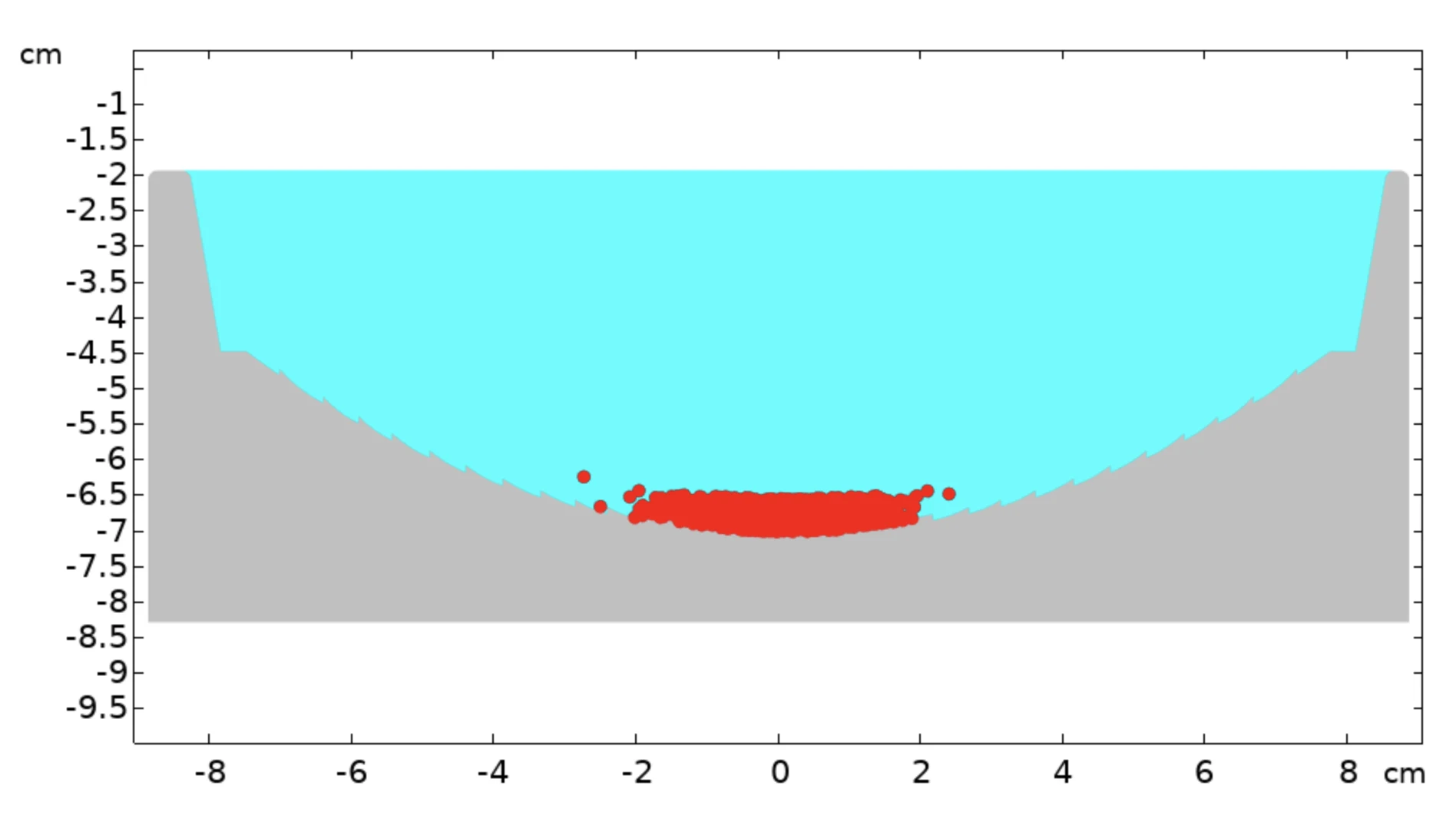
4 billion years ago, the young Earth was mercilessly bombarded by meteorites, leaving behind impact craters. Rains filled them with water, forming shallow ponds where lipid bubbles accumulated. These bubbles, like soap bubbles but with a double-layered lipid membrane (just like modern cells), formed spontaneously when water mixed with fat-like substances. And the water reliably sheltered them from deadly ultraviolet, since the ozone layer didn't exist yet.
The crater walls acted like a stone bowl — without them, the bubbles would have been scattered across the ocean. But in the tight space, underground tremors constantly jostled them together. The close quarters forced them to exchange organic molecules, merge, and divide — exactly like the simplest living systems. In these bowls, a dress rehearsal for true life took place.
And here's the twist: the same meteorites that carved out the craters often carried lipid substances. Thus, cosmic impacts not only sculpted protective bowls but also seeded them with the future components of cells. This makes meteorites not just destroyers, but unwilling architects of life.
Original abstract
as written by the authors arXiv:2602.18510
This paper provides experimental and numerical evidence supporting the occurrence of liposome congregation at the floors of meteor craters on Early Earth. This work builds on our earlier research, which demonstrated that liposomes submerged in a shallow Archean pond are protected from harmful UV radiation. This protection allows them to survive long enough for autocatalytic replication of amphiphiles and for mutation and selection of assemblies that maximize membrane stability. For liposomes to fuse, grow, exchange contents and membranes, and divide, they need to establish a population, which means forming a dense conglomerate that enables close physical contact. The study demonstrates that such a congregation is feasible in bowl-shaped meteor craters on Early Earth, especially under periodic seismic disturbances.
Today, those same lipid bubbles deliver drugs into cells: their membrane fuses with the cell membrane, just as protocells did 4 billion years ago.