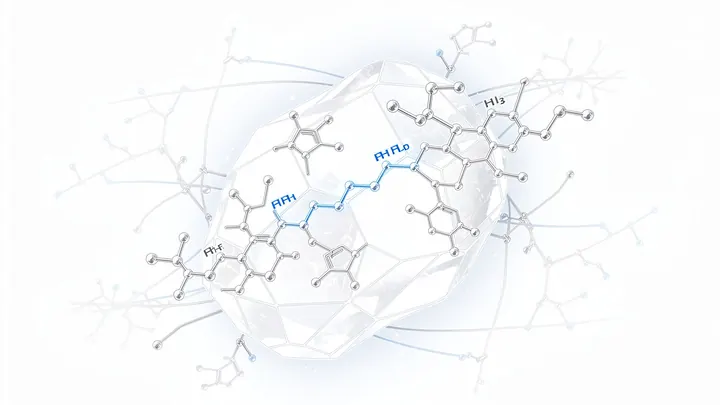
First starsnucleosynthesis refers to the nuclear reactions that forged the first chemical elements heavier than hydrogen and helium in the universe's earliest stars, known as Population III stars. These stars formed from pristine primordial gas a few hundred million years after the Big Bang, and their brief, violent lives produced elements like carbon, oxygen, and iron, which were then dispersed into space by supernova explosions. This process left a distinct chemical fingerprint in later generations of stars, which astronomers can observe to reconstruct the history of cosmic chemical enrichment.
History
The concept was developed in the 1960s and 1970s by astronomers like Yakov Zeldovich and later refined by others, but the first detailed models of Population III nucleosynthesis emerged in the 1980s and 1990s.
How it works
Population III stars were massive, hot, and short-lived, burning hydrogen via the CNO cycle once they synthesized carbon. In their cores, nuclear fusion built elements up to iron, and at the end of their lives, they exploded as pair-instability or core-collapse supernovae, ejecting newly forged elements into the surrounding gas. This enriched gas then collapsed to form the next generation of stars, which carry the chemical signatures of their predecessors in their spectra.
In practice
It is used to interpret observations of extremely metal-poor stars in the Milky Way's halo, providing constraints on the masses and explosion energies of the first stars.
Fun fact
Some of the iron in your blood was likely forged in a Population III star that exploded over 13 billion years ago.
Imagine three witnesses who saw the same event. Two tell the same story, the third tells a different one. Whom do you believe? This is exactly the situation in astronomy when measuring carbon in the star J0815+4729, an ancient object with a record-low iron abundance (carbon is one of the key elements used to infer the properties of the…
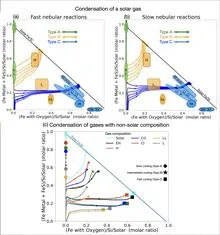
Three cabinets full of rocks. In one, metallic grains and the gray mineral enstatite; in the second, the same grains but with rusty streaks; in the third, layered clays swollen with water. All three sets were pulled from meteorites that fell to Earth: chondrites. They were born in the same gas-and-dust disk around the young Sun, yet somehow turned out so different.
Imagine two spinning tops set on a table. If they spin in the same direction, their combined rotation is large; if they spin toward each other, the total rotation can be zero even though each top spins rapidly on its own. In a pair of neutron stars approaching merger, their individual rotations, spins, play the role of such tops.
A neutron star is what remains after a massive star explodes. Its matter is compressed so tightly that a teaspoonful would weigh billions of tons. Under such conditions, protons and neutrons can rearrange, and new particles (hyperons, similar to neutrons but containing a 'strange' quark) can appear.
An interpreter gets distracted by every rustle in the hall, and a one-hour meeting stretches into two. A neutron star compresses a solar mass into a sphere the size of a city, and the matter in its core is denser than an atomic nucleus. Physicists cannot probe its structure in the lab: the required pressures are unattainable.
In the first half-billion years after the Big Bang, galaxies grew like crazy. Gas fell in rapidly and collapsed into stars without any resistance. This period is called 'unimpeded star formation.' It's like frying pancakes on a scorching skillet without a lid: splatters fly, but nothing holds them back.
Around young stars, flat clouds of gas and dust swirl: these are future planetary systems. Inside some of them, a void gapes: the dust and gas have been swept away, as if someone thinned out the middle of a vinyl record.
After a supernova explosion, a dense ball the size of a city remains at the center — a newborn neutron star. It is hot, compressed, and rings like a bell after being struck. These tremors, the star's oscillations, emit gravitational ripples that sensitive detectors on Earth can catch.
A uranium-235 nucleus that captures a slow neutron doesn't immediately fly apart into fragments. Instead, it seems to get stuck in two 'pits'—states with different shapes. The first, the ground state, is a slightly elongated drop. The second, the isomeric state, is a drop stretched further but not yet torn.
In the furnace of star formation, the heat reaches 900 degrees Celsius, like a glowing blast furnace. It is in this hellish heat that cosmic crystals are born. Astronomers have for the first time caught the moment when crystalline dust appears right during an accretion flare (when the star gobbles up surrounding gas) at the very young star EC 53, still cocooned in dense gas.
In the black depths of space, on the surfaces of tiny icy dust grains, a quiet construction is underway. There, where temperatures drop to near absolute zero and harsh radiation abounds, the ordinary amino acid glycine, the simplest protein building block, links up with itself.
The universe rang piercingly in its first moments. During the inflation epoch, when space expanded faster than light, energies were monstrous — trillions of times higher than in the Large Hadron Collider.
Through three minutes after the Big Bang, the Universe played its first symphony. It was the big bang nucleosynthesis — the formation of light nuclei, where each element sounded its own note, and the tempo was set by the expansion of space.
A billiard ball clicks against another in complete darkness. The sound of the impact and the clatter of balls dropping into pockets: that's all you hear. This is roughly how physicists study the interactions of elementary particles at energies that no terrestrial accelerator can reproduce.
The universe cooled like a giant bathtub after a hot start. At 400 000 years after the Big Bang, hydrogen was ready to recombine — protons capturing electrons to become neutral atoms. But somewhere in this dark water, a tap kept dripping.
The first three minutes after the birth of the world are a cosmic kitchen where nature cooked the lightest atomic nuclei. The recipe is set by gravity: it controls the cooling rate of the hot 'broth' of particles. If gravity worked differently than we are used to, the dish would have turned out different — with different amounts of helium and deuterium.
The James Webb Space Telescope peered into an era when the universe was less than a billion years old and spotted strange objects—'little red dots.' These are black holes with masses of millions of suns, but in very compact, chemically pristine galaxies. Standard scenarios can't grow such heavyweights that early.
For a long time, astronomers searched for the 'factories' of the most energetic cosmic rays — particles that carry the macrocosm compressed to the size of an atomic nucleus. Colossal star-forming regions like Cygnus OB2, where winds from young giants collide, were prime suspects.
Deep space, galactic center. A supermassive black hole is surrounded by a scorching disk of gas and dust. And then, through this fiery veil, a star shoots by every few hours — like an arrow loosed from the bow of gravity. Each passage triggers a dazzling X-ray flare that for a moment outshines the entire galactic nucleus.
Neutron stars — remnants of supernovae — are among the densest objects in the Universe. Their central density exceeds nuclear density many times over, and gravity is surpassed only by black holes.
Massive stars are cosmic titans, living under the sign of indomitable energy. When such a star enters the B[e] supergiant phase, its radiation is so powerful that it would seemingly pulverize any molecule into atoms. The spectral lines, once systematized by Johann Balmer, blaze here with particular fury.
A ball, almost weightless for its size, circles its star every four days. Planet TOI-2195 A b is a real riddle: by mass it's slightly heavier than Neptune, yet bloated to Jovian volumes. If there were an ocean big enough, this exoplanet would float on its surface like a giant inflatable ball.
A pot of porridge boiling over a high flame: bubbles carry grains from the bottom to the surface. A similar mechanism works on a neutron star. As it accumulates hydrogen and helium from a companion star, it occasionally triggers a powerful nuclear explosion — an X-ray burst.
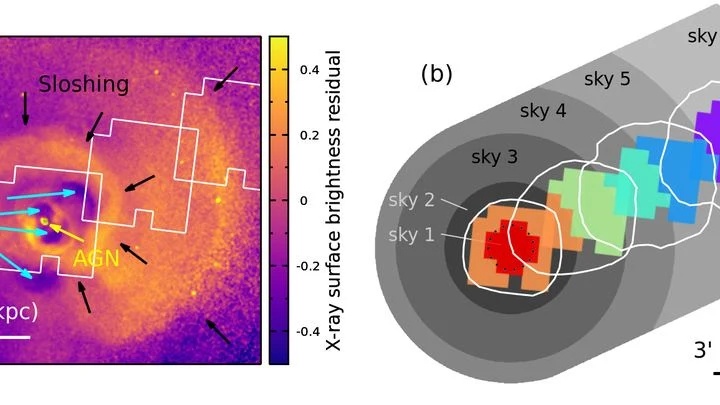
The Perseus galaxy cluster is a giant metropolis of thousands of star islands, bathed in an invisible ocean of scorching gas. Like urban smog, this gas preserves traces of all the chemical factories that have operated in galaxies for billions of years: supernova explosions that scatter freshly forged atoms across the surroundings.
The James Webb Space Telescope peered into a disk of gas and dust around a young star where planets are born, and for the first time spotted ice made of heavy water. This water is not ordinary: in its molecules, regular hydrogen is replaced by deuterium, its heavier sibling.
The universe is full of the invisible. We know about dark matter from galaxy rotation and gravitational lensing, but its nature has eluded us for a century.
A neutron star is a gravitational lens that focuses our attempts to glimpse dark matter. Through its ultra-dense matter, like exotic glass, we search for the axion — an elusive particle that could explain the hidden mass of the universe.
Elliptical galaxies are quiet stellar metropolises in retirement. By all rights, their light should be calm, reddish, like a sunset. But their spectra scream otherwise: in the far ultraviolet, these old-timers blaze like holiday lights. For three decades, astronomers have puzzled over this 'ultraviolet upturn' (UV upturn).
Neutron stars are cosmic 'ice cubes' of unimaginable density: a tablespoon of their material would outweigh Mount Everest. It was a mystery what lay in their cores: ordinary neutron matter (a giant atomic nucleus) or exotic quark matter, where particles are not bound into neutrons.
In the heart of the Milky Way, in the cloud G+0.693, astronomers caught a sweet signal — emission lines of erythrulose, a simple sugar with four carbon atoms and four oxygen atoms.
Using the James Webb telescope, astronomers peered into an ancient quasar — the dazzling heart of a galaxy where a giant black hole sucks in matter. It turns out it doesn't just destroy, but also creates: its powerful outflows and shock waves act like a true cosmic mill.
The first two billion years after the Big Bang were an era when the universe resembled a boiling construction pit. Dark matter clumped the gas together, igniting the first stars. It seemed there simply wasn't enough time to assemble massive elliptical galaxies—'dormant' stellar metropolises — from this raw material.
In the heart of the Eagle Nebula, about 7000 light-years away, three giant pillars of gas and dust rise — the Pillars of Creation. Their shape is familiar to many from Hubble Space Telescope images. Now, Webb's infrared camera has allowed us to peer inside these dense cocoons where stars are born.
A pot of boiling porridge, where instead of grains there are layers of oxygen and silicon, and the fire beneath is about to go out, and the star will collapse in on itself. Until now, astrophysicist cooks have used a simplified recipe: they assumed that bubbles and eddies in the porridge obey one and the same average temperature throughout the depth.
In a city park, trees grow faster than in a deep forest — not because the soil is better, but because branches collide and seeds are exchanged more often. Galaxies in the Spiderweb protocluster behave much the same way. This vast clump of matter will become a mature cluster billions of years from now.
An archaeologist holds in their hands not a clay shard but an actual star — a living snapshot of the era when the universe was just learning to produce anything heavier than lithium. That is exactly the kind of find astronomers describe in a new study. They spotted four dim stars so ancient and pristine in composition that their matter is barely diluted by the 'cosmic dust' of later generations.
Two ocean liners sail at night without lights. One was built in a shipyard from steel plates, the other seems to have grown by itself from foam and waves. By ear they are almost indistinguishable, but an experienced hydroacoustician will catch the difference in the hum of the propellers and the contours of the hull.
A light bulb that doesn't burn out but flares brighter and brighter until it blows the whole fixture apart. That's roughly how the most massive stars in the universe die. When a star's core heats up to billions of degrees, pairs of particles (electrons and their antimatter counterparts, positrons) begin to form.
Imagine an interpreter at a crucial negotiation suddenly switching to another language, and the meaning of everything changes. That's roughly what neutrinos do in the depths of a dying star. These invisible particles are born in enormous numbers when a star's core compresses into a city-sized lump. But on their way out, neutrinos can change their type — physicists call this flavor transformation.