A Thin Layer, Quiet Qubits express
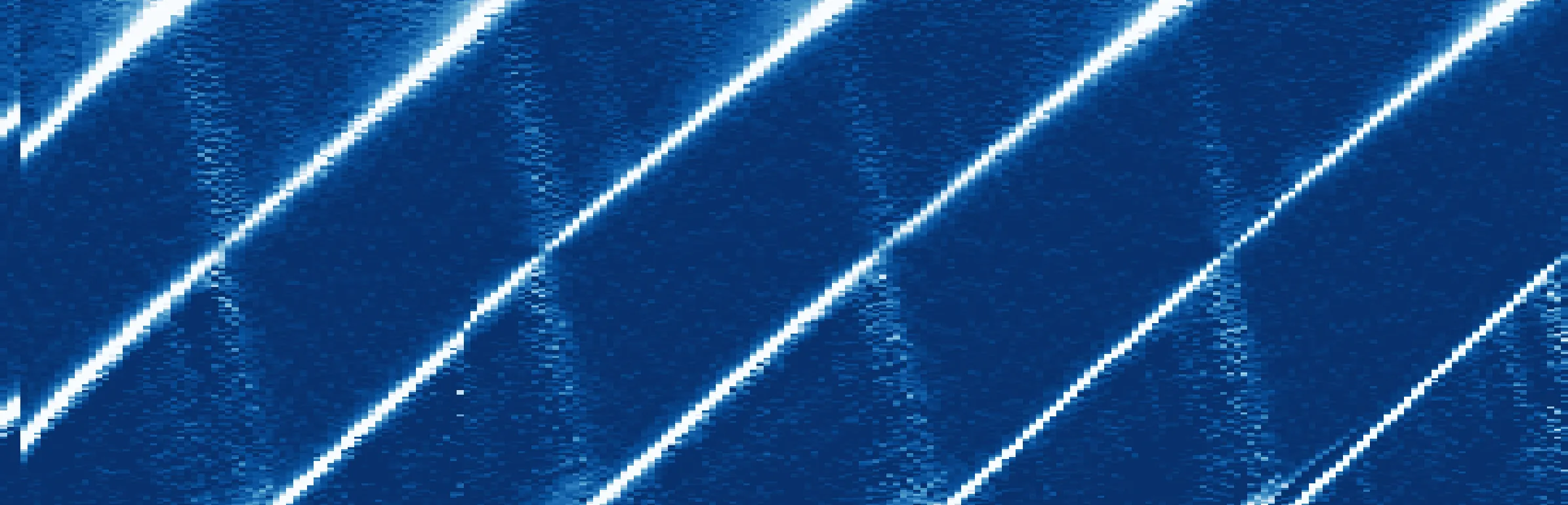
A quantum bit is like a spinning top that must keep spinning steadily for a long time. In germanium, researchers have learned to set such tops spinning, but the floor around them is always trembling: electrical noise knocks the spin off course. To make the floor more even, a thick layer of silicon-germanium is usually placed on top, like a carpet that muffles footsteps.
But if you want to place superconducting components nearby (needed for some quantum tricks), the thick carpet gets in the way: the superconductor must be close. The authors of this new work took a risk and made the carpet very thin — only 4 nanometers, which is five times thinner than usual. To avoid damaging the superconductor with high temperatures during insulation deposition, they developed a low-temperature oxide deposition process.
And here's the result: the noise in quantum dots on the thin carpet turned out to be nearly the same as on the thick one — about 1.8 microelectronvolts per square root of hertz. It's as if the top on the thin carpet spins just as steadily as on the thick one. This means germanium qubits can be combined with superconductors without sacrificing quality.
Such a hybrid opens the door to devices where quantum information is stored in the electron's spin and transmitted through superconducting contacts. The thin carpet is no longer an obstacle.
Original abstract
as written by the authors arXiv:2602.21363
Planar germanium is currently the only semiconducting platform where high-coherence spin qubits and proximity-induced superconductivity have each been demonstrated. Recent research into spin qubits in Ge/SiGe heterostructures has focused on increasing the thickness of the SiGe capping layer, reporting improvements in the electrostatic noise levels. Meanwhile, heterostructures with thinner capping layers remain rather unexplored, despite the potential advantages for proximity-induced superconductivity. Here, we study a Ge/SiGe heterostructure with a thin SiGe cap $$d \approx 4\ \mathrm{nm}$$ and investigate its viability to host low-noise quantum dots. To keep the thermal budget compatible with superconducting layers, low-temperature oxide deposition processes were developed and implemented for the gate dielectrics. The charge-noise level of fabricated devices is estimated to be $$1.8 \pm 1.0\ \mu\mathrm{eV}/\sqrt{\mathrm{Hz}}$$, comparable to devices fabricated on shallow heterostructures $$\left(d \sim 20\ \mathrm{nm}\right)$$ with high-temperature deposited oxides. Low charge-noise levels, together with the straightforward integration of superconductors, make this heterostructure an attractive platform for prototyping hybrid semiconducting-superconducting devices.
Germanium was the material of the first transistors in 1947, but later gave way to silicon. Now it is making a comeback in quantum technologies thanks to its clean spins.