How to Hear the Direction of a Gravitational Wave express
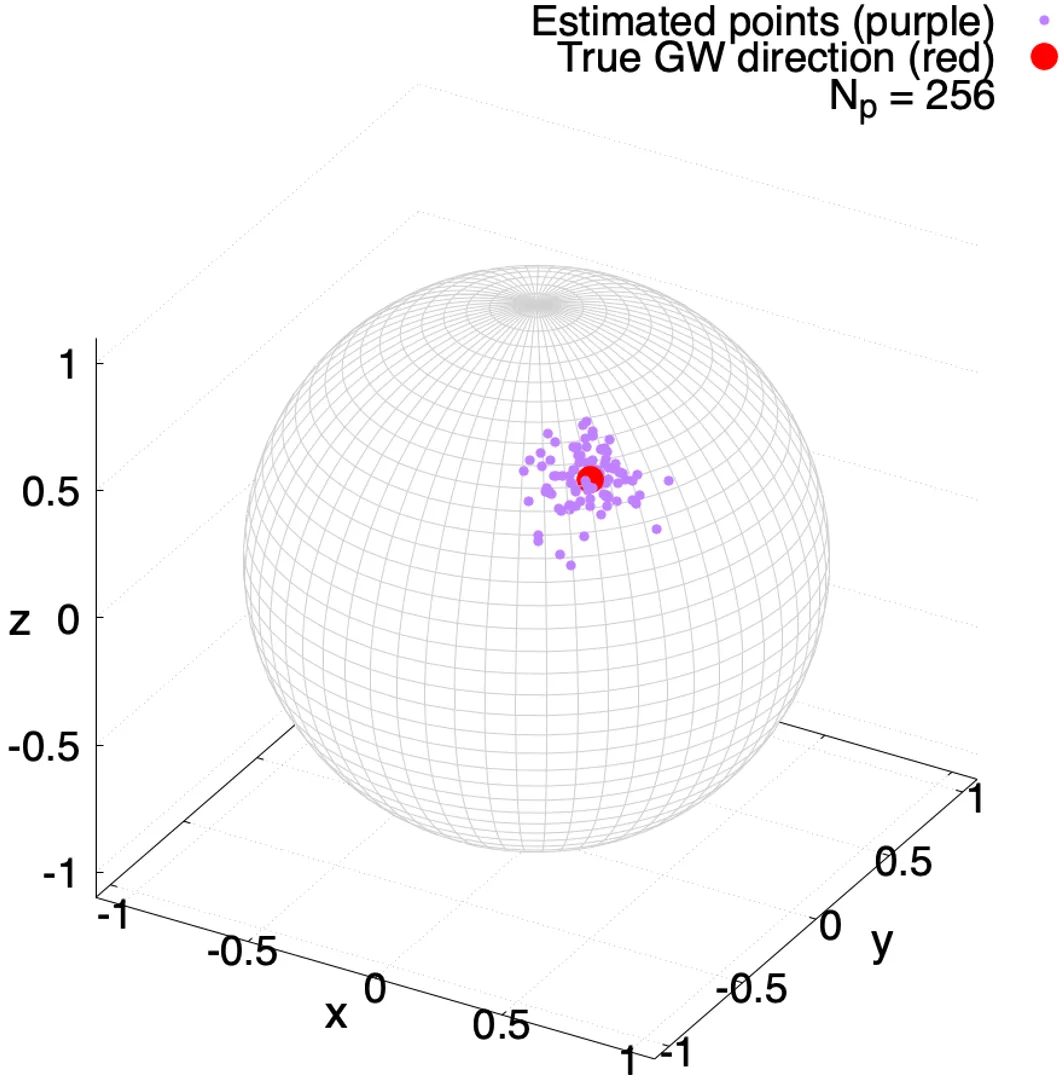
Gravitational waves are ripples in space, born, for example, when pairs of supermassive black holes spiral around each other. To catch them, scientists monitor pulsars — dead stars that emit radio pulses with clockwork precision. As a wave passes through space, it alternately squeezes and stretches the path of the signal, making pulses arrive slightly early or late.
In the new study, researchers took pulsars scattered across the sky and looked at how their signals wobble together. It turned out that these correlated wobbles form a distinctive pattern, like an invisible "frame" stretched toward the wave's source. From the shape of this frame, you can calculate where the signal came from.
The method was tested in calculations for the future Square Kilometer Array radio telescope. It will be able to detect even very faint waves from distant black hole mergers and point to them with accuracy of a few degrees.
Pulsars are so stable that their signals could serve as a galactic navigation system — for example, for spacecraft.
In Carl Sagan's novel "Contact," the protagonists receive a signal from space but don't immediately know where it's from, a similar challenge faces astronomers hunting gravitational waves.