A Double Star Inside a Double Star express
In the constellation Pisces, there is a star that people have seen for thousands of years, but only now have they discerned its inner structure. Alpha Piscium is not one star, nor even two, but a whole family: two pairs of stars bound by gravity. Astronomers had suspected that a third star lurked in the second pair, but they couldn't see it: it was too crowded.
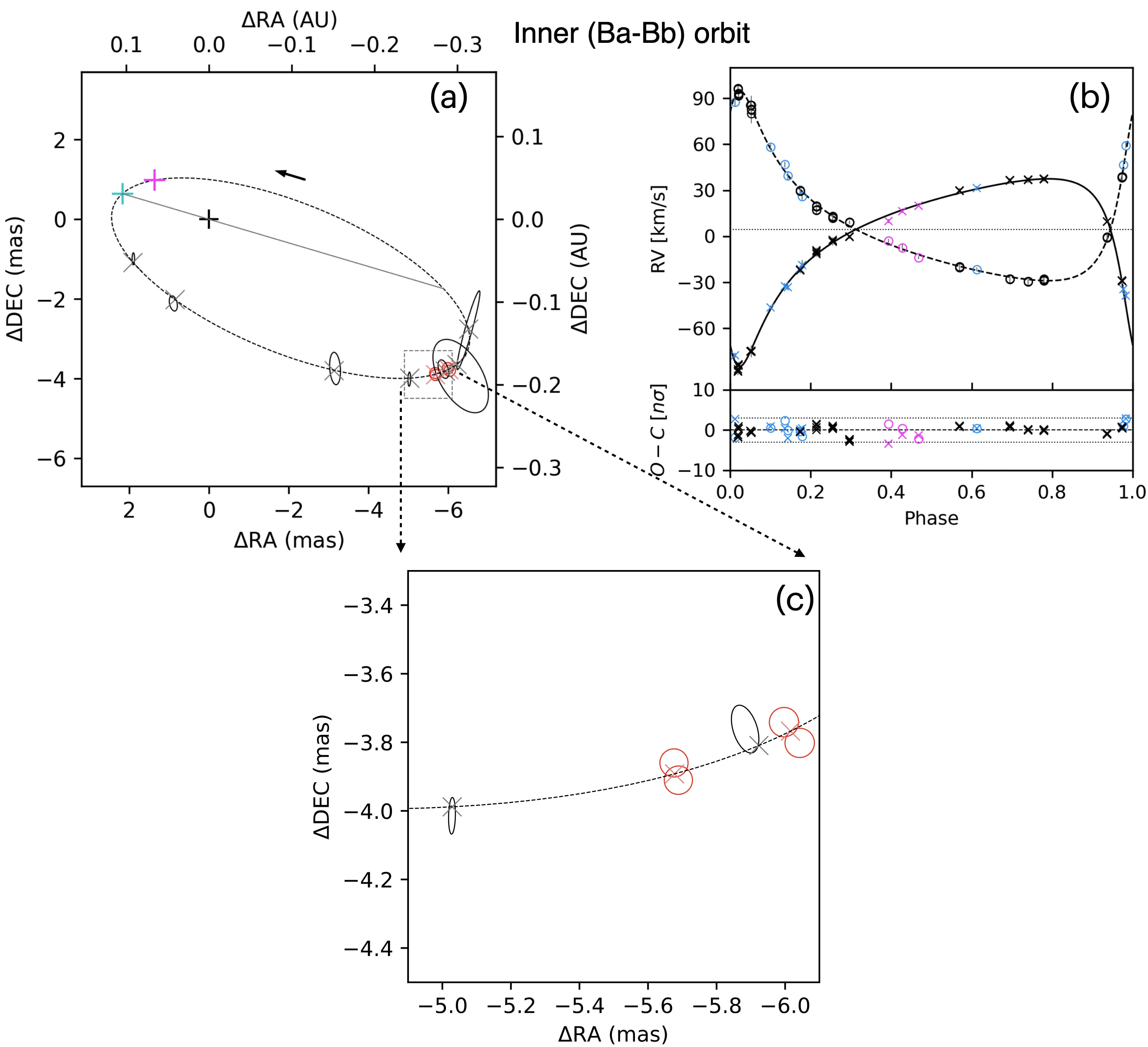
To peer into that tight space, scientists used several telescopes linked into a single giant antenna. They combined the starlight so that fine details became visible, as if looking through a very powerful binocular. This allowed them, for the first time, to directly see the second star in the pair: it turned out to be very close, at an angular separation 500 times smaller than the thickness of a human hair viewed at arm's length.
Thanks to this discovery, astronomers were able to precisely weigh both stars. One is 1.668 times heavier than the Sun, the other 1.646 times. Such precise mass measurements are rare for stars in triple systems. Now Alpha Piscium will serve as a benchmark for testing theories of how stars live and age.
The new observational technique the scientists applied allows measuring stellar positions with a precision comparable to noticing that an ant at the other end of a football field has shifted by the thickness of its antenna. This paves the way for studying other close pairs of stars that were previously invisible.
Alpha Piscium is one of the few stars visible to the naked eye even from a city, and it turns out to be a system of four stars.