Underground Cosmic Ray Counter express
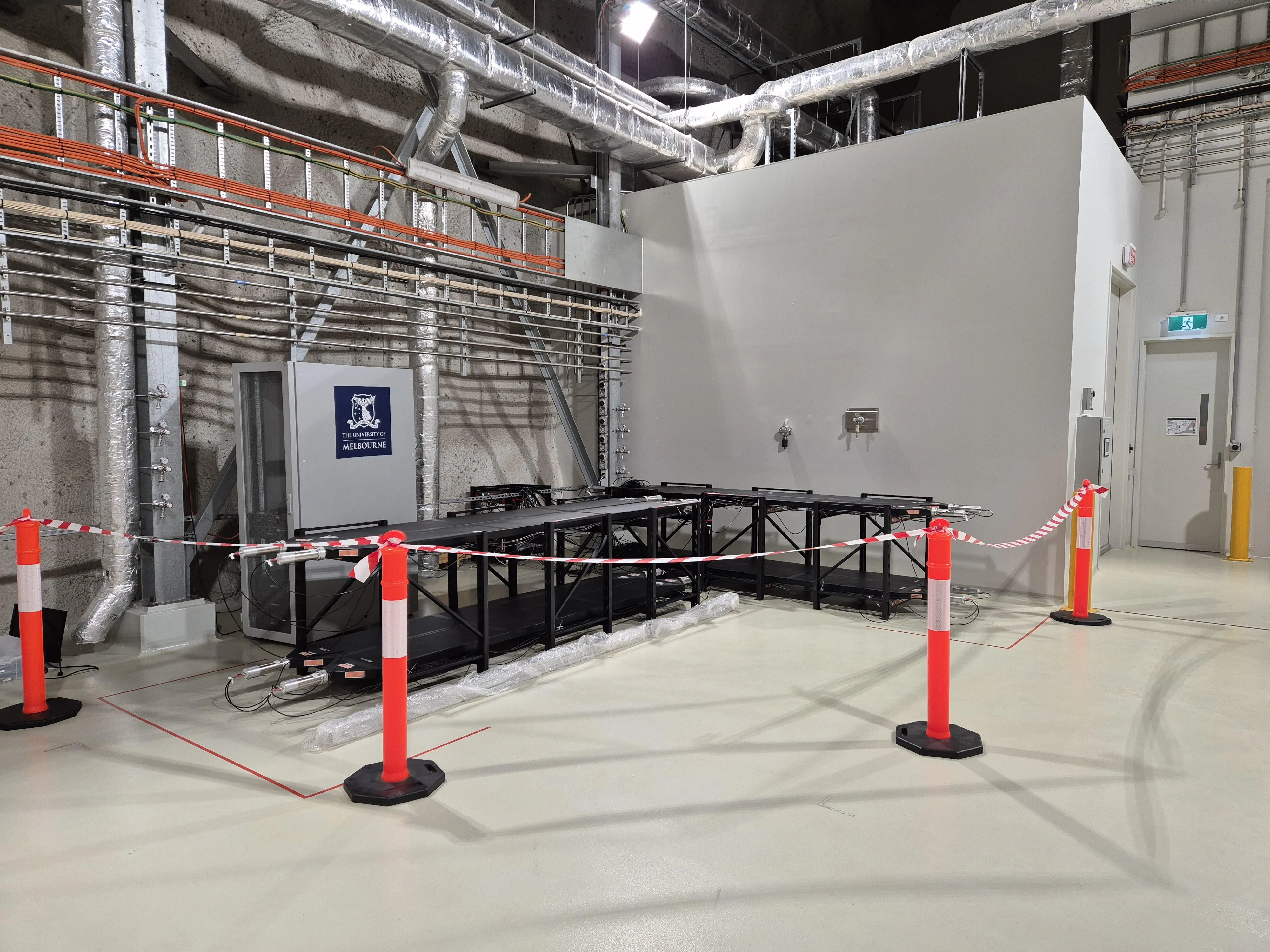
Deep underground, in a former gold mine in Australia, stands a laboratory where silence is broken only by rare flashes of light. These flashes are the traces of cosmic particles that punch through hundreds of meters of rock. Eight plastic panels, resembling large glowing sheets, catch these particles.
Each panel is a scintillator that flashes when a muon, a heavy cousin of the electron, flies through it. Muons are born high in the atmosphere when cosmic rays collide with air. Only the fastest of them reach the underground lab, and now their number has been measured with record precision.
The measured flux: about six muons per square centimeter per hundred days. This is ten times more precise than computer models predicted. Such precision is needed for the future SABRE South experiment, which will search for dark matter — the mysterious substance that makes up most of the universe.
Now that the muon background is known precisely, scientists will be able to distinguish a true dark matter signal from random flashes. The underground silence has become clearer, and within it, one can hear the faintest whispers of nature.
Every second, dozens of muons pass through your body, but you don't notice them: they barely interact with matter.