Liquid Crystal Radio Wave Sensor express
Radio waves surround us, but our eyes can't see them. This new sensor, the size of a fingernail, turns them into a colored patch on a tiny screen.
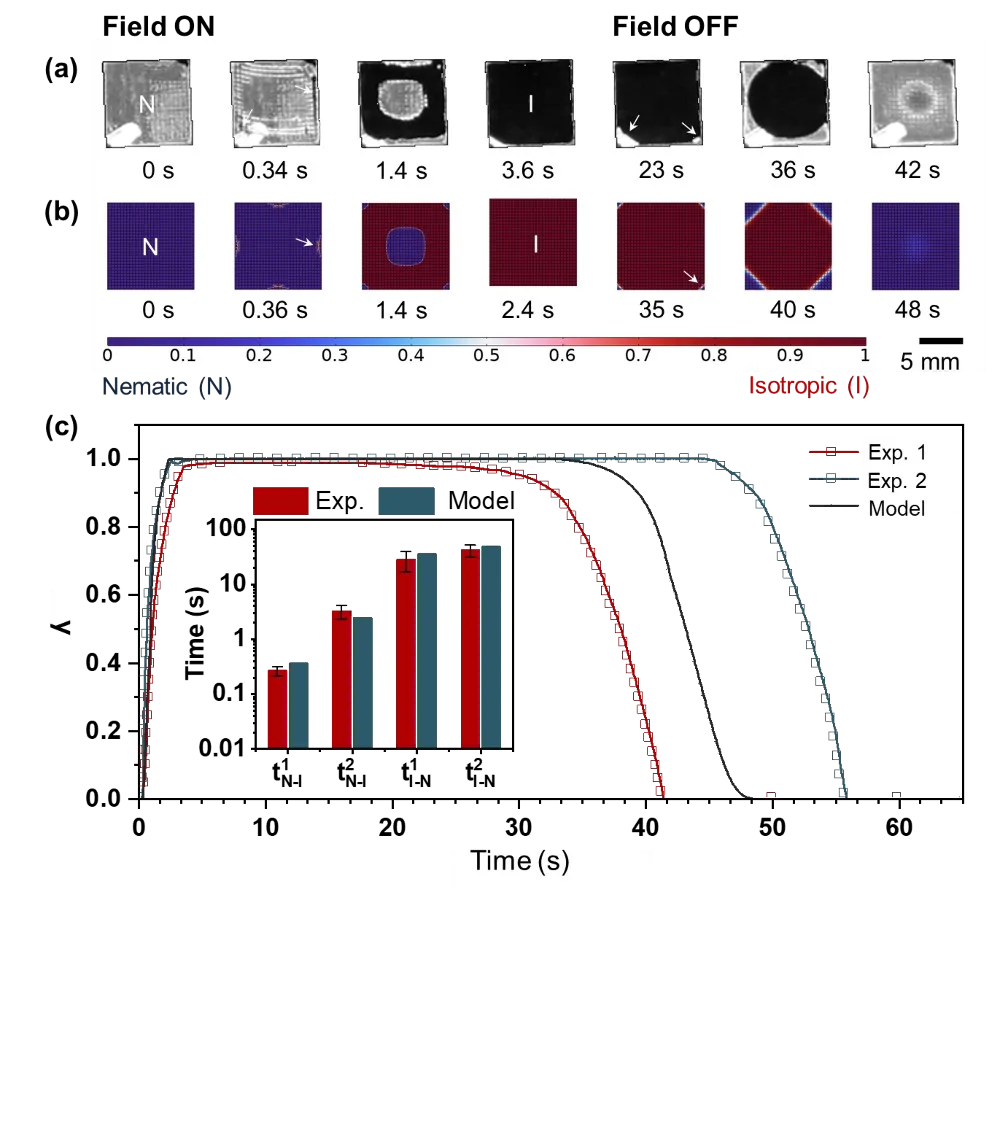
Inside the chip is a layer of liquid crystals — the same kind used in phone displays. Among them are embedded thin ferromagnetic nanowires. When a radio wave arrives, the nanowires heat up quickly. The heat transfers to the crystals, altering the arrangement of their molecules. Light passing through the crystals changes polarization. Polarizing films on the top and bottom of the chip convert this change into a visible color.
Such a sensor could be built into a phone or worn as a keychain. It would detect a strong radio signal (for instance, from a radar or jammer) and display it as a color. This could help spot an electromagnetic attack in time or simply check the radiation levels around you.
The liquid crystals in the sensor are the same as those in displays, but here they respond not to electricity but to heat from radio waves.