Are you one of the authors of this paper? Email us from your institutional or work email address mentioning this article's arXiv ID and we'll verify you and give you edit access to this page.
Are you an author who sees something we missed or got wrong? Write to us — the subject line already carries the paper id. We read every note and correct the write-up.
Extra signals in dark matter detectors turned out not to be what they seemed.
A dark matter detector is like a super-sensitive microphone listening for silence. It picks up tiny heat jolts, phonons, that occur when a particle grazes a crystal. But instead of silence, the instruments have been hearing noise for years: a slew of weak signals below a few hundred electronvolts. Where do they come from?
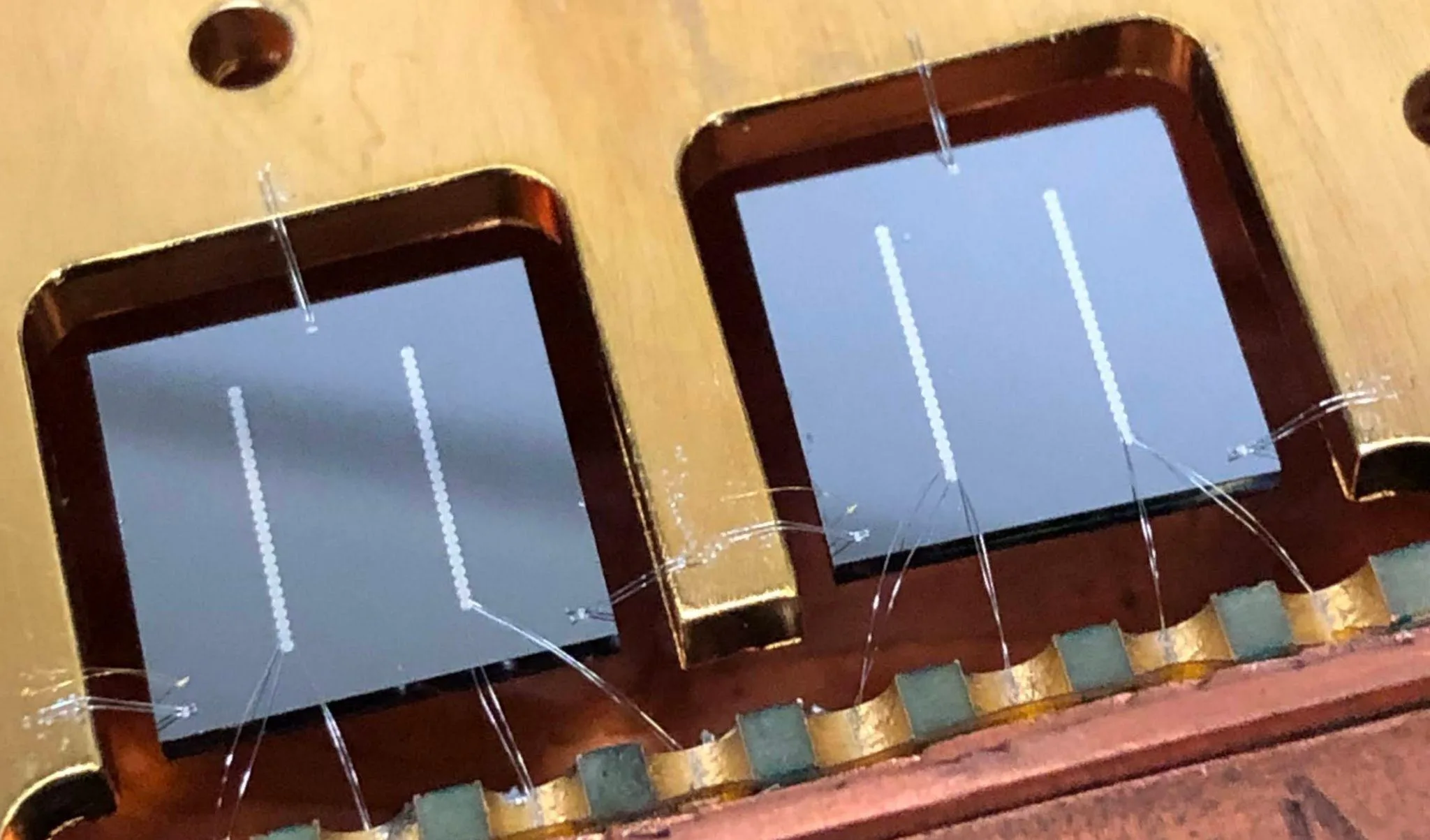
Previously, the blame fell on fast neutrons from cosmic rays. As they zip through the detector, they leave microscopic cracks in the crystal, like a bullet leaving chips in glass. Those damages then slowly relax, and each such 'click' is perceived by the crystal as a signal. To test this, physicists took two identical detectors: one was irradiated with neutrons, the other left pristine. Then they compared.
It turned out that the signals from the irradiated and pristine detectors were almost indistinguishable. If neutron damage were creating the background, the irradiated device would be noticeably noisier. But it isn't.
So neutrons are not the main source of the noise. The mysterious signals come from something else — perhaps the crystal's own nature or particles we can't yet tell apart from the background. Now dark matter hunters will have to search for a new source of 'microphone static' so that one day they can hear a truly important signal.