Biophoton emission refers to the very weak light that living cells and organisms continuously emit, typically in the visible and ultraviolet range. This light is not the result of heating (like a glowing ember) but is a byproduct of biochemical reactions, particularly those involving reactive oxygen species. The intensity is extremely low—often just a few photons per second per square centimeter—but it can be detected with sensitivephotomultiplier tubes. Researchers study this emission because it may reflect the physiological state of cells, potentially serving as a non-invasive diagnostic tool.
History
The phenomenon was first observed in the 1920s by Alexander Gurwitsch, who called it 'mitogenetic radiation.' However, it was largely ignored until the 1970s, when Fritz-Albert Popp and others developed sensitivedetectors and revived interest, coining the term 'biophotons.'
How it works
The photons arise when excited molecules, created during metabolic processes, relax back to their ground state. A major source is the oxidation of lipids and other molecules by reactive oxygen species, which produces electronically excited carbonyl groups and singlet oxygen. These excited species can emit light directly or transfer energy to other molecules (like chlorophyll in plants) that then fluoresce. The intensity and spectral composition of the emitted light correlate with the rate of metabolism and the level of oxidative stress in the tissue.
In practice
It is being explored as a non-invasive diagnostic tool for detecting oxidative stress in tissues, monitoring food freshness, and studying the effects of environmental stressors on living organisms.
Fun fact
A single human cell emits only about 10 to 100 photons per second, which is so faint that it would take a camera with a shutter open for years to capture a visible image.
When a laser beam hits a gas, it tears electrons from atoms and accelerates them to nearly the speed of light. As these electrons fly through the plasma, they emit X-rays, like a glowing trail from a fast particle. In the new work, physicists made a single laser pulse create not one but two such trails in succession.
The lifetime of the entangled triplet pair in the protein is about 60 picoseconds, which is eight times longer than in solution.
Sunlight is like a continuous stream of balls flying at a wall.
The mystery of antimatter in space has long puzzled astrophysicists: where do positrons come from, settling like snowflakes into our detectors? The answer might lurk in the most ubiquitous gamma-ray background. The Universe is soaked in diffuse light — the cosmic photon background (CPB).
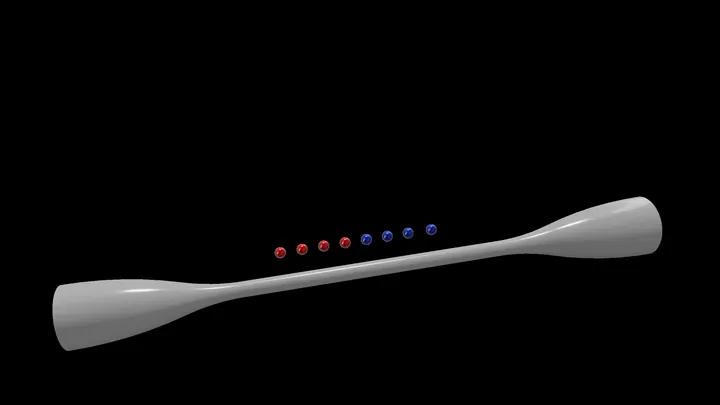
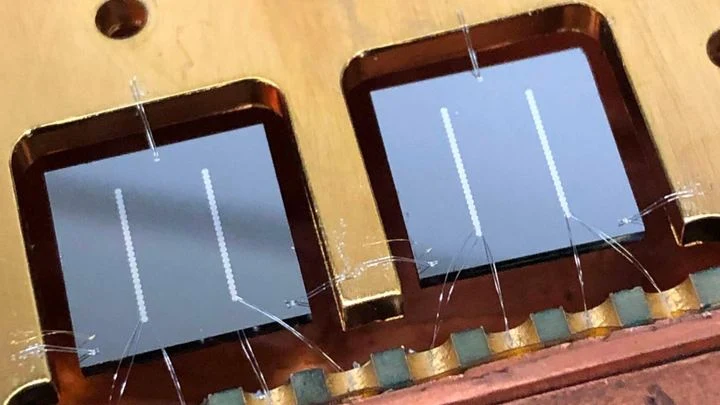
An orchestra without a conductor, where musicians hear each other through a shared wall. That's roughly how the new type of laser works: a few atoms (emitters) sit along a waveguide — a thin track for light on a chip. Light from each atom runs along this track and affects its neighbors.
In very dim light, photons arrive one by one, like drops from a leaky faucet — never in pairs. This effect, predicted by Roy Glauber and confirmed by Leonard Mandel, directly proves that light is made of particles.
Dark matter detectors are essentially incredibly sensitive microphones, capable of hearing a whisper amid the roar of a rock concert. Their job is to catch the rare nudges from hypothetical dark matter particles, which are thought to occasionally collide with atomic nuclei of ordinary matter.
A gamma-ray burst is a brief but extremely powerful flash of light, born from the merger of neutron stars or the collapse of a massive star. Inside such a flash, plasma flows race at enormous speeds and collide with each other.
At night in a dark room, the human body emits a barely perceptible glow. This light is so faint that only highly sensitive detectors can catch it. Some researchers thought this glow from the head could tell us about brain activity — no scanners or wires needed.
But when put to the test, the story changed.
Light in an optical fiber is a stream of photons, and quantum communication requires single photons that can be sent one at a time. But making them emerge quickly while remaining indistinguishable from one another is a tough challenge.
A dark matter detector is like a super-sensitive microphone listening for silence. It picks up tiny heat jolts, phonons, that occur when a particle grazes a crystal. But instead of silence, the instruments have been hearing noise for years: a slew of weak signals below a few hundred electronvolts.
Twenty-eight seconds: that's how long it took for an automated camera to lock onto a flash in a constellation whose light had traveled for more than nine billion years.
When light hits a semiconductor, it can knock out an electron, leaving behind a hole. The electron and hole attract each other and form a pair — an exciton. This pair can re-emit light, but not immediately: first, it exchanges energy with vibrations of the crystal lattice — phonons.
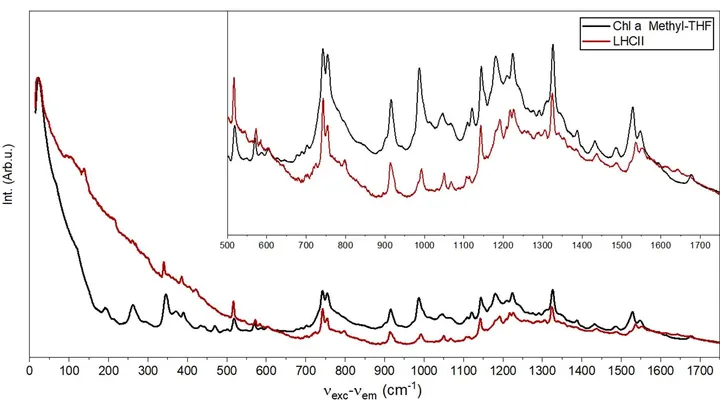
When a sunbeam hits a leaf, a relay race begins inside it. The energy of light passes from one chlorophyll molecule to the next until it reaches the reaction center — the place where the chemistry of life kicks off. This relay runs with astonishing accuracy: nearly every quantum of light finds its way.
An electron beam can be compared to the light from a laser pointer: if it diverges, the spot on the wall quickly spreads out. In the lab, physicists created such a narrow beam that it remained thin over a long distance, like the beam of a good pointer.
A laser pulse enters a tiny cavity made of a transparent crystal. Inside, light bounces between mirrors, and occasionally one photon splits into a pair: one goes one way, the other goes another. One becomes the signal, and the other acts as a 'bell' announcing that a single photon is ready.
A solar flare is like an explosion in a star's atmosphere: in minutes, it releases energy comparable to billions of nuclear bombs. On May 4, 2022, the RT-7.5 radio telescope in Moscow was watching an M5.7-class flare. The instrument was catching millimeter radio waves: those shorter than a centimeter and invisible to the eye.
Light from an ordinary bulb is a stream of individual photons, like drops from a faucet. But there is also light where photons come in pairs, like twins walking together. Such grouped light has long been desired for measuring distances and imaging objects hidden around corners. But sources of this light were either too dim, or their flashes too short for ordinary detectors to catch.
A heart cell in a Petri dish contracts, and at that moment, an electrical wave sweeps across its surface. Previously, to catch that wave, you had to poke the cell with an ultra-fine electrode needle. Now, you just look at it under a microscope.
The method is called electrochromic recording.
A single light source in a thin layer of boron nitride flashes on and off in a couple of nanoseconds. You can create many such sources in the material, but each one used to work on its own. In the new work, they were made to glow together, like musicians playing in unison.
In a particle accelerator, electrons race around a ring at nearly the speed of light. When such an electron collides with a photon, a particle of light, the photon bounces off like a ball hitting a moving truck and flies away with much greater energy.
An ordinary laser emits photons one by one, like a faucet dripping water. But what if you need several particles of light born at the same instant? Physicists have made a cloud of cold rubidium atoms emit quadruples of photons — as if the faucet suddenly released four drops at once, each falling into its own test tube.
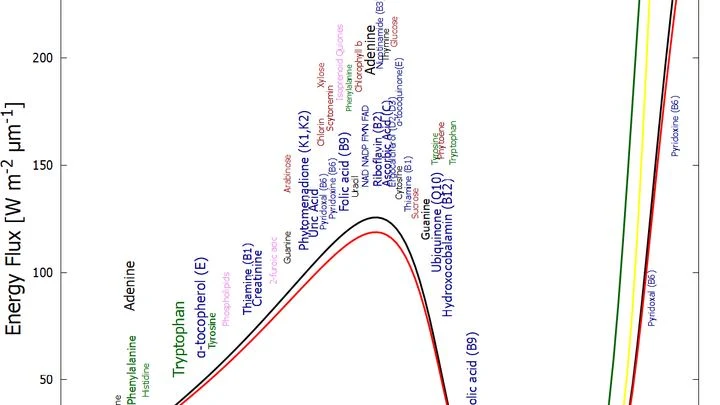
Life began with molecules akin to natural sunscreen — based on carbon, they soaked up the mild ultraviolet of the young Sun and turned it into heat. This way of dissipating energy wasn’t just heating: it made molecules self-organize, like chefs kneading structured dough out of a chaos of ingredients. But ultraviolet is a finicky tool.
Living cells continuously exchange light signals — a billion times fainter than daylight. It's like a whisper picked up by ultra-sensitive instruments. A healthy cell whispers rhythmically, a cancerous one — haltingly, but with a long memory of previous flashes.
The laser clicks ten million times per second, and each click kicks exactly one photon out of a polystyrene film. Not a beam, not a burst, just a single particle of light, neatly packaged in space and time. The source is a molecule you can order from a chemical supply catalog: C60 fullerene, sixty carbon atoms folded into a soccer ball.