The Galaxy's Halo: How to Weigh the Invisible express
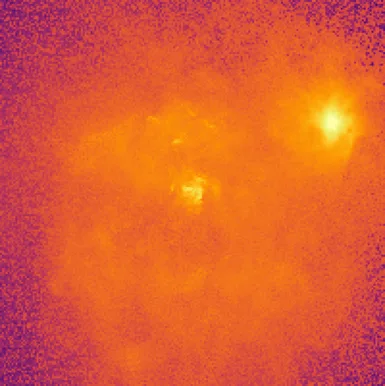
Every galaxy is wrapped in an invisible shell of hot gas, like steam rising from a pot of boiling water. This gas barely glows in X-rays, making it notoriously difficult to measure. Yet it holds the memory of stellar explosions and the galaxy's growth.
The new method uses light from a galaxy's bright center. As X-rays pass through the outer layers of gas, some scatter off oxygen atoms, like a flashlight beam in fog. By comparing the brightness of the center and the light scattered by the fog, you can count how much oxygen is in the halo, and from that, the total gas mass.
The method was tested on the TNG50 galaxy simulation. It turns out that for most galaxies, it yields an error of just 10%—as if you weighed a sack of potatoes and were off by only one spud. Even when galaxies are lopsided or their gas is in motion, the method holds up, except for the most unusual cases.
Thus the invisible becomes measurable: light reflected from gas tells the story of what lies hidden from view.
A galaxy's outer halo can contain more ordinary matter than the galaxy itself, like an invisible pantry we only discover by the light it reflects.