The quiet hum of gravity: how to hear the quantum nature of attraction
In a dark room, an invisible clock is ticking. Only the faintest trembling of its hands gives it away. Gravity is like that: if it isn't quantum, it should jitter slightly, as if nudged by an invisible crowd. That jitter is the noise.
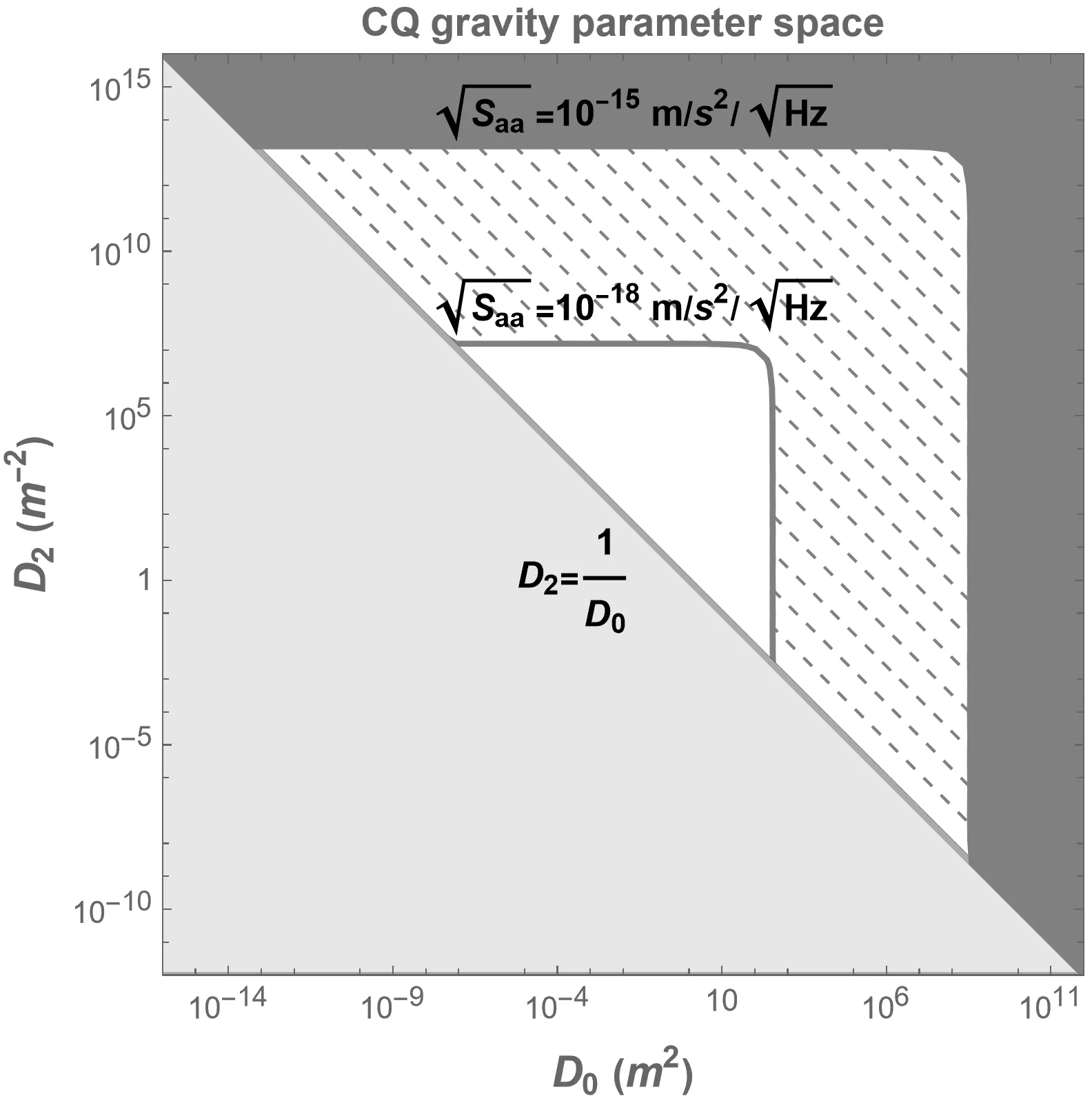
Physicists have found that in any theory without quantum particles of gravity, this noise cannot be arbitrarily small. They built a general framework that describes the jitter for all such theories. It took only three simple conditions: Newton's law must hold on average, evolution must not peek into the future, and the laws must not change under uniform motion.
For a pair of bodies of one milligram each at a distance of one millimeter, this threshold corresponds to an acceleration of about $10^{-18}$ m/s²/√Hz. That is a thousand times smaller than what the LISA Pathfinder spacecraft can already measure. The gap seems large, but engineers are already working on more sensitive sensors, and the goal is within reach.
The ticking of a clock in the dark can be measured without seeing the clock itself. Same here: you don't need to directly observe quantum entanglement. It's enough to measure the noise and compare it with the threshold. If it's below, then gravity is quantum, and entanglement has already happened. If it's above, whole classes of theories can be discarded. All that's left is to sharpen our hearing.
The noise threshold for millimeter-scale masses is only a thousand times below what has already been achieved in the LISA Pathfinder space experiment. In other words, the required sensitivity is not fantastically far away but lies within engineering reach.
The idea that gravity might be not quantum but stochastic echoes Greg Egan's novel Schild's Ladder, where physics in different regions of space obeys different rules. Here the question is what rules hold in our Universe, and the answer may come from laboratory noise.