A Light Pulse That Won't Spread Out express
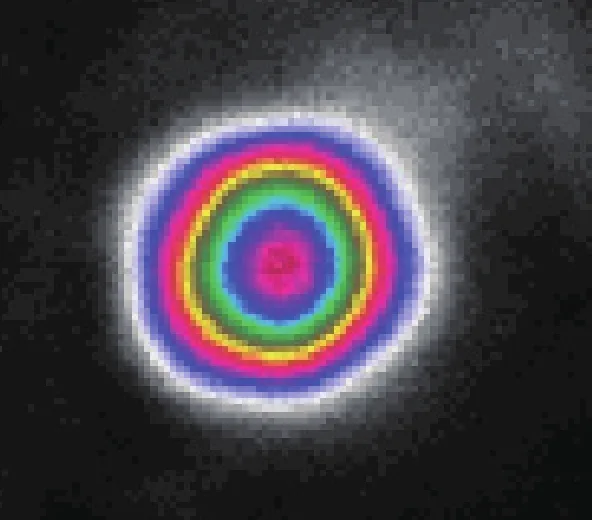
A laser flash lasting 50 femtoseconds is like a shot that lasts one billionth of a second. In that time, light travels only 15 micrometers — less than the thickness of a human hair. But if you send such a flash through an amplifier, it starts to stretch like a rubber band and loses its sharpness.
Physicists from the group of Jascha Sohl-Dickstein (though he is known for other work) found a way around this. They noticed that if you choose the right input pulse duration, a special regime emerges in the fiber—'partial parabolic amplification.' In this regime, the pulse compresses itself rather than stretching, and the output is a flash lasting 50 femtoseconds with a peak power of 30 megawatts. For comparison, a typical light bulb is 60 watts: this is a million times more.
Previously, such pulses could only be obtained with bulky solid-state lasers, but now it's possible in a compact fiber amplifier. The authors are confident that the power can be increased another tenfold, to 200 megawatts, using fibers with a wider core. This would pave the way for ultra-precise cutting of materials and microscopy that doesn't damage living cells.
Original abstract
as written by the authors arXiv:2603.27554
Nonlinear amplification is a powerful technique for generating ultrashort laser pulses with high peak power in fiber systems. However, the diversity of nonlinear amplification approaches and their inherent complexities present significant challenges to achieving a unified understanding and further scaling of peak power and pulse energy while preserving ultrashort durations. Here, we report the results of a systematic optimization with respect to seed pulse duration that elucidates the dynamics of nonlinear amplification and allows identification of distinct propagation regimes. As part of this analysis, we identify a new regime, termed partial parabolic amplification, which achieves 50-fs pulse duration and yields higher peak power than any other nonlinear amplification regime known to date. An initial experimental demonstration of partial parabolic amplification produces 50-fs and 2.2-uJ pulses with a 25-um-core Yb fiber amplifier, corresponding to a 30-MW peak power. In contrast to other nonlinear amplification techniques, practical energy scaling beyond 10 uJ and 200 MW should be achievable with available gain fibers with larger mode areas, which would fill a gap in existing fiber laser capabilities that would directly impact material processing, nonlinear bio-imaging, and other applications.
50 femtoseconds is as many times shorter than a second as a second is shorter than 600 million years.