The beam squeezes itself express
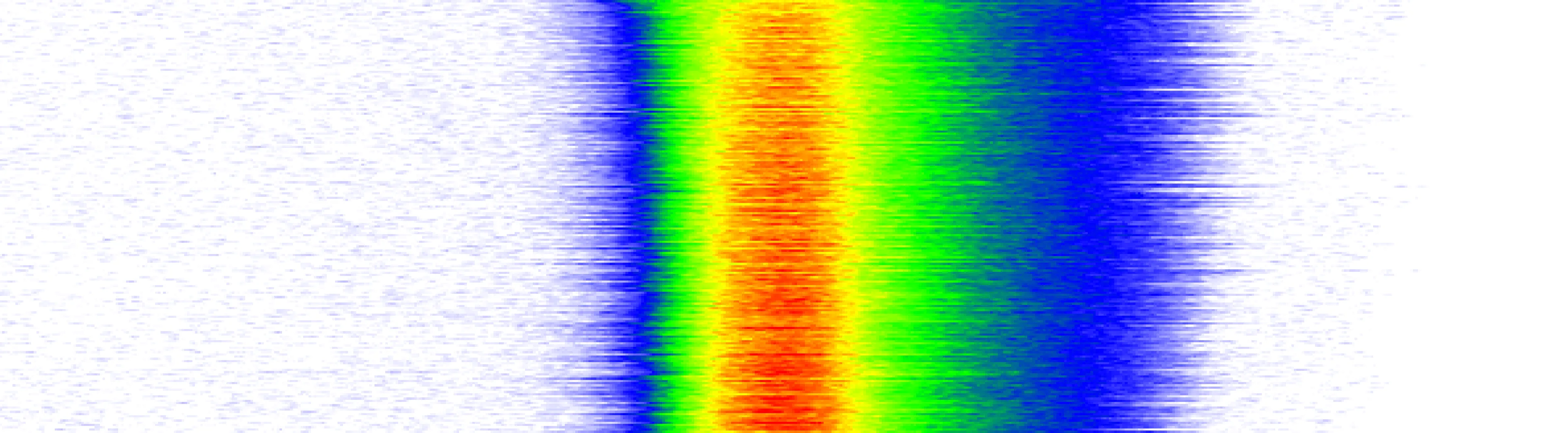
An electron beam in an accelerator is like a flock of birds: it flies in a tight group, but over time it spreads out. To keep particles together, heavy magnets are usually used. Here they did without them — the beam squeezed itself.
In the experiment at the FACET-II facility, a beam of 10 billion electrons (charge 1 nC) with an energy of 10 GeV was sent through a stack of thin metal foils. As the beam passes through a foil, its magnetic field reflects off the foil and returns to the beam. This reflected field acts on the beam itself and compresses it, as if an invisible hand gathers the scattering birds back into the flock.
Each subsequent foil enhances the focusing. Measurements showed that the beam becomes noticeably denser after passing through the stack. The results matched calculations and computer simulations.
This focusing method is simple and requires no precise tuning: the beam aligns itself with the foils. It could be useful for studying ultra-dense beams and the intense radiation they produce.
Original abstract
as written by the authors arXiv:2603.27692
Extreme beams of charged particles and photons, reaching ultrahigh densities or producing intense gamma-ray bursts, are central to accelerator physics, laboratory astrophysics, and strong-field quantum electrodynamics research. Yet their generation is hindered by conventional focusing methods at multi-GeV energies that rely on massive magnetic assemblies, limiting compactness and attainable density. Here we report the first experimental observation of a fundamentally new focusing mechanism, in which a high-energy charged-particle beam is focused by its own magnetic field reflected from a stack of thin metallic foils via near-field coherent-transition-radiation. The experiment, performed at SLAC's FACET-II facility, reveals strong, cumulative focusing across a broad range of beam configurations, enabled by the delivered 10 GeV, 1 nC, 10 Hz electron beam. The measurements closely agree with predictions from an analytical model and particle-in-cell simulations. These results demonstrate that multifoil focusing is a remarkably straightforward, self-aligned approach to the generation of ultrahigh density beams, opening a path to explore unprecedented regimes of beam-matter interaction and high-energy radiation.
A charge of 1 nC is about 10 billion electrons packed into a beam thinner than a human hair.
In science fiction, dense particle beams are often used as weapons or tools for cutting materials — here, a similar focusing principle works without bulky magnets.