A Tau Collider in the Oort Cloud express
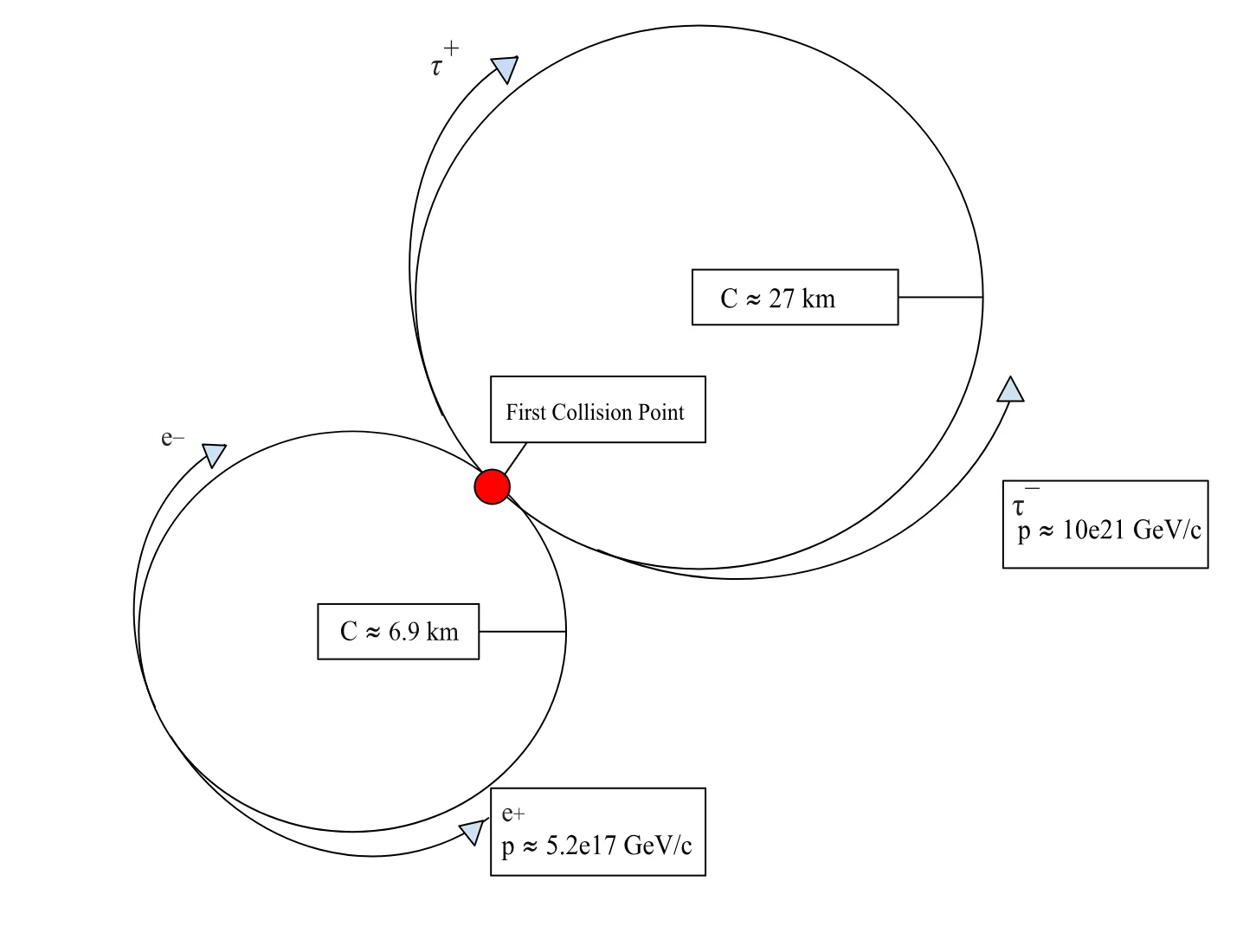
A ring road around the Sun, where the traffic is not cars but clumps of matter. The diameter of this road is measured in light-years: it encircles our planetary system at its outer edge, in the Oort Cloud, where the star's weak gravity still holds sway. That is the scale of the device a group of physicists proposes to build to study the Standard Model's Higgs boson and to search for new particles.
Instead of the usual protons or electrons, this accelerator would smash tau leptons — heavier cousins of the electron that live only for an instant. The collision energy would reach yottaelectronvolts — a unit with twenty-four zeros, a million times greater than that of today's Large Hadron Collider. Such power would open access to processes that are currently impossible to reproduce in the laboratory.
Construction would take decades, perhaps centuries. The authors honestly admit: humanity would have to rise to a Type I or II civilization on the Kardashev scale: that is, learn to harness the energy of an entire planet or even an entire star. But that is precisely why, they argue, development must begin immediately: a journey of a thousand miles begins with a single step.
The ring in the Oort Cloud is not just a giant instrument. It is a bet that the deepest mysteries of matter demand the grandest scale.
A tau lepton lives for just 2.9×10⁻¹³ seconds — in that time, light travels less than a tenth of a millimeter.
The idea of a planetary-scale accelerator echoes Liu Cixin's 'The Three-Body Problem,' where an alien civilization builds a facility that encompasses an entire star system.