The Dwarf Galaxy That Stopped Making Stars express
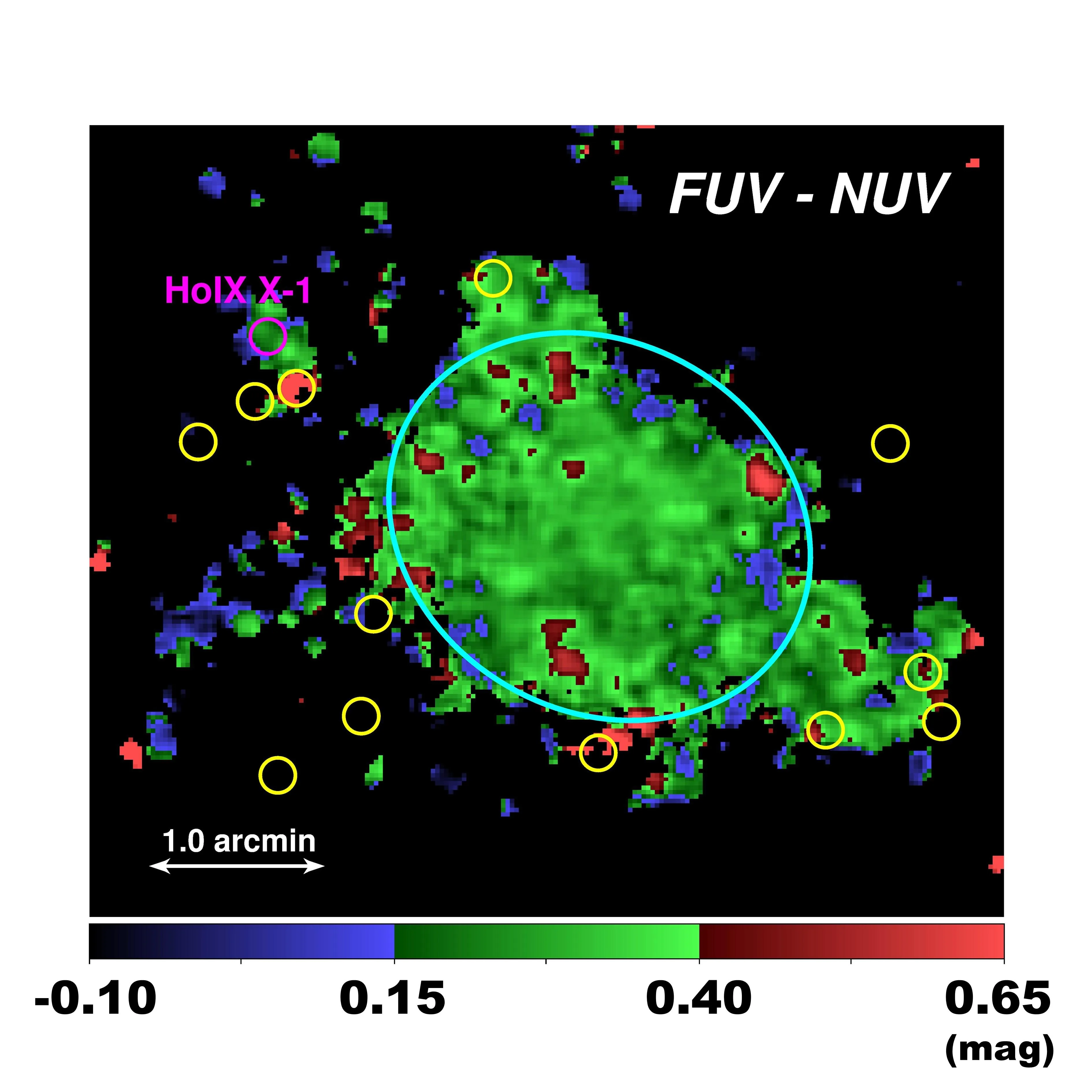
The galaxy Holmberg IX is like a city where construction of new houses suddenly stopped, even though building materials are everywhere. Astronomers peered into it with various telescopes and saw a strange picture: plenty of gas and heavy elements, but almost no dust. Usually, where there's gas, new stars are born, but here it's different.
From the glow in ultraviolet and hydrogen, scientists deduced that nearly all the stars formed about 130 million years ago in a single short burst. After that, star formation abruptly ceased, and in the last 80 million years, hardly any new stars have appeared. Currently, faint pockets of star formation are visible only at the galaxy's edges. It's as if life in the city center has frozen, while the outskirts still show some signs of activity.
What happens next? If star formation doesn't resume, the galaxy could become like a dim globular cluster of stars, or alternatively, gradually dissolve into space. But there's another possibility: if it's only producing very faint stars that are hard to detect, it could remain as is for a long time. Either way, Holmberg IX forces us to rethink our understanding of dwarf galaxy life cycles.
Holmberg IX lies near the large galaxy M81 and may be stretched by its tidal forces, like dough pulled apart by hand.