One Photon Checks Five express
A security guard needs to check five rooms but can't go inside. He knocks on the door and listens: silence means someone is inside, while an echo means the room is empty. Interaction-free measurement works similarly: a quantum particle, like a photon, passes by an object and its behavior reveals whether an absorber was in the path, even though the photon never hits it.
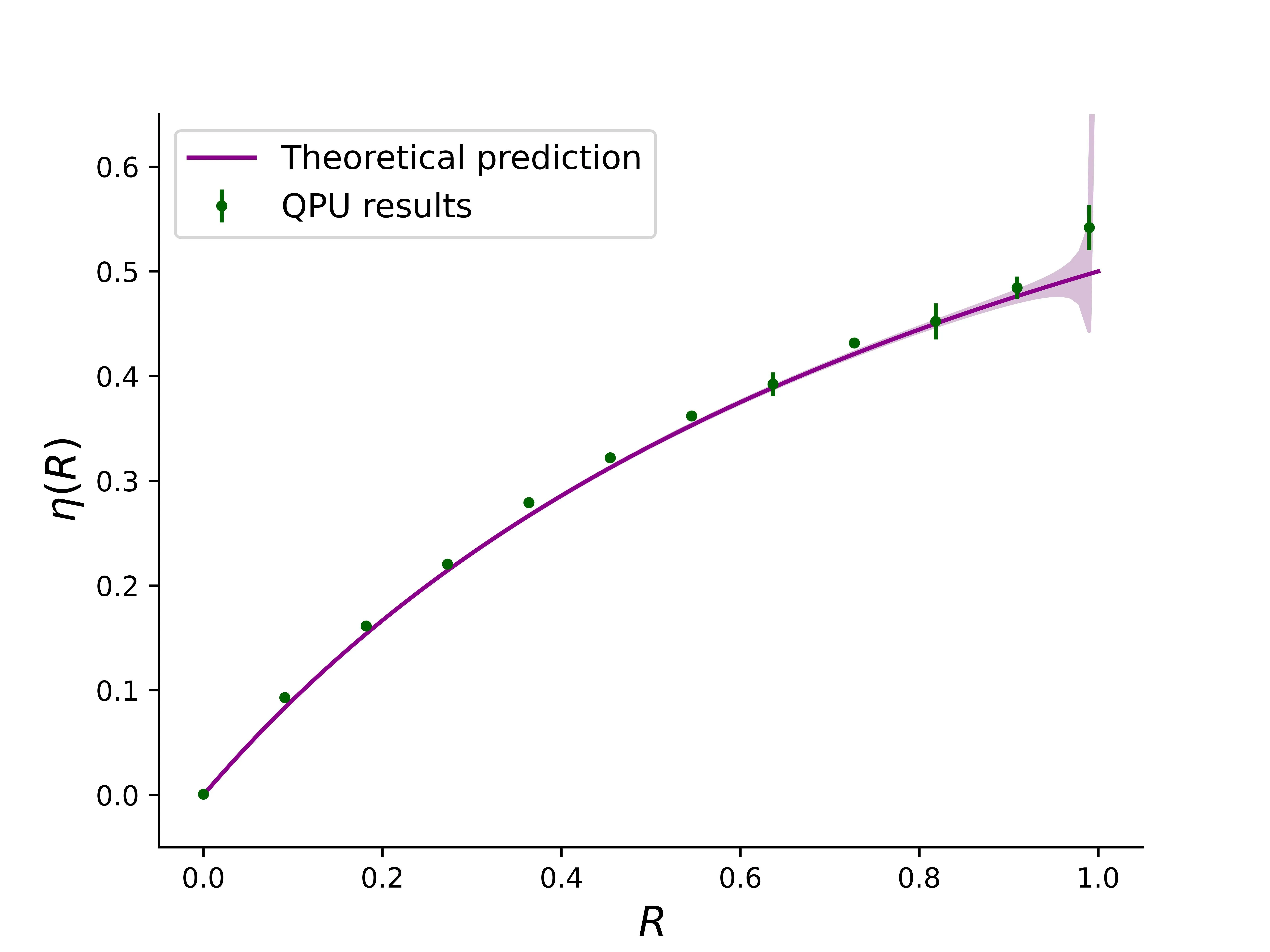
In the new work, the team at Quandela used the cloud-based photonic processor Ascella to send a single photon to check up to five imaginary absorbers in a row. The quantum trick is that the photon is in a superposition, as if it travels along two paths at once. If an absorber sits on one path, it blocks part of the superposition, and the pattern at the detector changes. So one photon, without being absorbed, reports: "something is here." In the experiment, they successfully checked five objects in sequence, with the photon remaining intact with high probability.
Errors, inevitable in real hardware, were carefully corrected, and the results matched theoretical predictions. This means the method can be scaled: a single quantum probe can interrogate a long chain of objects while barely depleting itself. Such an approach could be useful in quantum computing and communication, where it's important to check the state of many cells without destroying them.
In classical physics, to know if someone is in a room, you have to at least peek: that is, "spend" light or sound. In the quantum world, you can get the answer without ever sending a particle inside.