A Stack of Prisms Catches X-rays express
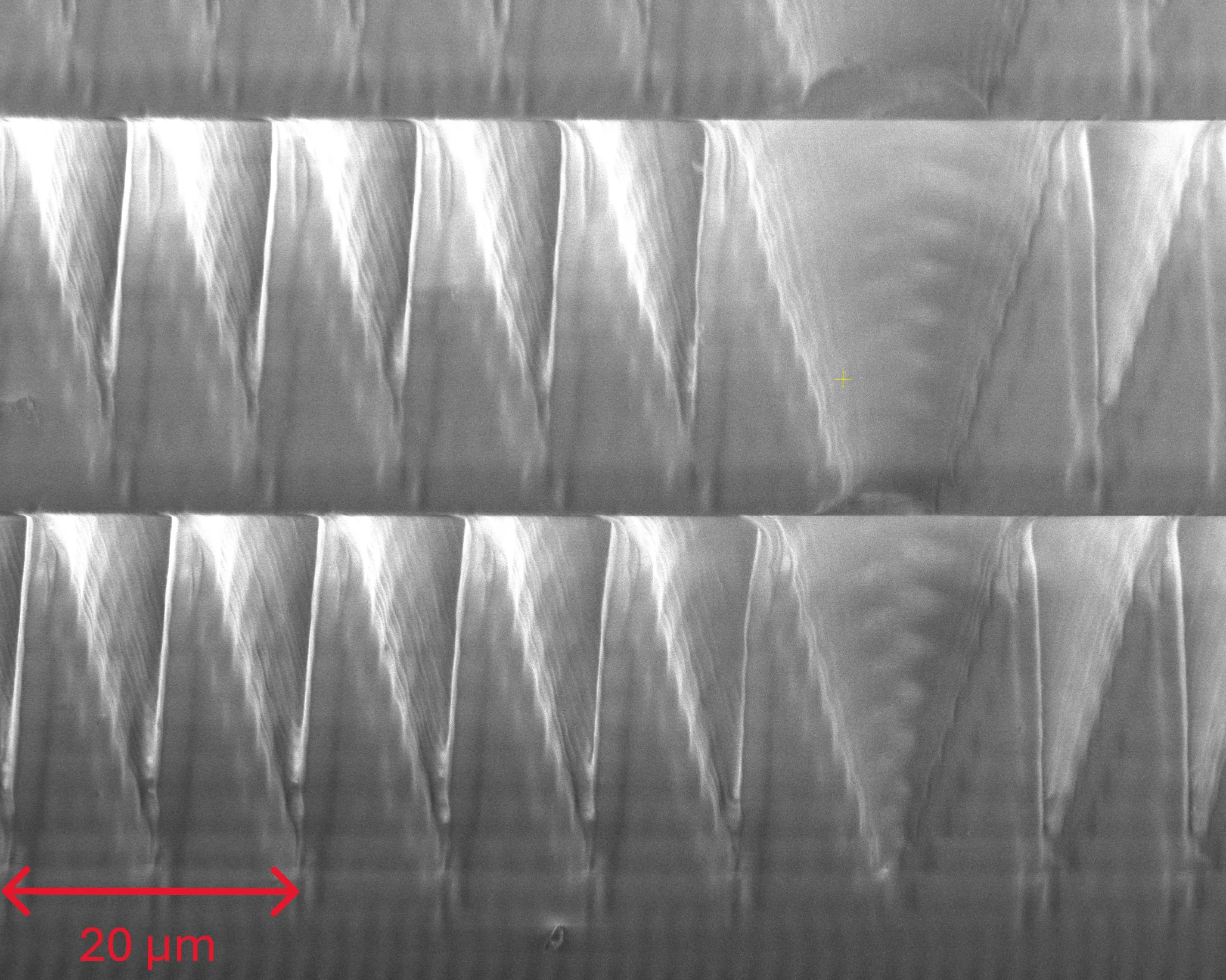
Light from distant stars travels for millions of years, but X-rays can't be caught with ordinary glass: they pass right through it like a bullet through paper. That's why X-ray telescopes need special lenses: stacks of tiny prisms that gently deflect the rays and focus them to a single point.
Previously, each prism was cut one by one, and each came out slightly different, like cookies baked by hand. Now scientists print them with a 3D printer that uses a laser: the beam solidifies liquid plastic in the right spots, creating perfectly even stacks of dozens of prisms. This is faster and more precise than older methods.
Tests showed that the new lenses collect more X-ray light than previous ones. If printing and assembly can be sped up, such lenses could form the basis of lightweight, powerful X-ray telescopes. They could observe black holes devouring matter and stars exploding in distant galaxies.
A stack of prisms is like a staircase for light: each ray climbs the steps and ends up focused at a single point. The more even the steps, the more light reaches the detector. And then the telescope will see what is hidden from us today.
X-rays cannot be focused with an ordinary lens because they barely refract in glass. That's why telescopes for them are built from many nested mirrors or stacks of prisms that deflect light by only fractions of a degree.