Pulse of Civilization: The Rhythm That Determines Survival express
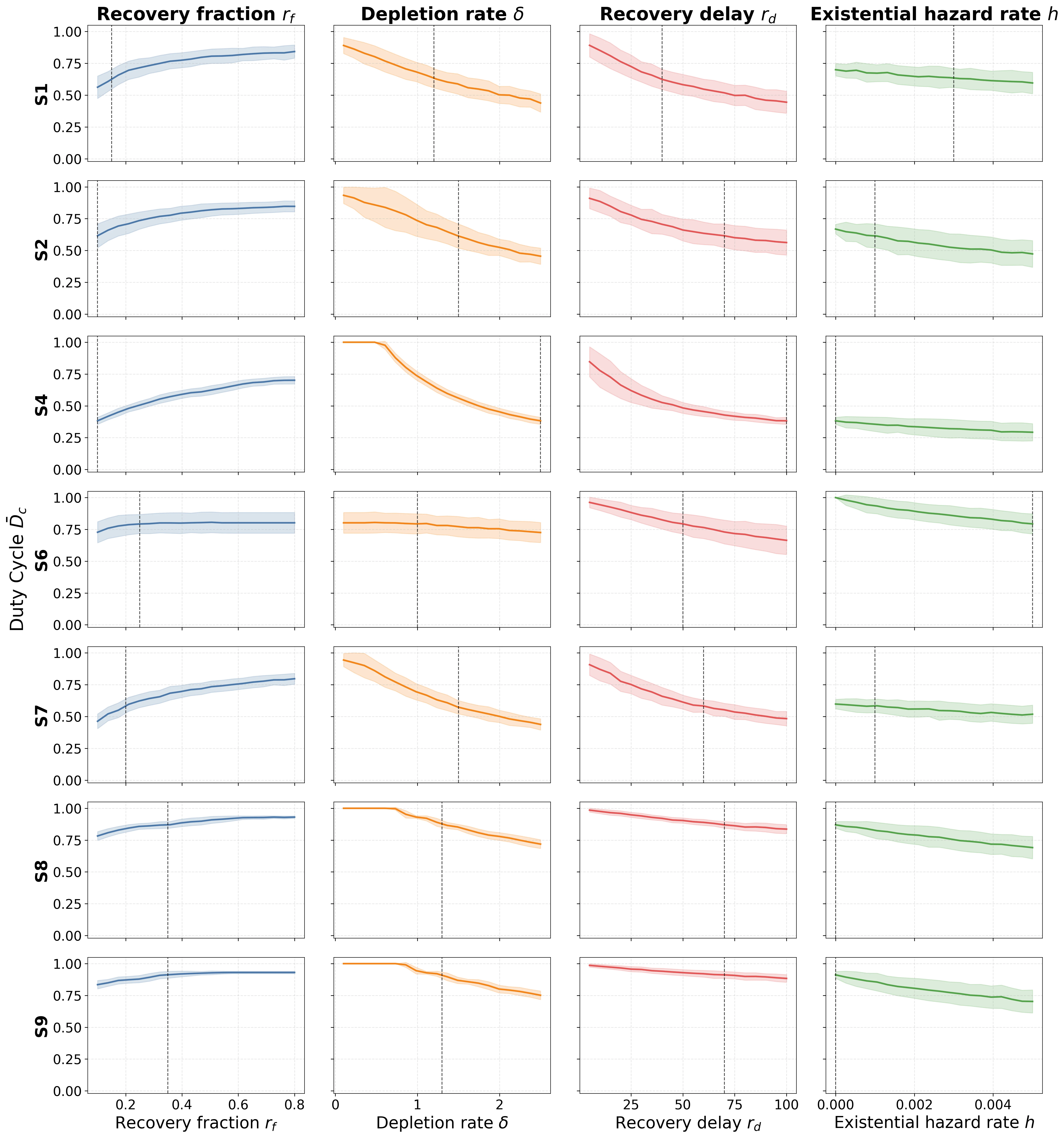
The fate of a civilization isn't just a matter of luck or disasters. Scientists simulated a thousand years of history under ten different scenarios, accounting for resource consumption, governance, and random shocks. The key metric turned out to be the 'activity coefficient' – the fraction of time when a civilization is technologically alive. At best, this fraction nears 100%; at worst, it drops to 38%.
The key levers are the speed at which we deplete resources and the ability to preserve knowledge for recovery. Even a slight shift in these parameters stretches active phases over centuries. Here lies the answer to the cosmic silence: civilizations on planets around other stars (exoplanets) might spend most of their time in sleep mode. Their beacons rarely light up, and by the time a signal reaches us at the speed of light, they may have gone dark again. Radiation analysis must account for this intermittent pulse, or we risk missing even the closest voices in the galaxy. Enrico Fermi might be surprised: perhaps space isn't empty, but simply sleeping peacefully.
Original abstract
as written by the authors arXiv:2604.13774
How long a technological civilization remains active, and what determines whether it collapses or persists, is a central question for both projecting humanity's future and assessing the prevalence of detectable intelligence in the galaxy. We model collapse-recovery dynamics across ten plausible futures for Earth-originating civilization using a hybrid deterministic-stochastic simulation over a 1000-year window. The duty cycle, defined as the fraction of its total lifespan that a civilization is technologically active, ranges from ~0.38 to 1.00, with trajectory outcomes shaped by the interplay of governance structure, resource pressure, and hazard exposure. Several model parameters map onto actionable resilience levers, and modest improvements can qualitatively alter long-term trajectories. Sensitivity analysis reveals that the resource depletion rate and the post-collapse recovery fraction are consistently the most impactful levers across scenarios, suggesting that reducing resource consumption may be at least as important as mitigating existential hazards for avoiding civilizational collapse. We discuss implications for Earth's civilizational resilience and for the search for extraterrestrial technosignatures. We also derive an effective detectability duration that accounts for intermittent civilizational activity, and show that the apparent absence of extraterrestrial signals may reflect the prevalence of low-duty-cycle civilizations rather than the rarity of intelligent life.
If the active phase takes up only 38% of the time, the chance of randomly hearing such a civilization is no higher than winning at roulette by betting on a single number.
In Isaac Asimov's 'Foundation,' mathematicians calculated the fall of the galactic empire and sought to shorten the dark ages – a task almost copied from this scientific model.