How to Catch a Molecule's Jitters express
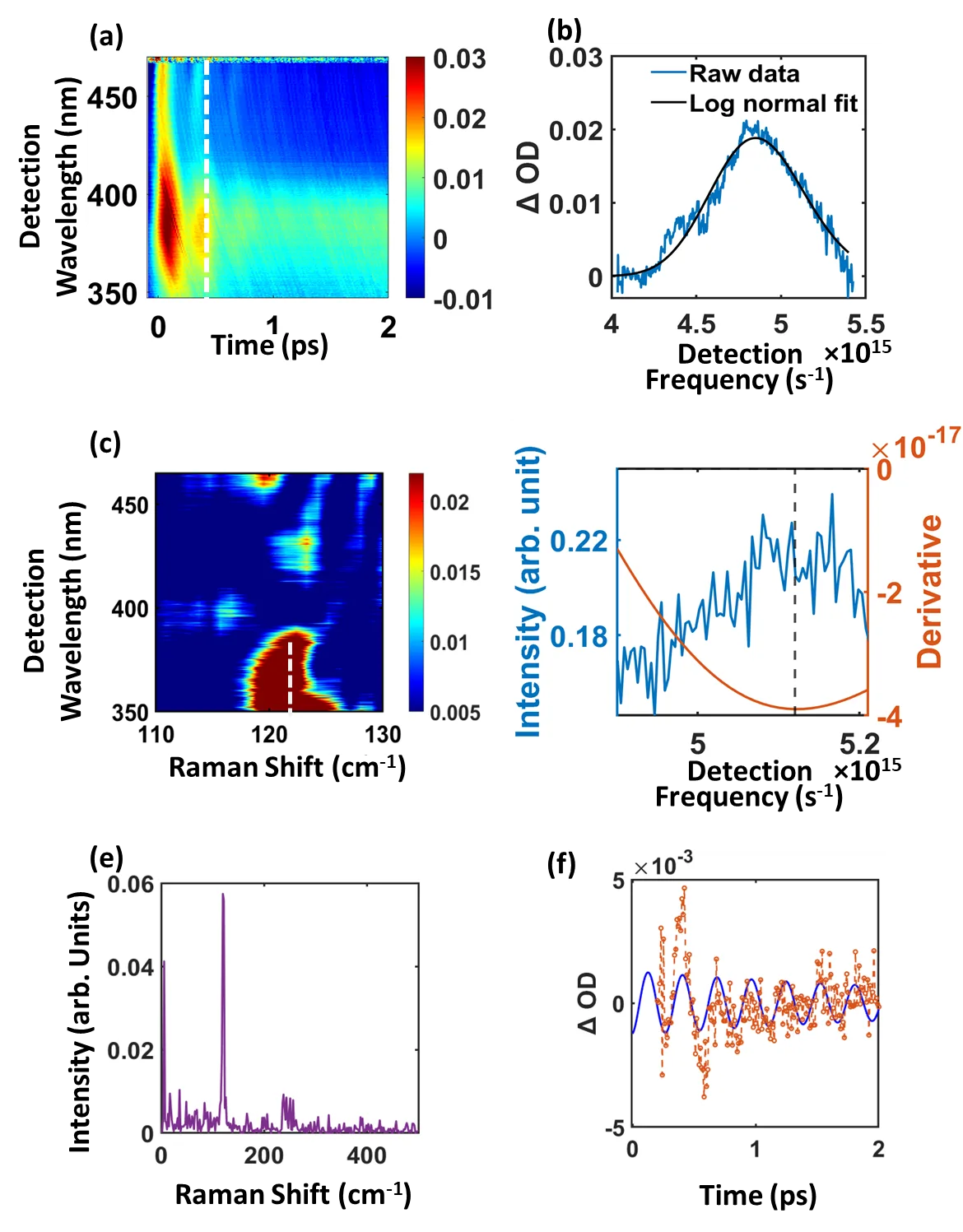
A short laser pulse hits an iodine molecule, and its atoms start to vibrate like a ball on a spring. Scientists track these vibrations with a second, broadband pulse that captures a spectrum at different moments in time.
It turns out that vibrations in the excited B state quickly shift in frequency and fade out, and then vibrations appear in the A state. It's like a relay race: the molecule falls apart, but the solvent, like a cage, holds the fragments close together, and they recombine, passing the vibrational energy on to a new state.
Wavelet analysis, mathematical 'microscopes' for frequencies, revealed how vibrational frequencies change from picosecond to picosecond. This helps separate signals that overlap in a regular spectrum.
This approach is like a stethoscope that hears not just a heartbeat but every rustle in the chest. It opens the door to studying coherence in complex photochemical processes.
Iodine in solution looks purple, but its vapor is blue-violet; the color depends on how the molecules interact with their surroundings.