A Drug That Switches On with Green Light express
The light bulb turns on only in the room where you need it. That's roughly how photoactivatable drugs work: they 'switch on' only where light is directed, leaving the rest of the body untouched. This is especially important in cancer treatment: conventional chemotherapy hits all dividing cells indiscriminately, causing severe side effects. But here, you can illuminate just the tumor, and the drug goes to work.
Creating such a drug is no easy feat. The molecule must be stable in the dark, activate quickly in light, and bind tightly to its target protein — in this case, PARP1, which helps cancer cells repair their DNA. To avoid manually screening millions of options, the scientists built a computational pipeline. First, they virtually 'docked' 5 million molecules to the protein and selected those that bind differently in the dark versus light. Then, using machine learning, they predicted their color, stability, and efficacy. In the end, they synthesized 10 of the most promising candidates and tested them in the lab.
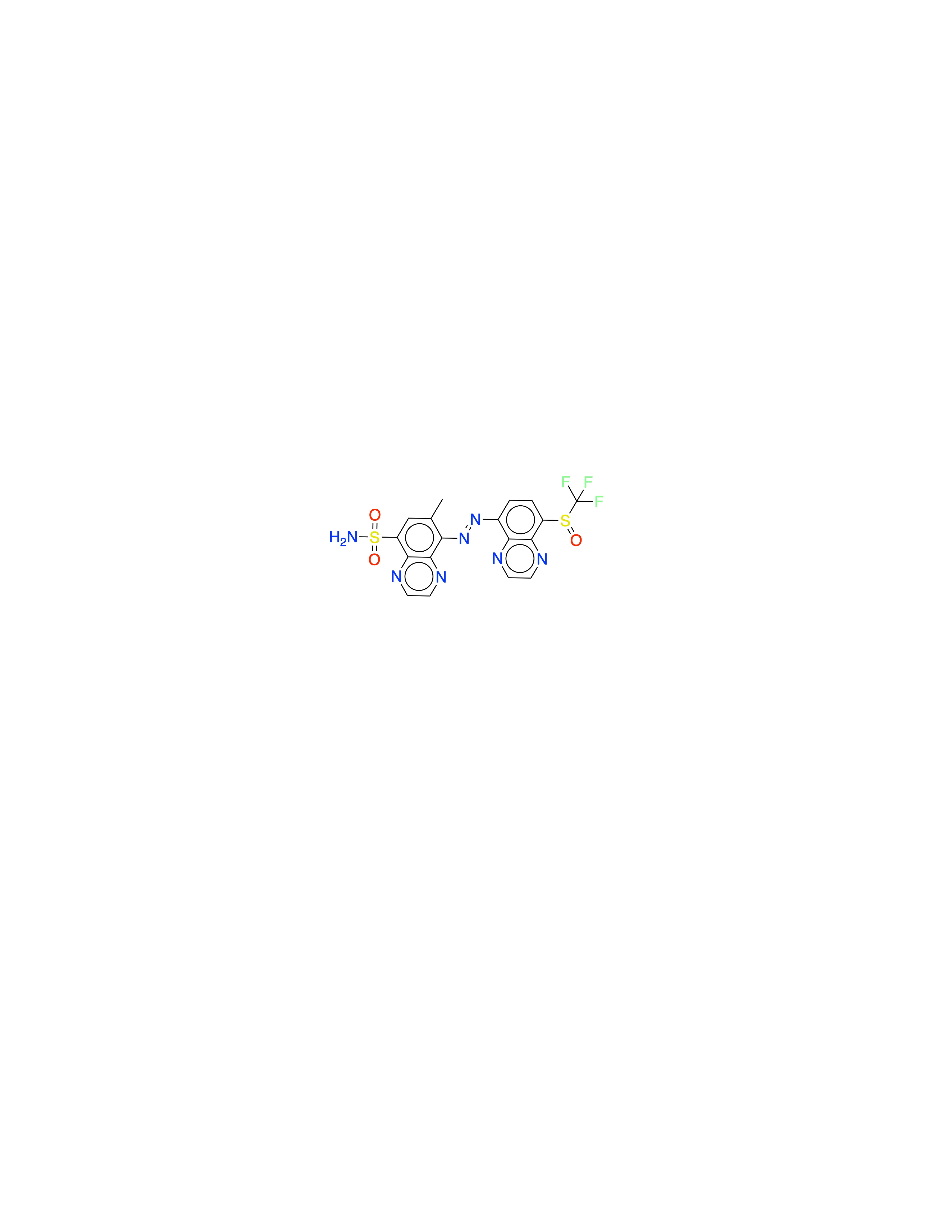
The best molecule showed a 15-fold increase in PARP1 inhibition when exposed to green light (519 nm). It's like a switch that only turns under light: in the dark, the drug barely works, but when illuminated, it actively suppresses the protein. There is a catch, though: in an aqueous environment, like inside a cell, the molecule quickly loses its active form. But the approach itself (combining computational screening, quantum chemistry, and machine learning) paves the way for more precise and safer drugs of the future. And then the light bulb will turn on exactly where it's needed, without any extra light.
Original abstract
as written by the authors arXiv:2604.24634
Light-activated drugs are a promising way to treat localized diseases for which existing treatments have severe side effects. However, their development is complicated by the set of photophysical and biological properties that must be simultaneously optimized. Here we used computational techniques to find a set of promising candidates for the photoactive inhibition of the poly(ADP-ribose) polymerase 1 (PARP1) cancer target. Using our recently developed methods based on atomistic simulation and machine learning (ML), we screened a set of 5 million hypothetical photoactive ligands. Our workflow used protein-ligand docking to identify candidates with differential PARP1 binding under light and dark conditions; ML force fields and quantum chemistry calculations to predict p$$K_\mathrm{a}$$, absorption spectra, and thermal half-lives; graph-based surrogate models to screen additional compounds; excited-state nonadiabatic dynamics with ML force fields to estimate quantum yields; and free energy perturbation (FEP) to refine binding predictions. From these predictions, we prioritized a small set of synthetically feasible candidates expected to have red-shifted absorption spectra, thermal half-lives on the order of seconds to minutes, and isomer-dependent PARP1 binding under visible-light control. We synthesized 10 candidates and experimentally characterized their photobehavior and PARP1 inhibition constants. Among the validated compounds, \textbf{1} showed a 15-fold increase in inhibition of PARP1 upon green-light irradiation at 519 nm (208.8 $$\pm$$ 28.3 $$\mu$$M vs 14.4 $$\pm$$ 1.9 $$\mu$$M). These results validate the computation-guided screening strategy for identifying red-shifted PARP1 photoinhibitors, while also underscoring current limitations such as rapid thermal relaxation in aqueous media.
Photoactivatable drugs are reminiscent of photochromic glasses that darken in the sun: in both cases, molecules change shape under light, but here that change is used for therapy.
The idea of light-activated drugs echoes the 'medical tricorder' from Star Trek, where treatment can be directed precisely to the affected area.