Record-Breaking Cloud: How TMC-1 Doubled Our Chemical Inventory express
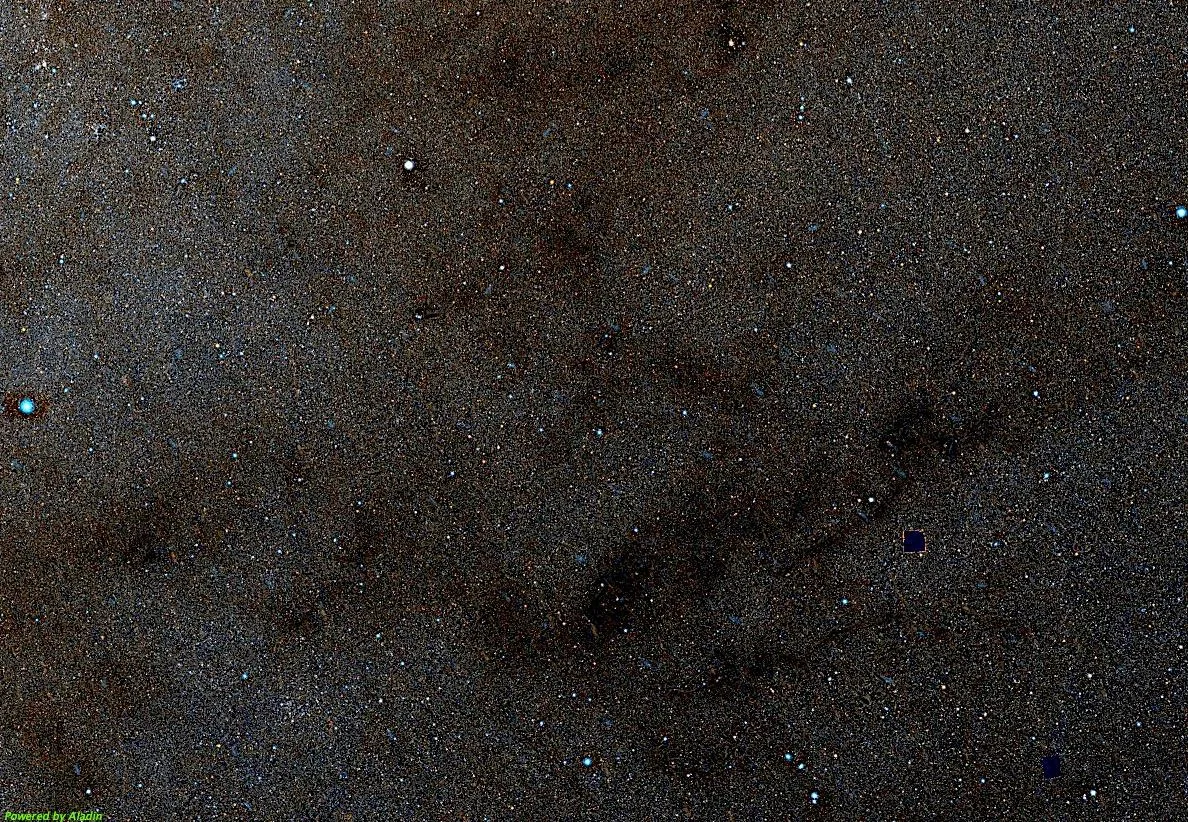
A giant cloud of gas and dust, so cold that its warmth barely flickers, just a few degrees above absolute zero. This is TMC-1 in the constellation Taurus, one of the darkest and densest cradles of molecules in our Galaxy. In recent years, it has become a true treasure trove for astrochemists: the number of substances found there has more than doubled.
All thanks to two projects that listened to the cloud in different voices. One of them, QUIJOTE, worked like a sensitive radio receiver tuned to the 31–50 GHz range, using a 40-meter antenna in Yebes. It caught faint "notes"—the emission lines of molecules, each sounding at its own frequency. This allowed them to identify a host of organic compounds, including long carbon chains.
But the most intriguing part is the failure. Chemical models, which usually predict cloud compositions quite well, are stalling here. Especially when it comes to polycyclic aromatic hydrocarbons — flat molecules made of carbon rings, resembling honeycombs. Where they come from in such cold and darkness is still unclear. It's like a chef who strictly follows the recipe, yet the dish still turns out with an unexpected ingredient.
Perhaps unknown chemical pathways are at work in this darkness — for example, reactions on the surfaces of dust grains, where atoms meet and stick together like passengers in a crowded subway car. Or perhaps the dust grains themselves act as tiny factories, accelerating processes that would crawl in empty space. TMC-1 reminds us that even in the coldest, seemingly simplest environments, the Universe knows how to surprise.
Original abstract
as written by the authors arXiv:2604.26439
In recent years, the obsessive interest in the observation of TMC-1 has brought a boost in our knowledge of the chemistry of cold dark clouds. The number of molecules detected in this particular cloud has been more than doubled. Two observational programmes, GOTHAM and QUIJOTE, are responsible for this spectacular achievement. Here we provide an overall view of QUIJOTE, which is a line survey carried out in the Q band (31-50 GHz) with the Yebes 40m radiotelescope, summarize the actual observational status of TMC-1, and discuss the chemistry of this remarkable source. We highlight the successes and failures of state-of-the-art chemical models to describe its chemical composition, with a particular emphasis on the origin of PAHs, which is yet far from being understood.
TMC-1 is so cold, around 10 kelvins, that most molecules there are literally frozen into ice on the surfaces of dust grains. Only the lightest ones, like carbon monoxide, remain in the gas and betray themselves by faint emission.
In Fred Hoyle's novel "The Black Cloud," an intelligent gas cloud arrives at the Sun, and its chemistry turns out to be the key to communication. TMC-1 is certainly not intelligent, but its chemical richness also forces us to reconsider the boundaries of the possible.