X-ray passports for habitable worlds
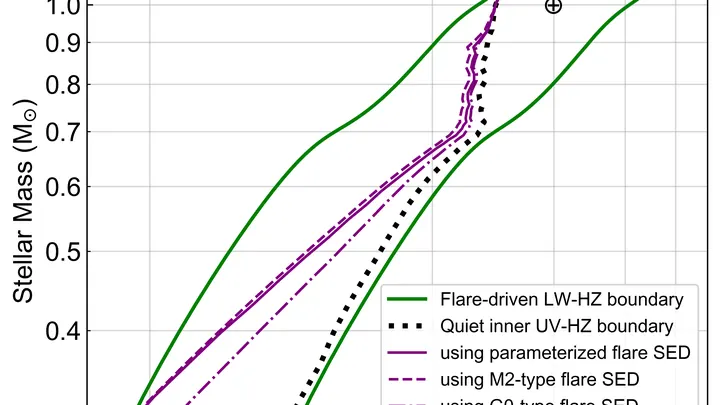
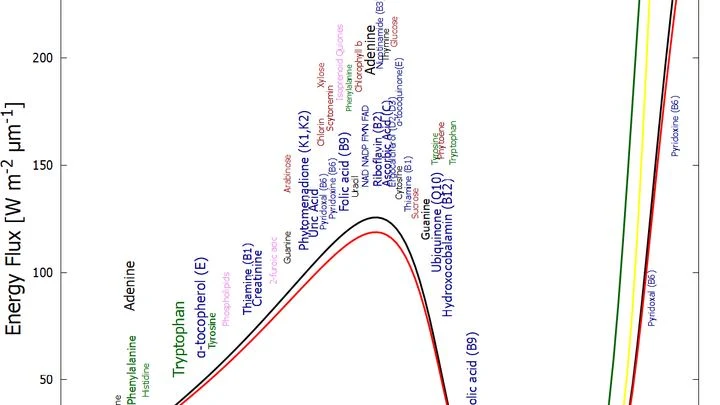
Twelve stars have received X-ray passports. Now, for each of them, we know the exact radiation dose received by a planet in the habitable zone, the region where liquid water is possible.
Chemical reactions driven by light, particularly ultraviolet radiation from a host star.Photochemistry is the branch of chemistry concerned with chemical reactions initiated by light absorption. In an astronomical context, it often refers to processes driven by ultraviolet radiation from a host star, which can break molecular bonds, ionize atoms, and drive the formation of complex molecules. This is crucial for understanding planetary atmospheres, the origin of life, and the habitability of exoplanets.
The field began in the early 19th century with observations of light-induced reactions, but the modern quantum understanding developed in the 20th century, with key contributions from scientists like Giacomo Ciamician and later Gerhard Herzberg.
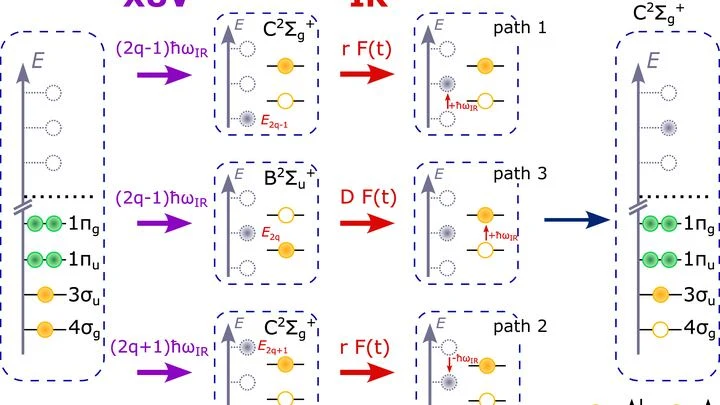
When a molecule absorbs a photon, it gains energy and enters an excited electronic state. This excited state can undergo reactions that are inaccessible in the ground state, such as bond breaking or electron transfer. The energy of the photon must match the energy difference between molecular states. In planetary atmospheres, UV light from the star can split water vapor into oxygen and hydrogen, or drive the synthesis of organic molecules from simple gases.
Photochemistry is used in solar energy conversion, photodynamic therapy for cancer, and the production of vitamin D in the skin. In astrobiology, it helps model the chemistry of exoplanet atmospheres and the potential for life.
The ozone layer in Earth's atmosphere is created by photochemistry: UV light splits oxygen molecules, and the resulting atoms combine to form ozone.