Astrochemical spectroscopy is the use of spectroscopic techniques to identify and study molecules in space, from interstellar clouds to planetary atmospheres. By analyzing the light absorbed or emitted by these regions, astronomers can determine their chemical composition, temperature, and density. This field has revealed the presence of over 200 molecules in the interstellar medium, including complex organic species that are precursors to life, and has shown that the chemistry of space is far richer than once imagined.
History
The first interstellar molecules (CH, CN, and CH+) were detected in the 1930s and 1940s, but the field expanded rapidly after the discovery of the first polyatomic molecule, ammonia, in 1968.
How it works
Molecules in space absorb and emit light at specific frequencies corresponding to their rotational and vibrational transitions. When light from a background star or the cosmic microwave background passes through a molecular cloud, the molecules imprint their unique spectral fingerprints on the light. By comparing the observed spectrum with laboratory measurements, astronomers can identify which molecules are present and estimate their abundances. Radio telescopes are particularly useful for detecting rotational transitions of molecules in cold clouds, while infrared spectroscopy probes vibrational modes in warmer regions.
In practice
Astrochemical spectroscopy is used to map the distribution of molecules in star-forming regions, study the atmospheres of exoplanets, and search for potential biosignatures in space.
Fun fact
The molecule glycolaldehyde, a simple sugar, has been detected in interstellar space, suggesting that the building blocks of life can form in the cold, dark regions between stars.
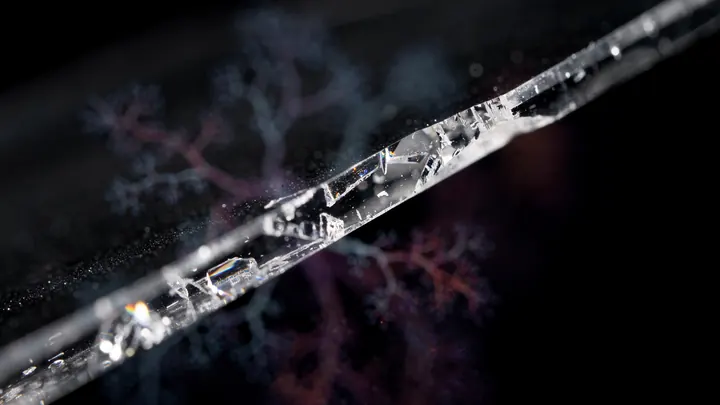
In the coldest, darkest corners of space, dust grains get covered in ice, like a window on a frosty day. This ice isn't just frozen water: it also contains carbon monoxide and carbon dioxide. From such ice, comets and planets may eventually assemble. But until now, it was unclear how the dust grain itself affects the ice that forms on it.
Imagine a packed orchestra, each musician playing their own part, while you try to pick out the quiet voice of a rare flute: its melody drowns in the sound of violins and trumpets. That's what hunting for molecules in interstellar clouds is like: telescopes pick up the 'radio voices' of countless substances, and picking out the signal you want from the noise is no easy task.
For nearly half a century, astronomers have been searching for glycine, the simplest amino acid and one of the fundamental building blocks of proteins, in the interstellar medium.
A giant cloud of gas and dust, so cold that its warmth barely flickers, just a few degrees above absolute zero. This is TMC-1 in the constellation Taurus, one of the darkest and densest cradles of molecules in our Galaxy. In recent years, it has become a true treasure trove for astrochemists: the number of substances found there has more than doubled.
The smell of fresh bread unmistakably signals a nearby bakery. But to know if baking is happening right now, it's better to catch not the aroma itself but its intensification — the continuous stream of hot air from the oven. This everyday analogy helps grasp a revolution in the search for extraterrestrial life on exoplanets — planets beyond our solar system.
A pathologist stains a tissue section with hematoxylin and eosin — cells turn blue and pink, and under the microscope you can see their shape and arrangement. But which genes are active in each cell cannot be read from such an image. That requires a separate, expensive assay that reveals the activity of thousands of genes at once, but it is rarely performed.
Every molecule is like a set of building blocks: the same pieces can be assembled in different ways. Two assemblies with the same atoms but different geometry are called isomers. If one can be turned into the other by a simple rotation around a bond, they are conformers, like a bent arm versus a straight one.
Radio telescopes detected emissions from the celestial object G358.93-0.03 MM1 — a hot cocoon inside which a massive star is igniting. Within that glow, lines of glycolamide appeared, a delicate carbon molecule.
Long before a star ignites in a gas cloud, chemical life is already bustling. In cold, dense clumps of gas, called starless cores, atoms stick together to form molecules, both simple and complex. To peer into this invisible kitchen, astronomers aimed a 40-meter radio telescope in Yebes at 23 such clouds in the Orion Nebula.
Comet 3I/ATLAS was spotted when it entered the Solar System from interstellar space. The James Webb Telescope split the light from its gas cloud into a rainbow, a spectrum, and in this pattern, the lines of rare molecules with deuterium (heavy hydrogen) appeared.
A scanning tunneling microscope probes a molecule with an ultra-fine tip and maps its relief. But the image is flat, while the molecule is three-dimensional. How do you guess a person's pose from their shadow on a wall?
In a kitchen where you're simultaneously boiling soup, frying meat, and baking bread, everything happens in one pot. That's roughly what the central molecular zone (CMZ) looks like — a dense clump of gas at the very heart of the Milky Way.
When a chef prepares a dish, not only the proportions of ingredients matter but also their total amount. Two pies with the same sugar-to-flour ratio but made from different batch sizes will turn out differently. So it is with disks around young stars: carbon and oxygen are the key 'spices,' and their absolute amounts change the look of the cosmic 'kitchen' no less than their ratio.
In dark, cold clouds where stars are just beginning to form, dust grains put on icy coats. This ice is not just frozen water: it contains dissolved carbon dioxide, methanol, ammonia, and other molecules.
Dark matter is like an invisible glue that holds galaxies together. It emits no light, but if its particles collide, gamma rays can flash. Scientists hunted for such flashes in dwarf galaxies — small stellar clusters with lots of dark matter and almost no ordinary matter.
Magnetic fields are all around us, from the compass in your phone to the MRI machine at the hospital. To measure them with high precision, you need special materials that respond to the slightest changes in the field. One such material is molecular crystals, where electron spins, think of them as tiny tops, can hold their state for a long time.
In cold clouds of interstellar gas, carbon hides inside carbon monoxide (CO) molecules, like sugar dissolved in tea. But near hot, massive stars, this 'tea' boils: harsh radiation tears the molecules apart, and carbon escapes as lone atoms or ions.
In a cold gas cloud right at the center of our Galaxy, designated G+0.693-0.027, hides a true chemical laboratory. There, far from stars, on the surfaces of tiny dust grains, about the size of smoke particles, atoms stick together into molecules, like dough on a kitchen counter.
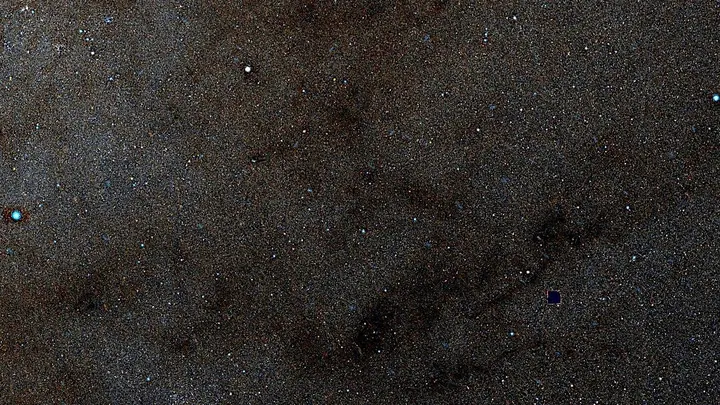
At the center of our Galaxy lies a dense forest of dust and gas. Starlight barely penetrates this thicket, like a flashlight in fog. But it is precisely there, in this dense cloud, that new stars are born.
Scientists decided to look into this fog. They took light from 15 bright stars that shine through cold clouds.
Astronomers read the history of galaxies by their portraits. Previously, they used either lengthy analysis of light by colors or quick filtered snapshots, losing the details of shape.
A century ago, magnetic observatories recorded only the slow breathing of Earth's core. Today, their data have become hunting grounds for particle physics. At the Eskdalemuir Observatory in northern England, fluctuations of the magnetic field are recorded every hundredth of a second.
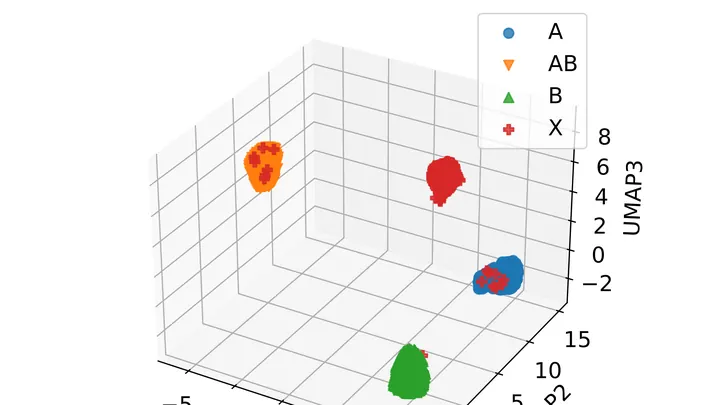
Like long-distance runners, atomic nuclei, from light helium to heavy iron, race toward us across the Galaxy. At the finish line, in a detector on a high-altitude balloon, we see that heavy nuclei arrive a bit more exhausted than light ones. The difference is small, but it repeats from flight to flight.