The Hidden Light of Young Galaxies express
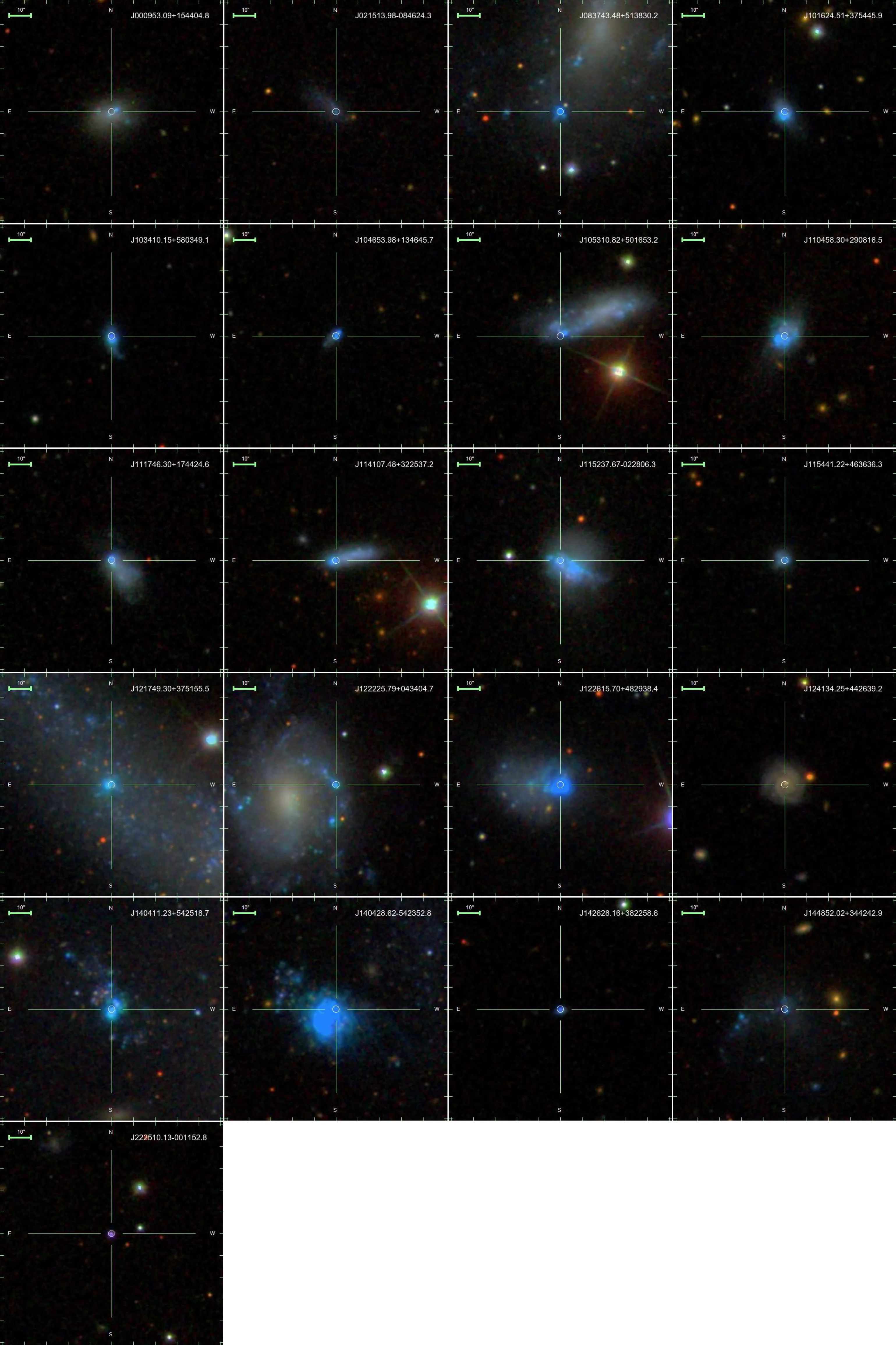
A dim lightbulb suddenly starts illuminating patterns on the wall that were invisible to the eye. That's roughly how astronomers look at distant dwarf galaxies — tiny stellar islands poor in heavy elements. In some of them, a faint violet glow of ionized helium has been spotted (a specific spectral line He II 4686 Å). To make helium shine like that, you need a powerful stream of extreme ultraviolet, as if someone switched on an invisible spotlight. But what serves as that spotlight has long remained a puzzle.
The main suspects were compact objects greedily devouring matter — for example, black holes or neutron stars in binary systems. Gas falling onto them heats up to millions of degrees and should emit that very hard radiation. A team led by Francesco Sacco tested this idea using the Chandra X-ray Observatory. They gathered data on 21 nearby galaxies where the helium glow had already been seen, but they found no massive Wolf-Rayet stars there — another possible source. The result was unexpected: the X-ray "spotlights" shine on average ten times fainter than needed to explain the observed helium brightness.
So something else must be at play. Perhaps the radiation is born in shock waves from supernova explosions, or in extremely hot but as yet invisible stars stripped of their outer layers. Or maybe we are seeing the traces of the first generations of stars: those that ignited when hydrogen and helium were almost the only elements in the universe. Either way, dwarf galaxies with helium glow turn out to be windows into the universe's youth, where the usual rules of star factories didn't yet apply. Now astronomers need to find that hidden spotlight, and then the dim bulb of our understanding will shine a little brighter.
The He II 4686 Å line is so energy-hungry that producing it requires photons with temperatures above 100,000 degrees — tens of times hotter than the Sun's surface.
In Stanisław Lem's novel Solaris, the planet's ocean emits a mysterious light that scientists cannot explain — much like the enigmatic helium glow in distant galaxies.