How a Layer Shift Switches on Magnetism express
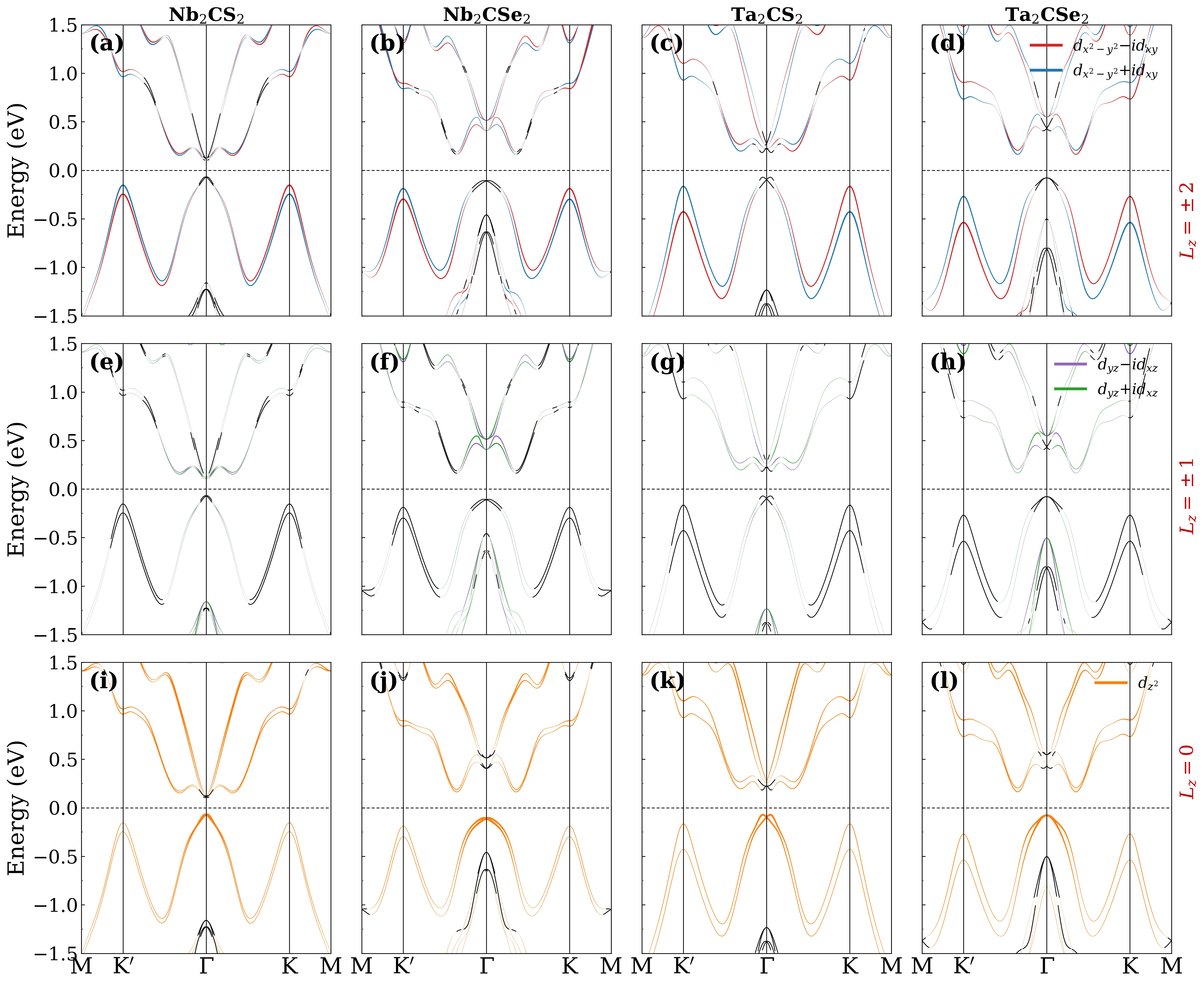
Two ultrathin sheets, resembling mica, lie on top of each other. One shifts by a fraction of a nanometer, and a modest semiconductor turns into a magnet. That's roughly how the materials studied by the authors work: layered compounds of niobium and tantalum with sulfur or selenium.
In their normal state, these films conduct current but show no magnetic properties. However, the picture changes when they are placed on a substrate of chromium bromide — a substance that is itself a magnet. The boundary between layers starts acting like a translator: it transfers magnetic order from the substrate to the film without letting them mix. A field emerges that can sort electrons by their spin, as if a turnstile let through only people with left or right rotation.
The most unexpected discovery concerns how the layers are arranged relative to each other. If you shift the top sheet sideways, like sliding a box lid, not only the distance between atoms changes, but the entire electronic structure. In one position, the material remains an ordinary insulator. In another, it becomes a topological insulator: current flows only along the edges, without resistance. This is like a highway where cars glide without friction, but only in the outer lanes.
Such a mechanical "toggle" opens the door to devices where information is written not by an electric field but by a simple shift. Magnetic order can be switched on and off by changing the magnetization direction of the substrate, like flipping a magnet on a fridge changes the pattern of field lines. And a layer shift allows smooth tuning of properties, like a rheostat in an old lamp.
These films are not just a laboratory curiosity. They combine strong spin–orbit coupling, sensitivity to magnetism, and mechanical flexibility. Three properties that used to occur separately now work together. This is what makes them candidates for spintronics — electronics where the information carrier is not charge but electron spin.
Shifting the top layer by one-tenth of a nanometer changes the electric current the material produces under light by nearly four times — from 5 to 18 arbitrary units.
In Arthur C. Clarke's novel "Childhood's End," aliens manipulate matter at the atomic level — much like a layer shift controls magnetism in these films.