Sound Trap in a Superfluid ✎ express
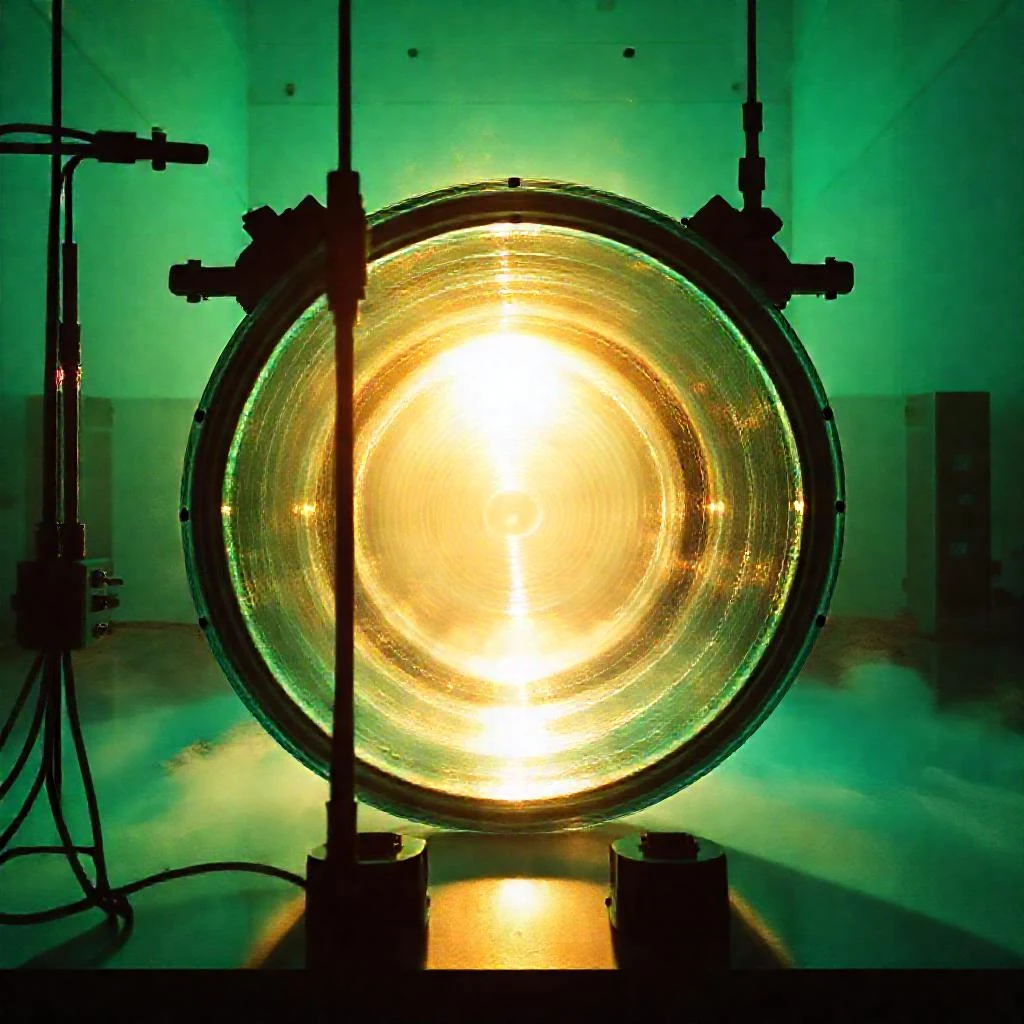
Sound travels through a medium at a certain speed. If the medium moves faster, the sound gets swept along by the flow — like a wood chip pulled into a whirlpool. In superfluid helium — a frictionless liquid — rapid rotation spawns vortex funnels. Inside them, an acoustic black hole forms: a region from which sound cannot return.
Researchers added uniform rotation and computed the resonant frequencies — the notes at which the vortex 'sings.' Using vibration analysis, they observed stable wave patterns within the curved space of the funnel.
These calculations help explain superfluid helium experiments and test Hawking’s hypothesis about black hole radiation without ever leaving Earth. Amazingly, the core of each vortex is a quantum thread as thin as an atom: a microscopic trap mimicking the cosmic abyss.
When cooled nearly to absolute zero, superfluid helium can circulate forever in a closed loop without slowing down — that’s the ideal frictionless liquid in action.
In *Interstellar*, the Gargantua black hole twists light; a lab vortex twists sound.