A quantum vortex is a topological defect in a quantum fluid, such as a superfluid, a Bose-Einstein condensate, or a superconductor, where the phase of the quantum wavefunction winds around a central point by an integer multiple of 2π. This winding is quantized, meaning the circulation is always a multiple of a fundamental unit, and the vortex core is a region where the fluid density drops to zero. Quantum vortices are the quantum analogs of classical whirlpools, but they are stable and have a fixed strength.
History
The concept was first proposed by Lars Onsager in 1949 and independently by Richard Feynman in 1955 to explain the rotation properties of superfluid helium. The first experimental observation of quantized vortices in superfluid helium was made in the 1960s, and in superconductors they were predicted by Alexei Abrikosov in 1957, for which he received the Nobel Prize in 2003.
How it works
In a superfluid, the entire fluid is described by a single macroscopic wavefunction. When the fluid rotates, it cannot rotate as a solid body; instead, it forms discrete vortices, each carrying one quantum of circulation. The velocity field around a vortex is inversely proportional to the distance from the core, so the fluid moves faster near the core. In superconductors, vortices carry magnetic flux quanta and are called Abrikosov vortices; they appear when a magnetic field penetrates the superconductor above a critical value.
In practice
Quantum vortices are exploited in superconducting devices, where they can be used as qubits, and in studies of turbulence in quantum fluids. They also play a role in understanding neutron star interiors and in the development of quantum simulators.
Fun fact
In a rotating superfluid, the vortices arrange themselves into a regular triangular lattice, known as the Abrikosov lattice, which can be directly imaged in superconductors using magnetic force microscopy.
A laser pulse slams into a gas cloud and knocks electrons out of it, leaving behind a bubble: a cavity almost devoid of particles. This bubble races through the plasma at nearly the speed of light, and its walls drag along the electrons trapped inside, much like a speedboat tows a water skier.
295 000 meters per second. Not even particles in solar coronal ejecta move that fast. But at the center of the galaxy cluster H1821+643, hot gas does exactly that. The quasar at its heart takes a breath, and its breath stirs everything around for 60 thousand light-years.
At the center of many galaxies lurks an invisible cloud — a halo of dark matter. If this matter is cold and light enough, it behaves like a superfluid: it flows without friction, and any rotation in it twists into tiny quantum vortices — threads the size of an atomic nucleus.
Two-dimensional worlds never cease to amaze: here even crystal melting is not a symmetry breaking but a vortex drama discovered by Kosterlitz and Thouless. At the heart of this theater are topological сингулярности, whose energy and энтропия bargain for order. This language is common to сверхтекучести и сверхпроводимости.
In the quantum world, dark matter particles can merge into a single superfluid droplet — a state where matter flows without friction, like an ideal fluid. When near a black hole, this droplet doesn’t just disappear into it but twists into stable vortices, like water swirling around a rock in a stream.
Sound travels through a medium at a certain speed. If the medium moves faster, the sound gets swept along by the flow — like a wood chip pulled into a whirlpool. In superfluid helium — a frictionless liquid — rapid rotation spawns vortex funnels. Inside them, an acoustic black hole forms: a region from which sound cannot return.
A pot of water has just been stirred: the whirlpools and eddies gradually calm down, and the liquid becomes smooth. A similar process, but in the quantum world, occurs in superfluid helium or in a cloud of ultracold atoms.
According to the Standard Model, the vacuum is not emptiness but an ocean of virtual ghost particles. An ultra-strong electromagnetic field, like a storm, yanks electron-positron pairs into reality.
Water churns behind a rock in a river, air swirls behind an airplane wing: it seems like completely random motion. But the authors of the study found a rigid kitchen recipe in this chaos.
They decomposed the fluid's rotation (angular momentum) into two independent parts.
The void can produce particles if a strong enough field is applied. Physicists call this the Dirac–Klein paradox. Previously, explaining it required the most complex calculations of quantum field theory. But we can make do with a visual image: a tightly stretched rubber band with a knot. The knot is a particle.
In superfluid helium, a vortex is like a tornado in a bottle, but instead of water, it's a quantum liquid that flows without friction. Such a vortex doesn't dissipate on its own, so the question of where its energy goes has long remained open.
A superfluid flows without friction, like water in a perfectly smooth pipe, but the moment it hits an obstacle, the picture changes. In a new study, researchers looked at how a superfluid stream flows around rectangular walls and pits with sharp corners.
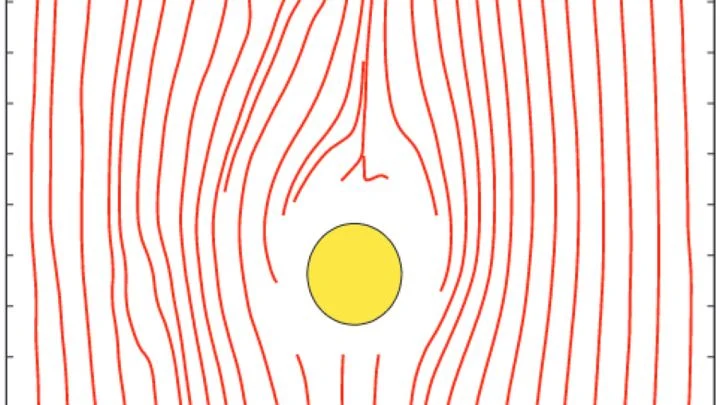
Liquid helium cooled to near absolute zero behaves like two fluids at once: a normal viscous part and a superfluid part that flows without friction. When such a flow hits a cylinder, vortices are born behind it. But sometimes vortices appear in front of the cylinder — where classical laws say they shouldn't be.
A vortex in a superfluid gas is like a whirlpool in a sink: the fluid swirls around an empty core. If you spin such a vortex three times harder than usual, it won't hold: it breaks into three separate whirlpools, much like a thick stream of water splits into droplets.
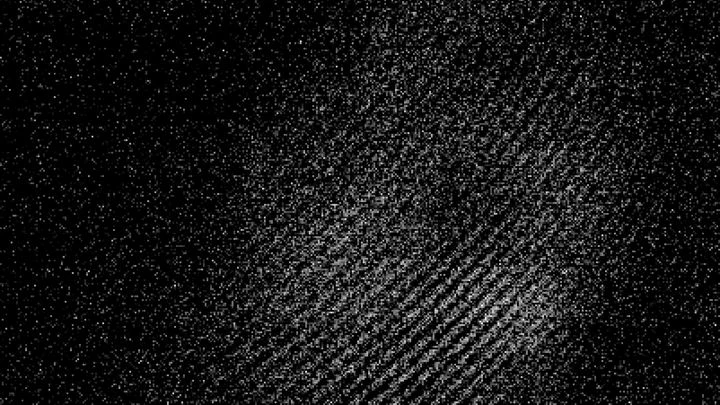
In a container the size of a coin, light behaves like water: it gathers into a single quantum fluid. When energy is added, whirlpools, quantum vortices, spin up on their own. Each vortex is like a tiny whirlpool that cannot simply disappear.
Physicists illuminated this fluid with a laser and took snapshots.
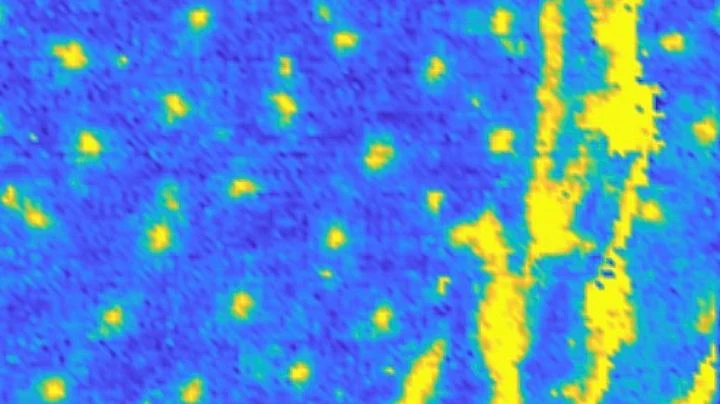
In a superconductor, electric current flows without loss, like water through a perfectly smooth pipe. But if you place such a material in a magnetic field, vortices appear inside — tiny whirlpools where superconductivity is destroyed. As long as these whirlpools stay put, current flows freely.
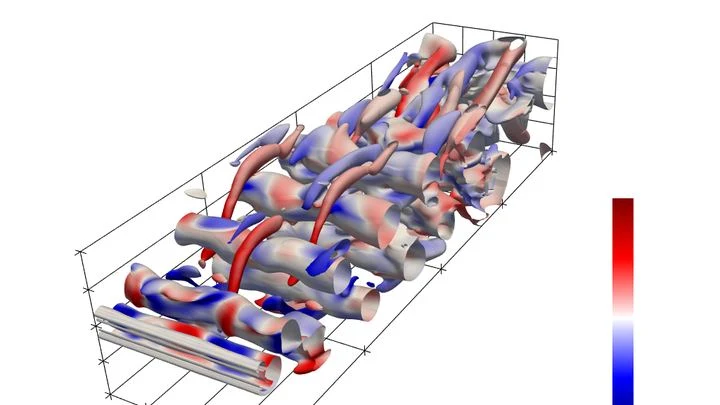
A thin plate stands across a flow of water or air. Behind it, a wake forms — a region where the flow becomes tangled and mixed. Usually, such a wake becomes turbulent when the flow speed is high enough, quantified by the Reynolds number.
A spinning black hole acts like a giant funnel, but instead of just sucking in everything around it, it twists space itself, like a swift river current. New calculations show that in this maelstrom, stable vortices can be born from ultralight particles — likely building blocks of dark matter.
According to the laws of the microworld, an electron obeying the Dirac equation trembles even at complete rest. This is Zitterbewegung — an oscillation with an amplitude of trillionths of a millimeter, like a spinning top on an invisible axis.
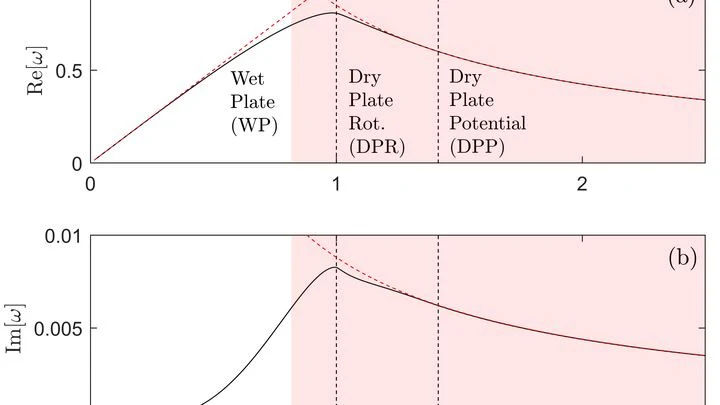
When liquid is swirled in a cup, a vortex with an empty center forms. In this empty core, waves find a trap: bouncing off the walls, they siphon energy from the vortex and grow like a flame along a fuse — each wave stronger than the last, until a surge breaks loose.
Astrophysicists have described the same chain reaction around black holes.