Dust That Never Ages express
A distant galaxy always looks redder than it really is. That's the work of cosmic dust — tiny solid particles that scatter blue light more than red, like haze at sunset. Astronomers measured this effect for tens of thousands of galaxies using two powerful instruments. The ground-based SDSS telescope observed the nearby universe, while the space-based James Webb peered back to an era when the universe was less than a billion years old.
The result is surprising: the degree of dustiness depends not on a galaxy's age but on its mass. Light systems, with masses below a billion suns, are almost transparent — light from ionized hydrogen (gas that has lost its electrons) passes through them like clean glass. But once a galaxy piles on mass above this threshold, the amount of dust jumps sharply. And the growth law is the same for all times: whether today or half a billion years after the big bang, the plot is identical.
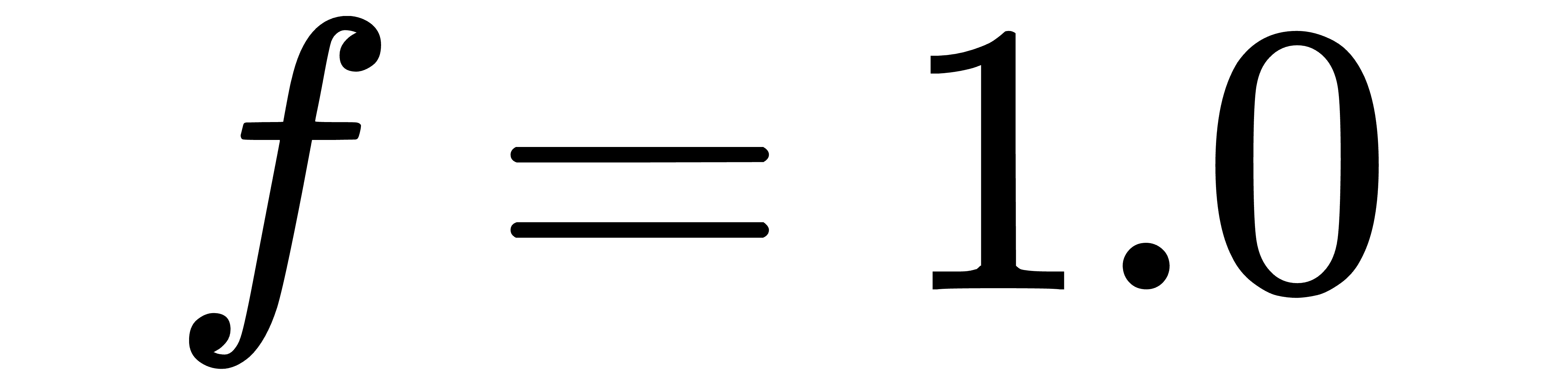
The most interesting part is the difference in how dust dims starlight versus gas light. In small galaxies, both components fade equally. But in large ones, starting at the same threshold of a billion solar masses, the gas light fades noticeably faster than the starlight. The authors suggest that in massive systems, dust gathers into dense clouds where stars are born, and these clouds most strongly block the gas radiation. This resolves a long-standing debate: which ratio to use in calculations—1 or 0.44. The answer depends on mass: for light galaxies, use 1; for heavy ones, use roughly 0.44.
Original abstract
as written by the authors arXiv:2605.23049
We present the demography of dust attenuation, including its mass dependence and redshift evolution, using spectroscopic samples of 34,182 SDSS galaxies at $$z\sim0.1$$ and 863 JWST/JADES galaxies at $$z\sim1.5$$--$$7$$. We find that, on average, $${\rm H\alpha}/{\rm H\beta}$$ ratios are comparable to the Case B recombination value at $$M_\ast \lesssim 10^9 M_\odot$$, and increase beyond $$M_\ast \sim 10^9 M_\odot$$ both at $$z\sim0.1$$ and $$1.5$$--$$7$$. We derive the nebular attenuation $$A_{\rm V, nebular}$$ from Balmer decrements and the stellar attenuation $$A_{\rm V, stellar}$$ from rest-frame UV--optical spectra with supplementary \textit{GALEX} data, via comparisons with stellar-population models and multiple attenuation curves in a consistent manner across cosmic time. We find no significant redshift evolution of $$A_{\rm V, nebular}$$ and $$A_{\rm V, stellar}$$ at fixed $$M_\ast$$ over $$z\sim0$$--$$7$$, forming a universal extinction relation, and both rise from $$0.2$$--$$0.4$$ at $$M_\ast \lesssim 10^9 M_\odot$$ to $$\sim1$$ at $$M_\ast \sim 10^{11} M_\odot$$. Interestingly, at $$M_\ast \gtrsim 10^9 M_\odot$$, $$A_{\rm V, nebular}$$ rises more steeply than $$A_{\rm V, stellar}$$. This correlation holds within an uncertainty of $$\sim\pm0.2$$ for various combinations of attenuation curves (Calzetti, SMC, and Milky Way). These results indicate that $$M_\ast \sim 10^9 M_\odot$$ is a transition mass in dust attenuation, whose low-mass behavior reflects dust widely distributed by feedbacks. These mass-dependent extinction results address the long-standing issue of appropriate choice of the stellar-to-nebular color excess ratio, $$f\equiv E(B-V)_{\rm stellar}/E(B-V)_{\rm nebular}=1.0$$ or $$0.44$$, and suggest that galaxy $$M_\ast$$ determines $$f$$ from $$\sim1.0$$ to $$\sim0.44$$ across low- to high-mass galaxies.
If our Galaxy were completely transparent, the night sky would shine far more brightly, and the Milky Way would cast shadows.
In James S. A. Corey's 'The Expanse,' the protomolecule uses dust as a medium for propagation — similar to how real interstellar dust serves as raw material for new stars.