Glue Inside the Proton express
Inside the proton, life is boiling. Quarks don't just sit there: they're glued together by carrier particles called gluons (from the word glue). Usually, this glue is spread evenly, like butter on a skillet. But when energies become enormous, gluons start clumping together. This is the gluon condensate — an ultra-dense state of the gluon field.
A research team led by Zhu and Shen showed that such a condensate can arise naturally. They relied on an equation that describes how gluons multiply and interact. In this equation, chaotic solutions were found: instead of spreading out, gluons pile up near a certain energy threshold. It's like a traffic jam — particles slow down and accumulate at one point. This effect was named synergy of shadowing and anti-shadowing.
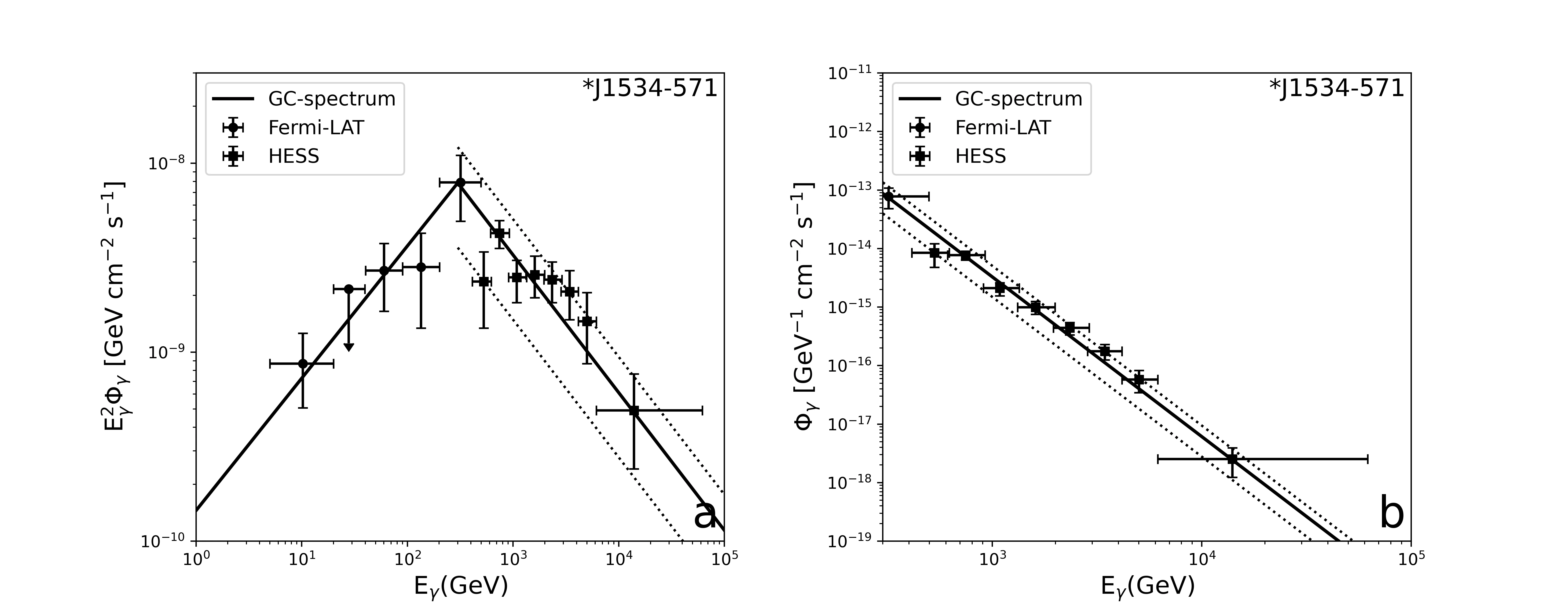
The most unexpected thing is the bridge between worlds. Previously, it was thought that proton physics and high-energy astrophysics were different universes. Now the gluon condensate becomes a translator: what happens inside a tiny proton directly affects the signals that reach us from the depths of space. If this picture is confirmed, many mysterious features of gamma-ray spectra will have to be reconsidered: they may not indicate new particles, but a new state of the same old glue. And that is interesting not only for cosmology, but also for nuclear physics, and even for condensed matter physics.
Gluons, unlike quarks, have never been observed in isolation: they are always confined inside particles, like prisoners. The gluon condensate is one of the few ways to see their collective behavior.
In Bruce Sterling's novel Schismatrix, a civilization manipulates the strong interaction; a gluon condensate could be a tool for engineers reshaping matter at the quark level.