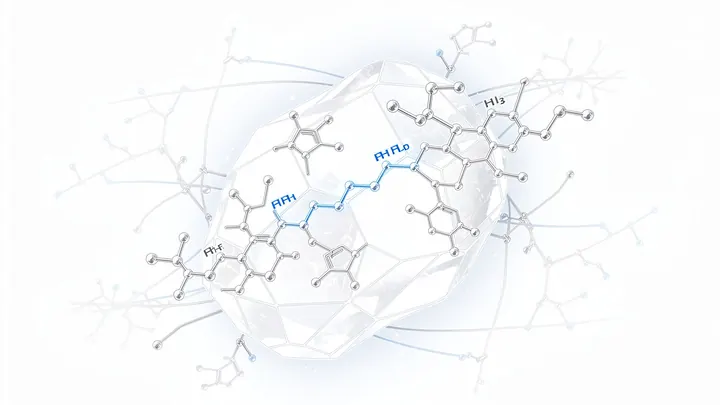
Glycine is the simplest amino acid, a fundamental building block of proteins. In space, it can form from simple molecules like formic acid, which is found in star-forming regions. Its presence in molecular clouds around protostars suggests that the ingredients for life may be widespread in the universe, potentially seeding planets with the raw materials for biology.
History
Glycine was first identified in the laboratory in 1820 by Henri Braconnot, who isolated it from gelatin. Its detection in space has been a gradual process, with the first definitive interstellar detection reported in 2003.
How it works
Glycine forms through chemical reactions in interstellar ices, where molecules like formic acid and ammonia combine under ultraviolet radiation or cosmic rays. These reactions occur on dust grains at low temperatures, producing glycine that can then be incorporated into comets, asteroids, and eventually planets.
In practice
Glycine is used in biochemistry research and as a supplement in cell culture media, and its detection in space informs astrobiology and the search for life's origins.
Fun fact
Glycine is the only amino acid that is not chiral, meaning it has no mirror-image forms, which makes it uniquely simple among protein-building amino acids.
In the black depths of space, on the surfaces of tiny icy dust grains, a quiet construction is underway. There, where temperatures drop to near absolute zero and harsh radiation abounds, the ordinary amino acid glycine, the simplest protein building block, links up with itself.
For years, the Sun teased astrophysicists. In its atmosphere, refractory elements, like spices in a basic recipe, were slightly less abundant than in nearly identical twin stars. Suspicion arose: could our star be modest, skipping the planetary "dessert" that others devour with gusto?
Imagine a forest planted in a single day. At first glance, all trees look alike, but their cross sections tell different stories: some grew on clean soil, others on the ashes of ancient fires.
The galaxy NGC 1277 is like an old book that no one has opened for billions of years. It formed quickly at the dawn of the Universe and has barely changed since — no collisions with neighbors, no new layers added.
The stellar halo of the Milky Way is a galactic palimpsest: an ancient manuscript where earlier layers lie hidden beneath the visible text. For a long time, the Gaia-Sausage-Enceladus (GSE) structure was thought to be the final entry in this manuscript, the scar of a single catastrophic merger.
In the heart of the Milky Way, in the cloud G+0.693, astronomers caught a sweet signal — emission lines of erythrulose, a simple sugar with four carbon atoms and four oxygen atoms.
The young super-Jupiter TWA5B, a scorching ball 25 times Jupiter's mass, floats just fifty light-years away. Its faint infrared glow long hid its chemical makeup. Now, high-resolution spectroscopy with CRIRES+ has registered the ghostly trace of SiO — silicon monoxide.
Inside the proton, life is boiling. Quarks don't just sit there: they're glued together by carrier particles called gluons (from the word glue). Usually, this glue is spread evenly, like butter on a skillet. But when energies become enormous, gluons start clumping together. This is the gluon condensate — an ultra-dense state of the gluon field.
For nearly half a century, astronomers have been searching for glycine, the simplest amino acid and one of the fundamental building blocks of proteins, in the interstellar medium.
Titan is a cold world with methane lakes and a dense orange atmosphere. But beneath the icy crust, warm puddles may hide, formed after meteorite impacts. In such a puddle, like a chemical flask the size of Selk Crater, simple gases from the air, hydrogen cyanide and acetylene, mix.
A chemical detective searches for life on other planets. Its tool is a mass spectrometer that identifies molecules by weight (the same device earthly forensic scientists use to analyze clues).
Radio telescopes detected emissions from the celestial object G358.93-0.03 MM1 — a hot cocoon inside which a massive star is igniting. Within that glow, lines of glycolamide appeared, a delicate carbon molecule.
At the dawn of Earth, about four billion years ago, the planet was a harsh place: a dim sun, frequent asteroid impacts, and air without oxygen. Under such conditions, the first steps of life seem almost impossible.
A scanning tunneling microscope probes a molecule with an ultra-fine tip and maps its relief. But the image is flat, while the molecule is three-dimensional. How do you guess a person's pose from their shadow on a wall?
In a cloud where massive stars are being born, there is a hot, dense core. Like a crowded kitchen where the heat of the stove makes smells evaporate, here the warmth from young stars evaporates molecules from the surface of cosmic dust grains.
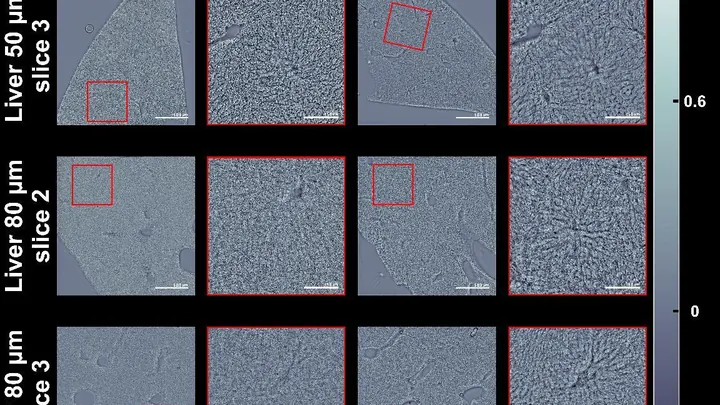
A thick slice of tissue under a microscope looks like fogged glass: light scatters and details are lost. Usually, to see cells, you stain them or cut them into very thin slices. But there's a simpler way — make the slice itself transparent, as if you've wiped the glass clean.
In dark, cold clouds where stars are just beginning to form, dust grains put on icy coats. This ice is not just frozen water: it contains dissolved carbon dioxide, methanol, ammonia, and other molecules.
In the dark, cold clouds where stars are born, dust grains are covered with an icy crust. Across this crust, like on a winter road, individual atoms wander slowly. Calculations show that it is precisely these wandering oxygen and nitrogen atoms that kick off the assembly of the HNSO molecule — a compound of hydrogen, nitrogen, sulfur, and oxygen.
Astronomers using James Webb and spectroscopy (splitting light into colors) peered through dust into the center of galaxy IRAS 07251-0248. There they discovered benzene, acetylene, methane — the same hydrocarbons found in gasoline and plastics.
Deep beneath our feet, at the very center of Earth, lies a solid iron core. But it's not pure iron — there are lighter elements too, such as hydrogen. Exactly how hydrogen is distributed within the core has long been a mystery.
The night sky looks dark, but it's actually filled with a faint glow. Most of this light is born in invisible clouds of cold gas — the very stuff from which new stars emerge. This gas barely emits, making it hard to spot. But sometimes it gives itself away through radio waves emitted by carbon monoxide (CO) molecules.
In the stream of cosmic rays, particles flying toward us from the depths of the Galaxy, titanium is rare. Its nuclei are almost indistinguishable from iron: both are heavy, and both leave similar tracks in detectors.