Nuclear physics is the branch of physics that studies the atomic nucleus, its constituents (protons and neutrons), and their interactions. It explains why the periodic table ends at lead, how stars fuse elements, and why some nuclei are radioactive. Nuclear physics also underpins technologies like nuclear power and medical imaging, and it probes fundamental forces, including the strong force that binds quarks into nucleons.
History
Nuclear physics began with Ernest Rutherford's discovery of the nucleus in 1911, followed by James Chadwick's discovery of the neutron in 1932. The field expanded rapidly during the mid-20th century with the development of particle accelerators and nuclear reactors.
How it works
The nucleus is held together by the strong nuclear force, which overcomes the electrostatic repulsion between protons. Nuclear reactions, such as fission and fusion, release energy because the binding energy per nucleon varies with atomic number. Radioactive decay occurs when a nucleus is unstable, emitting particles or radiation to reach a more stable configuration. Nuclear physics also involves quantum tunneling, which allows fusion in stars at temperatures lower than classical predictions.
In practice
Nuclear physics is applied in nuclear power generation, medical diagnostics (PET scans), and radiocarbon dating, as well as in understanding cosmic ray interactions in the atmosphere.
Fun fact
The strong force is about 100 times stronger than electromagnetism, but it acts only over distances of a femtometer (10⁻¹⁵ meters), which is why nuclei are so small.
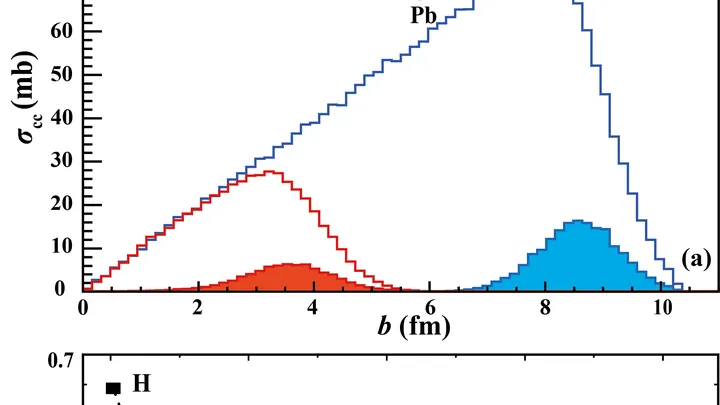
To determine the size of the proton cloud in an atomic nucleus, physicists collide an unstable nucleus with a target and observe how many protons it loses. The larger the projectile nucleus, the more often it grazes target nuclei and loses particles.
Atomic batteries powered by plutonium decay have been running pacemakers and space probes for over sixty years. But the raw material is scarce: worldwide, only a few kilograms of plutonium-238 are produced each year, barely enough for the most critical missions.
A uranium-235 nucleus that captures a slow neutron doesn't immediately fly apart into fragments. Instead, it seems to get stuck in two 'pits'—states with different shapes. The first, the ground state, is a slightly elongated drop. The second, the isomeric state, is a drop stretched further but not yet torn.
Imagine an hourglass where the sand grains transform into other grains as they fall: that's what unstable atomic nuclei are like. They live for an instant and then decay, ejecting an electron (this is beta decay). In September 2025, theorists and experimentalists gathered under the FRIB Theory Alliance to discuss how to use such decays to probe the structure of matter.
The thinner the ferroelectric film, the stronger the depolarizing field — a dictate of classical physics. Imagine a pencil balancing on a fingertip: the shorter it is, the harder to keep it upright. Nanoscale polarization likewise strives to vanish.
In the orchestra of atoms, each instrument has its own score. But sometimes two musicians start playing in unison, and the sound amplifies many times over. In the quantum world, this 'harmony' is called a Feshbach resonance. It allows you to control atomic interactions with jeweler-like precision.
The Standard Model is a set of rules for all known particles. But it says nothing about dark matter, which makes up a quarter of the Universe. To find it, you don't need to build city-sized colliders. Radioactive molecules act like sniffer dogs: their incredible 'scent' picks up the faintest traces of unknown forces that slip past giant machines.
A pot of boiling soup bubbles away, and you'd love to know how hot individual droplets are inside. But you can only dip your thermometer at the edge, where things are calmer. Laser fusion is a bit like that: a powerful laser pulse hits a target, creating a cloud of fast protons.
If you try to break a proton apart and pull out a quark, you're in for a surprise. Ordinary forces, like the electric force, weaken as particles fly apart. Here, it's the opposite. The farther a quark gets from its neighbors, the harder it's pulled back.
Two tin nuclei collide at about two-thirds the speed of light. For an instant, a hot, dense cloud forms, and protons fly out in all directions. If you catch pairs of protons and measure how often they fly off in the same direction, you can work out the size of that cloud. This method is called femtoscopy: it works like a microscope for nuclear scales.
A clock isn't just hands. Every atomic nucleus is a natural metronome: it oscillates with nearly perfect regularity. If you lift one such metronome a couple of meters, its rhythm speeds up ever so slightly — that's time warping, as predicted by Einstein.
A high-speed collision knocked a neutron out of a helium-8 nucleus, and for an instant a helium-7 nucleus appeared, like an overloaded shelf shedding three books at once. This fleeting 'sound' of decay was captured for the first time: three neutrons flew apart, leaving behind an ordinary helium-4 nucleus.
An atomic nucleus isn't always round. It can stretch out like a melon or flatten like a pumpkin. And its size depends on this shape — just as the size of a pie depends on the shape of the dough.
Scientists calculated the shapes and sizes of nuclei of berkelium isotopes — a heavy element produced in reactors.
Inside an atom's nucleus, protons and neutrons stack in layers, like spectators in a packed hall. When a layer is full, the nucleus becomes especially stable — physicists call these 'full rows' magic numbers. One of them, 32, has long been elusive: in nuclei with 32 neutrons, its effect is weak, and in some neighbors it seems absent altogether.
The atomic nucleus isn't a frozen ball but a seething collective of protons and neutrons. They whirl, collide, and arrange themselves into patterns that physicists see as "bands"—ladders of energy levels. In niobium and technetium nuclei, four such ladders have been found, but the last one stubbornly refused to fit the calculations.
An atomic nucleus usually has a well-defined shape — elongated like a melon or flattened like a pumpkin. But silicon-30 behaves differently: it seems unable to make up its mind.
Ten microseconds after the Big Bang, the Universe resembled a pot of boiling broth. Floating in it were quarks and gluons — the particles that would later assemble into protons and neutrons. As the broth cooled, at some point the quarks clumped together into lumps — the very protons and neutrons that make up all visible matter.
A bell doesn't ring with a single note — after being struck, it sounds with several harmonics at once. An atomic nucleus vibrates in much the same way: after a collision, it can oscillate, and these oscillations show up in the emitted gamma rays.
A neutron star is the ultra-dense remnant of a supernova explosion, whose existence was predicted by Fritz Zwicky back in the 1930s. Later, Jocelyn Bell Burnell detected them as pulsars — rotating sources of strictly periodic radio signals.
An unstable atomic nucleus is like a drop of water on a sizzling skillet: it exists for only a moment, and its shape is constantly changing. Physicists have learned to describe such drops — nuclei that live for less than a billionth of a second and decay almost as soon as they are born.
Neutrons in an atomic nucleus aren't all held equally tight. If you peel them off one by one, like leaves from a cabbage, the energy required changes each time. For isotopes with 149 particles in the nucleus (lanthanum, cerium, praseodymium), this energy has just been remeasured, and one number didn't match the previous value.
The calcium-48 nucleus is like a locked room with 48 nucleons inside. Rearrangements are happening within: a neutron turns into a proton, and the room slowly rebuilds itself into another — titanium-48. The process takes an unimaginably long time: on average, a trillion trillion years, but it does happen.
To describe such a rearrangement, physicists assembled the nuclear wavefunction from pieces.
When an extra neutron is added to an atomic nucleus, it starts behaving like an overfilled cup: one more drop and it spills over. Physicists at the French facility GANIL orchestrated such a 'pass' of a neutron from a deuteron (the nucleus of heavy hydrogen) to an oxygen-19 nucleus.
A proton slams into a deuteron — a tiny bundle of a proton and a neutron. In the past, such collisions were described by equations where time flows the same for everyone, as in everyday life. But when particles are accelerated to near-light speeds, time slows down for them and lengths contract. It's like two runners on a track measuring the distance with different rulers.
High above Earth, a satellite flies, and inside it is an instrument the size of a small wardrobe. It catches particles that have been racing through the galaxy for billions of years and finally slam into the detector. Such particles are called cosmic rays, and they bring news of distant stellar explosions.