Light Hurricane: How Hydrogen Light Blows Galaxies Away ✛ ✎ ✦
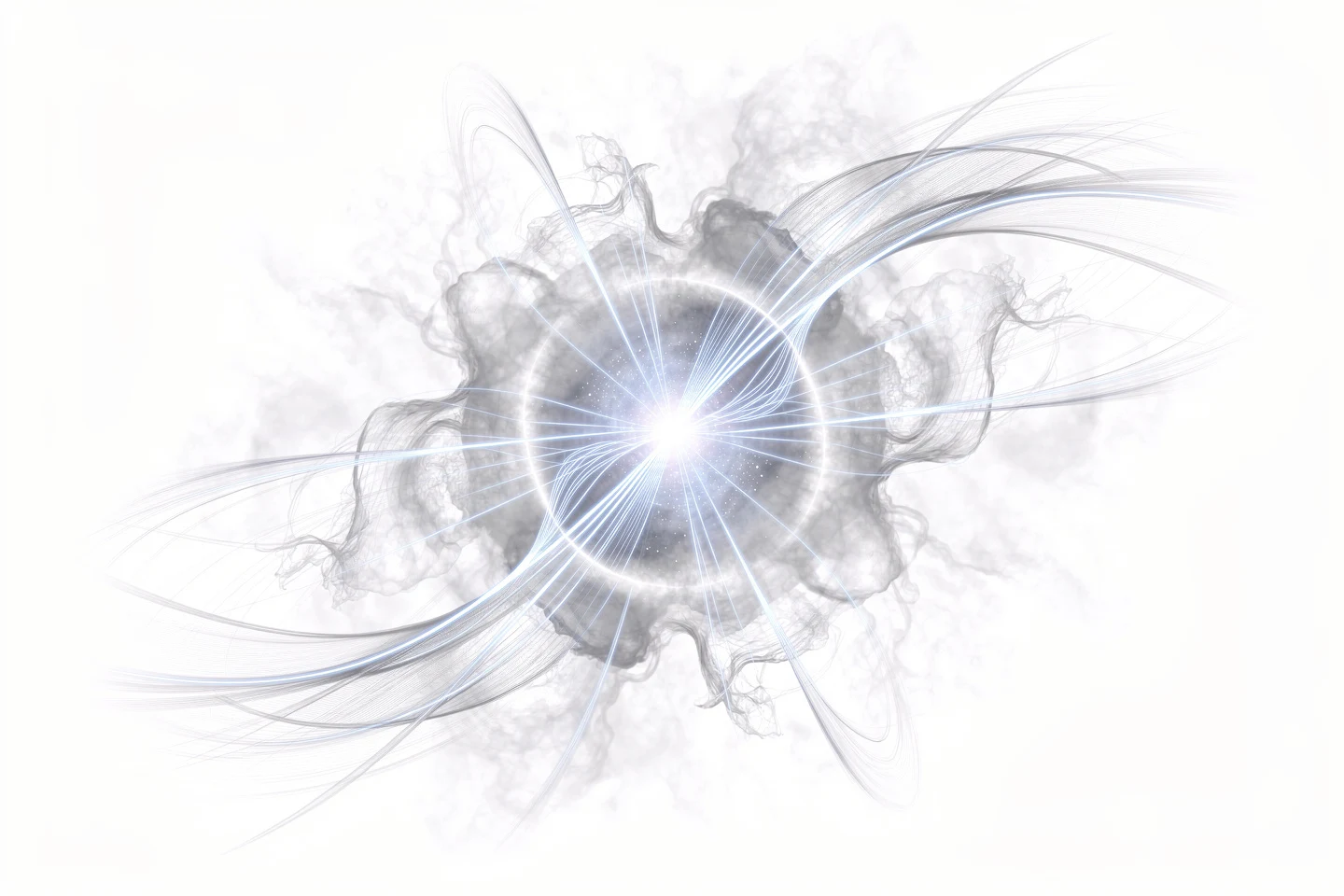
Right after the Big Bang, the universe consisted of giant clouds of hydrogen. When the first stars ignited inside them, their ultraviolet light began bouncing between atoms, like a ball in a closed room. Each impact nudged the gas — an effect foreseen by Chandrasekhar. The surprise is that a single photon can bounce millions of times, multiplying its pushing force. Thus, a light hurricane is born.
The new Lydion program has accounted for these millions of collisions for the first time. It turned out that in an environment without cosmic dust, which is almost absent in early galaxies, the pressure on gas exceeds the star's direct radiation by up to 16 times. This is enough force to blow the gas out and halt the birth of new stars. Now James Webb gets an explanation for why ancient galaxies look exactly the way they do, rather than as old models predicted.
The same mechanism helps us understand how black holes grew and why galaxies go quiet after supernovae. Even when analyzing color shades of distant galaxies, we see traces of hydrogen wind accelerated by the echo of its own light. All this unfolds against the backdrop of cosmic expansion. The ideas of Zwicky and Bekenstein about neutron stars and black holes now intertwine with this discovery.
The brightest hydrogen light is invisible. It's the ultraviolet line, whose photons bounce millions of times inside a cloud, amplifying their pressure tens of times.
In Arthur C. Clarke's 'Rendezvous with Rama,' starships sail by capturing solar wind. Nature went further: a hydrogen cloud itself becomes a sail, where each photon, bouncing back and forth, multiplies its thrust tens of times, and scatters matter around stars.