Light Condensate Learns to Draw Digits express
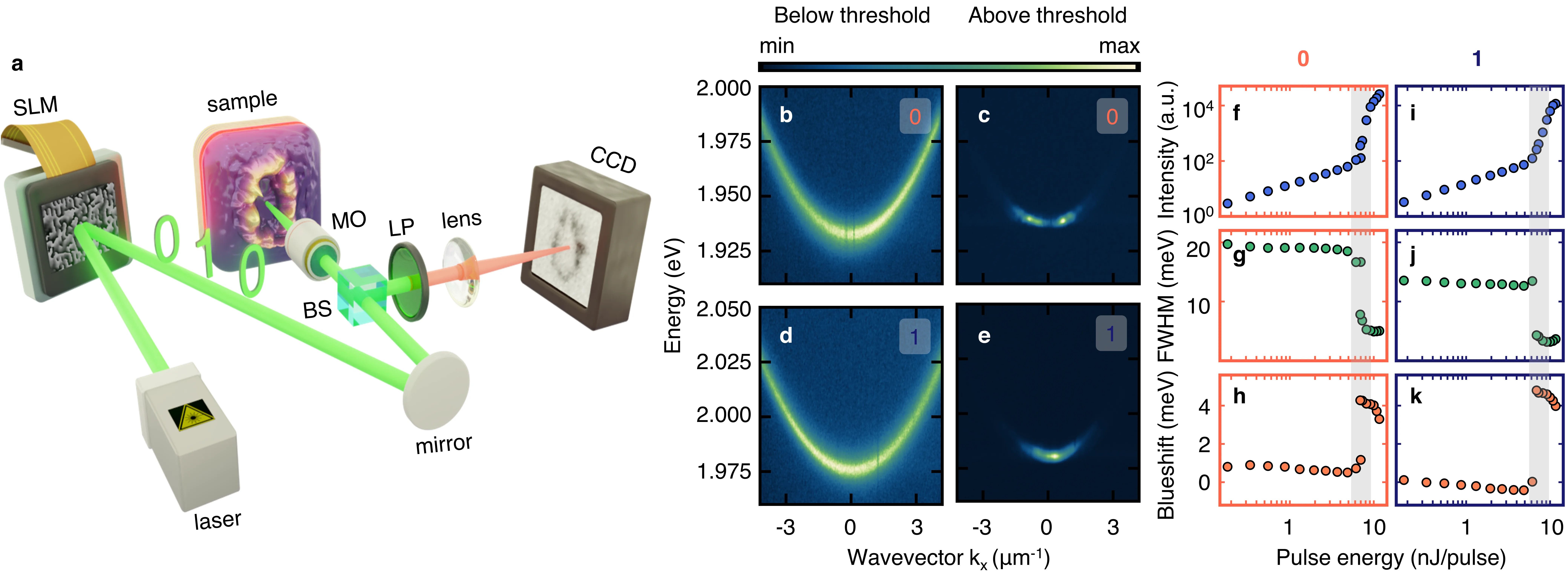
Generative neural networks that create images typically rely on digital randomness. But a team of researchers built a system where randomness is born not in code, but in a tiny optical cavity filled with an organic dye.
This condensate was placed into a generative adversarial network (GAN). One part drew digits, the other evaluated the results. The condensate served as a source of random perturbations that helped the network avoid getting stuck on a single pattern. It turned out that this 'physical' randomness works better than its digital counterpart: the images come out sharper and more diverse. Metrics assessing quality and structural similarity confirmed the advantage. Moreover, the spatial correlation of fluctuations in the condensate itself ordered the training, preventing the network from overfitting to a single sample.
Thus, the polariton condensate transformed from a laboratory curiosity into a computational resource. It doesn't replace the computer but adds a new dimension, physical, to it.
The polariton condensate forms at room temperature — unlike many other quantum effects that require extreme cold.
The idea of using a physical medium for computation echoes the 'computational clouds' from China Miéville's novels, where matter itself runs algorithms.