Overfitting occurs when a statistical model describes random error or noise instead of the underlying relationship. The model performs well on the training data but poorly on new, unseen data. This is a central problem in machine learning and statistics, as the goal is to build models that generalize, not just memorize.
History
The concept has been known since the early days of statistics and curve fitting. The term 'overfitting' became prominent in the 1960s–1970s with the rise of neural networks and decision trees.
How it works
Models with high flexibility (e.g., many parameters) can fit the training data almost perfectly, including its idiosyncrasies. When the model is too complex relative to the amount of data, it captures spurious patterns that do not exist in the true population. This leads to high variance: small changes in the training set cause large changes in the model. Techniques like cross-validation, regularization, and pruning are used to detect and prevent overfitting.
In practice
In predictive modeling, overfitting is a constant concern. Practitioners use validation sets and regularization to ensure models like those in credit scoring or medical prognosis remain reliable on new patients.
Fun fact
A model that perfectly memorizes the training data (e.g., a lookup table) has zero training error but typically performs no better than random guessing on new data—a classic example of overfitting.
A treasure map drawn by a neural network promises to show where the gold is buried. But if you take that map to another island, the marks may point to nothing. That is exactly what happened with the explanations from a model that estimates pulse from facial video.
The RhythmFormer neural network picks up subtle color changes in the skin caused by heartbeats.
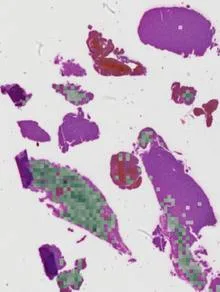
Imagine trying to figure out what happened in a room from the sound that lingers after a gunshot. The shot is gone, but the echo still bounces off the walls. That's roughly how a neuropathologist views a brain tissue section where the tumor itself is absent: the biopsy only captured healthy tissue that reacted to the disease.
Two runners start a race on a course with changing incline. One starts earlier, the other later, and the judge measures their speeds without knowing about the staggered starts. So it is with virus variants: data arrive with delays, and if those delays are unequal, estimates of competitive advantage can be badly wrong.
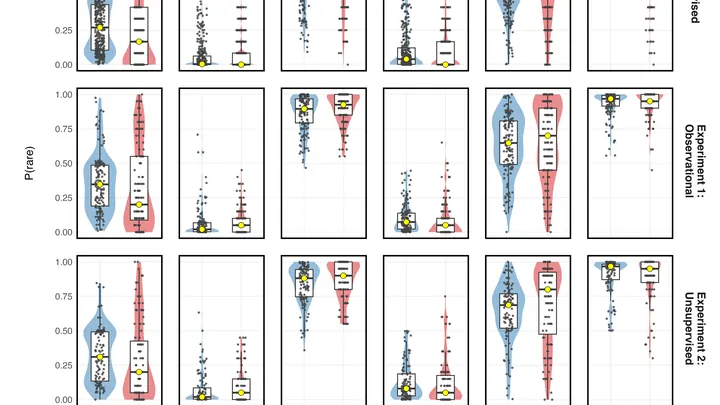
In a warehouse, there are boxes of apples and pears. There are many apples and few pears. But when the stock clerk says "a fruit with smooth skin," we are somehow more likely to recall the rare pear than the common apple. This is the inverse base-rate effect — a persistent glitch in how the brain resolves ambiguity between categories.
A hundred thousand stars in the dense core of a globular cluster move like steel balls in a giant pinball machine. Each 'bump' — a gravitational encounter between a binary system and a single star — triggers a cascade of unpredictable events.
Evolution flows like water. In a wide river, changes are smooth and slow, while a mountain stream churns with every stone. Population size and mutation rate set the channel: broad and calm, or narrow and rapid-filled.
Machine learning has long ceased to be just a tool — it is becoming an investigator, independently fishing out the laws of nature from data. But how does a silicon mind come to understand?
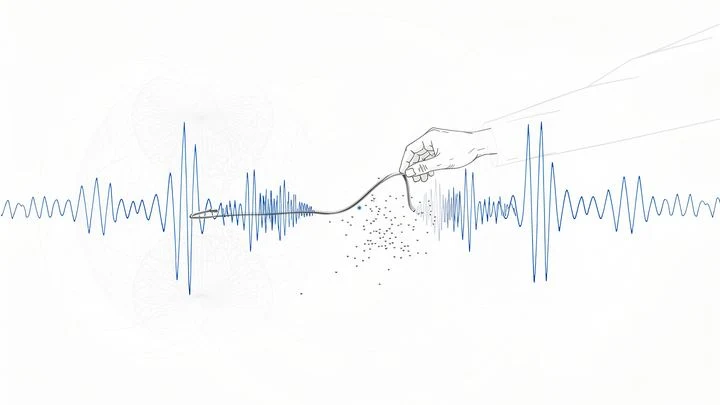
Gravitational signals from dying massive stars are whispers reaching us from the most violent laboratories in the Universe. Einstein predicted these gravitational waves over a century ago, but only today, with detectors like LIGO, are we beginning to hear them.
60 mice, 1,980 samples, 234 lung cancer patients. Behind each number lie thousands of genes. Their activity is measured to understand the disease. But the data aren’t uniform: for one patient, you assess a protein level (a continuous number), make a diagnosis (yes/no), and determine the tumor subtype (a category).
Statistical models are an attempt to stretch a perfect mathematical web over the uneven landscape of data. When a model resists, it emits tension, but we've grown accustomed to ignoring it. Researchers spend hours staring at residual plots, trying to guess where the model is 'coming apart at the seams.' Squealer translates this resistance into sound.
A student who has spent years solving problems from other people's textbooks suddenly receives three notebooks with real ocean observations. There are few problems, but they have already seen hundreds of similar ones, and now a couple of examples suffice to catch the new teacher's style.
In a football stadium, the crowd's emotions arise from the chatter of individual fans. If mood could be both joyful and sorrowful at once, you'd have a quantum superposition. But the murmur of thousands of voices instantly forces that blend into a single definite state.
Training an accurate aerodynamic model is like culinary art: first, a chef masters hundreds of recipes to grasp the general principles, then easily perfects a specific dish. Engineers created AeroTransformer and fed it 30,000 different wing shapes — a whole galaxy of culinary ideas galaxy.
A uranium nucleus is like a tight wallet snapped shut on two halves. To make it burst and release energy (that is, to make the nucleus split) you have to climb over an energy barrier. The height of this threshold determines whether a substance is stable or ready to fall apart at any moment.
If you photograph the same mountain with a film camera and a modern smartphone, you get different images: colors are brighter in one, details are blurrier in the other. The same goes for telescopes: each instrument sees the sky in its own way, adding its own distortions to the true light of galaxies, like a filter through which we look.
A quantum computer is like an orchestra where each musician plays their own part. If the conductor slips up, the music falls apart. In digital quantum simulations, the conductor's role is played by a sequence of simple operations, and errors accumulate like wrong notes.
Turbulent water flowing through a pipe and the swing of a pendulum may seem worlds apart. But they share something fundamental: both follow their own laws of motion, which can be described by numbers. A neural network trained on just one such 'dance of numbers' suddenly starts to understand another — without a single extra example.
A neural network can be compared to a dormitory where each resident gets their own room. Usually, each feature in the data occupies a separate neuron, and learning proceeds sequentially: first one feature, then another. This is slow and depends on which data you happen to get.
But if you allow several features to share a room, overlap them, the picture changes.
The puppet master pulls the strings, and the marionette dances. In forecasting the future from time series, the puppet masters are the few variables that truly control the system. The rest merely echo their movements, creating an illusion of complexity. The challenge is to find these puppet masters and watch only their fingers, not the whole stage.