How to Design the Perfect Therapeutic Peptide: Three Properties at Once express
An engineer tunes an antenna: pull one segment, the frequency drifts; change the angle, the gain drops. Developing therapeutic peptides (short protein chains) works much the same way. Solubility, the ability not to destroy red blood cells, and resistance to protein debris sticking: these three properties are intertwined, and trying to improve one often breaks the others.
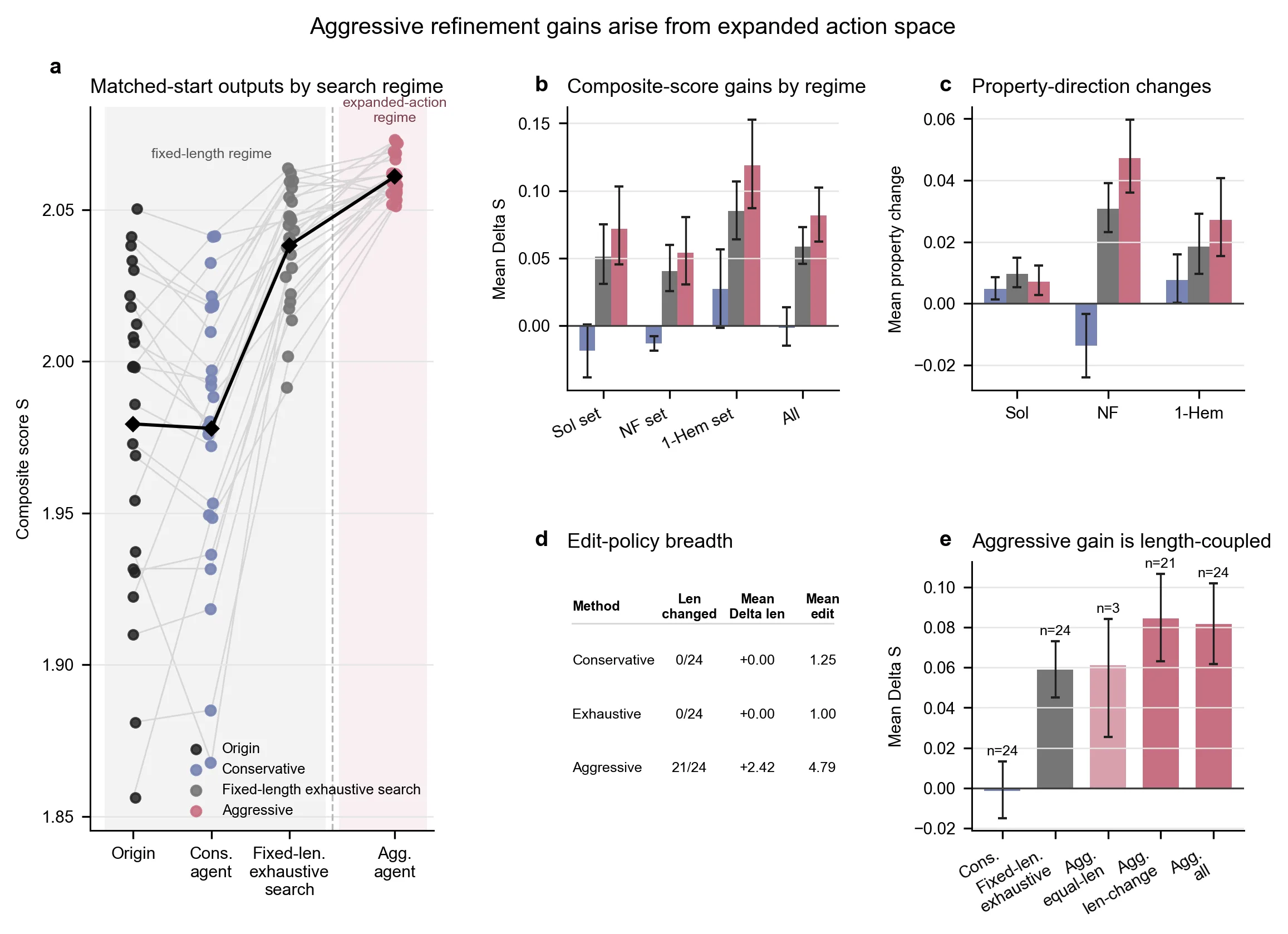
The new system, Pepti-Agent, takes a different approach. Instead of a monolithic script where everything is mixed together, it is assembled from three independent tools, like a set of screwdrivers in a drawer. One tool, PeptideGPT, generates peptide variants. Another, based on the ProtBERT model, evaluates the three key properties. The third, a mutation operator, makes point amino acid substitutions. Conducting this orchestra is a language-model-based controller: it calls the tools in turn and checks against the real property numbers after each step.
This approach provides a transparent "medical history" for each candidate: what decisions the controller made, what the models predicted, and which mutations were accepted. This not only helps select the best variants for lab tests but also allows comparing different design strategies. In essence, Pepti-Agent turns blind searching into meaningful engineering, where every edit is backed by numbers.
The word "peptide" comes from the Greek "peptos," meaning cooked or digested. The first peptides were indeed obtained by breaking down proteins in a test tube, but today they are assembled like building blocks from amino acids.