A Quantum Cloak for the Naked Singularity express
A star contracts under its own gravity, and at some point its fate hangs on a razor-thin balance. Classical physics paints a grim picture: if the mass and the force of compression are tuned with terrifying precision, what emerges is not a black hole but a 'naked' singularity. This is a point of infinite density, exposed to the winds of the universe, with no protective veil. For scientists, such a scenario is a waking nightmare: near a naked singularity, the laws of nature lose their grip, and predicting anything becomes impossible. Black holes at least hide their singularity behind an event horizon — a boundary from which not even light can return. But here, in the case of a precise hit on the critical regime, it's total anarchy.
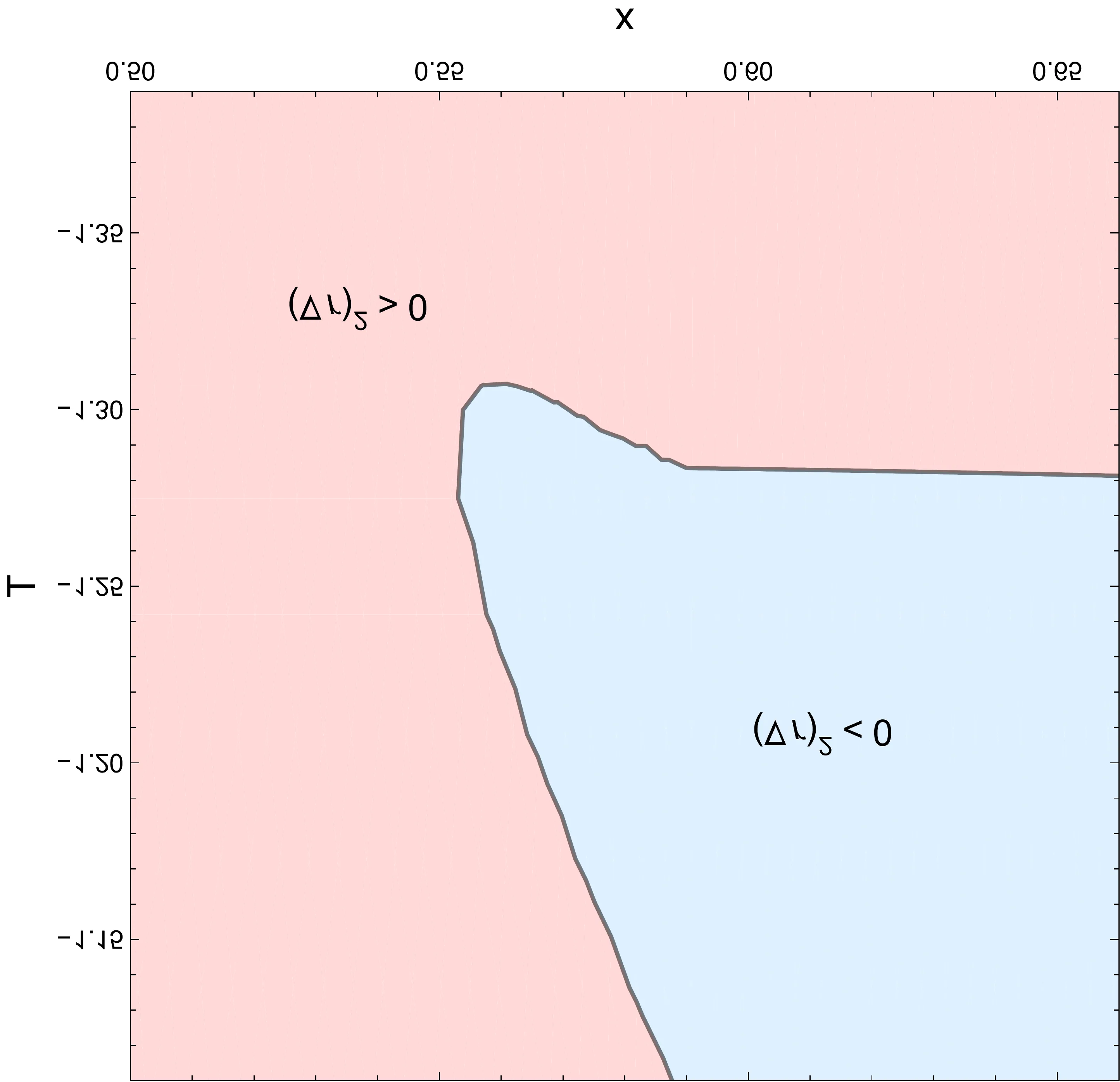
The authors took a model of a collapsing scalar field, a simplified stand-in for matter that contracts under its own pull, and added quantum effects. It turned out that the field's own radiation creates a backreaction. This is like falling snow that heats the air and thereby alters its own trajectory. In the two-dimensional case, the physicists traced the process analytically; in the three-dimensional case, they did it numerically, on a computer. And everywhere the result is the same: quantum corrections give birth to a new horizon where classical theory predicted a naked singularity.
This work is a bridge between the classical and quantum pictures of gravity. It shows that even the most exotic solutions, like the naked singularity, obey quantum laws. The problem of lost predictability reduces to the already familiar puzzle of black hole evaporation.
Thus, the quantum world itself ensures that the future remains predictable: even in critical collapse, the star acquires a horizon, like a quantum cloak hiding the chaos.
Original abstract
as written by the authors arXiv:2606.17135
Classical critical collapse provides a dynamical route from smooth initial data to a naked singularity, representing a sharper violation of predictability than ordinary black hole singularities. We argue that this distinction is erased by quantum backreaction. Building on the semiclassical interior analysis, where quantum self-energy of the collapsing matter generates a universal growing mode and a finite mass gap, we study the exterior naked singularity region that determines global visibility in the Einstein-scalar system. We analyze controlled exterior models in both $$2+1$$ and $$3+1$$ dimensions. In the former, smooth matching and physical boundary conditions analytically select a vacuum polarization state, whose backreaction cloaks the classically naked region by a quantum trapped branch. In the latter, numerical horizon tracing shows that near a quantum-shifted threshold the exterior develops finite-mass marginally trapped surfaces rather than a zero-mass naked endpoint. These results suggest a global quantum picture in which the Choptuik naked singularity shares the fate of an ordinary black hole singularity: quantum effects push the putative Cauchy horizon behind a quantum-generated horizon, thereby reducing the loss of predictability to the standard black hole evaporation problem.
The term 'naked singularity' was coined by John Wheeler in the 1960s, but the idea itself traces back to the 1939 work of Oppenheimer and Snyder on the collapse of dust clouds.
In the series 'Star Trek', a naked singularity is a temporal anomaly capable of warping time; in reality, quantum effects might make it indistinguishable from a black hole.