Why El Niño Arrives in Winter ✛
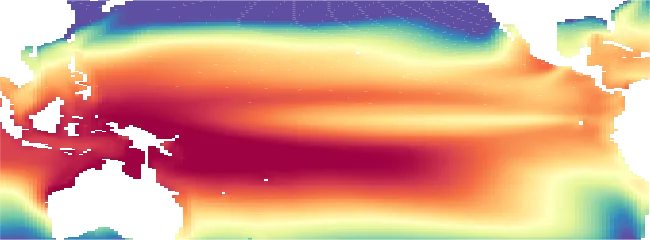
Every winter, something strange happens in the tropical Pacific: the water off the coast of Peru becomes noticeably warmer than usual. This phenomenon is called El Niño, and it affects weather around the globe. The big puzzle is why El Niño's peak almost always falls in December. The ocean has plenty of heat in summer too, but the temperature rise only begins in autumn.
Scientists have compared the ocean to a bathtub where the tap turns on and off, and the plug isn't quite tight. Water comes in, but some drains away. For the level to rise, more must come in than goes out. It turns out that in November, the 'leak' slows down: the ocean seems to stop 'forgetting' its warm state, and temperatures start to climb quickly. In September and February, the leak is at its strongest, so temperature growth is suppressed in those months.
Previously, it was thought that only the amount of heat mattered. Now it turns out that another factor is important: how irreversible temperature changes are. This discovery helps explain why climate models often get El Niño's timing wrong. Perhaps they misjudge how the ocean 'forgets' its past in different seasons.
The peak of entropy production in September and February means that in these months ocean temperature transitions are most irreversible: the system 'forgets' the past faster than in other seasons.