Dark bubble and microcosm: gravity at millionths of a meter express
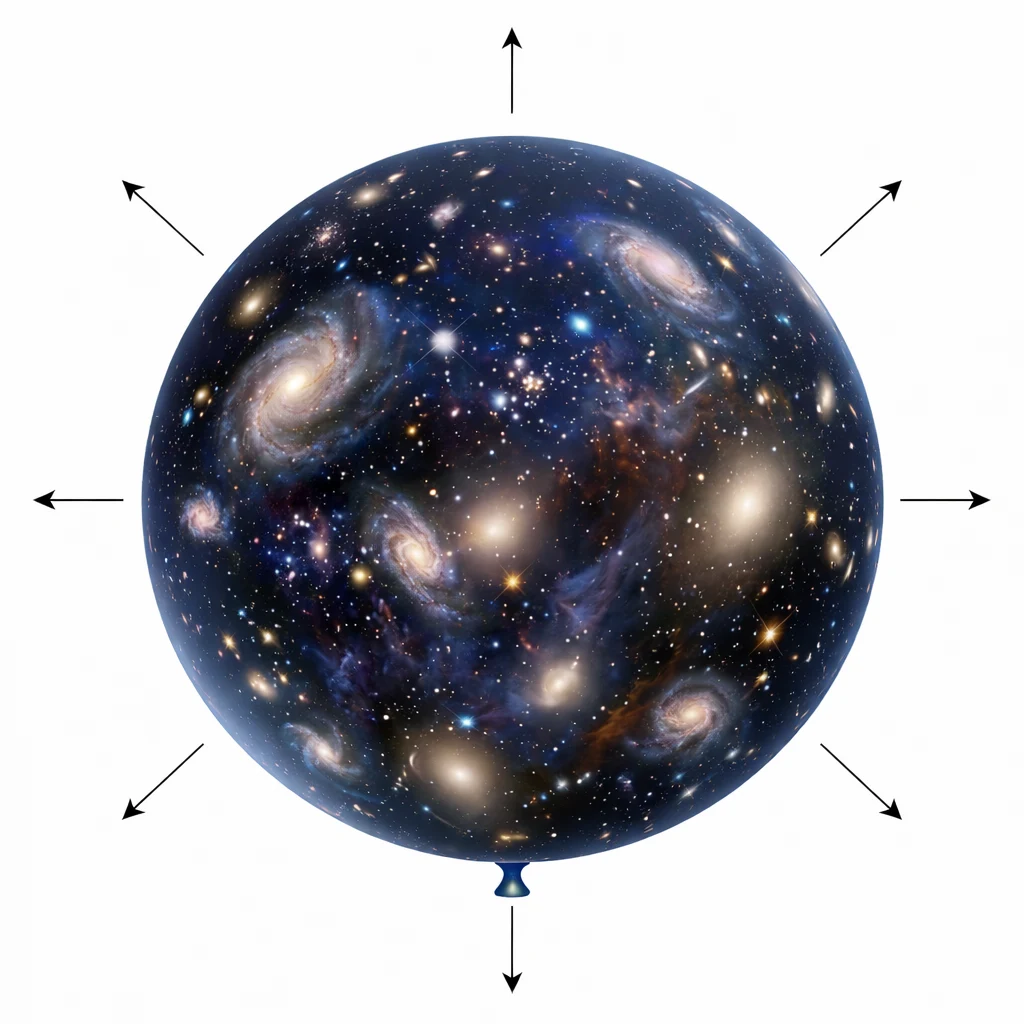
The Universe behaves like a soap bubble swelling in a multidimensional foam. The dark bubble model explains why it's expanding ever faster: the spacetime bubble grows, and its membrane gains a tiny thickness — about a micron, like a bacterium. At such distances, gravity 'blurs' across this thickness and weakens.
We can test this by measuring the attraction between microscopic particles. At a distance of a micron, the force would be a couple of percent weaker than Newton's textbook law predicts. This weakening is inextricably linked to the accelerated expansion of the cosmos — both are manifestations of the same phenomenon. The model also points to a slight curvature of space, which astronomers hope to detect.
A micron (one millionth of a meter) is the typical size of a bacterium. If such a dimension existed, it would literally be under our microscope.