Neutron Spiral Splits Two Entangled Quantities express
A stone falls into water, and ripples spread in all directions. Throw a handful of stones at once, and the ripples overlap: you can no longer tell which ripple came from which stone. A neutron beam hitting a detector looks much the same: a bright spot blurred by many causes.
Two main causes are the size of each individual particle-wave and how synchronously (coherently) different particles oscillate. For decades, these two quantities merged into a single fuzzy spot, and no one could say where one ended and the other began. The authors of the new work devised a way to separate them. They passed neutrons through a device that twists the wavefront into a spiral, as if the ripples on water moved not outward but along a helical staircase. On the detector, instead of a solid spot, a ring appeared.
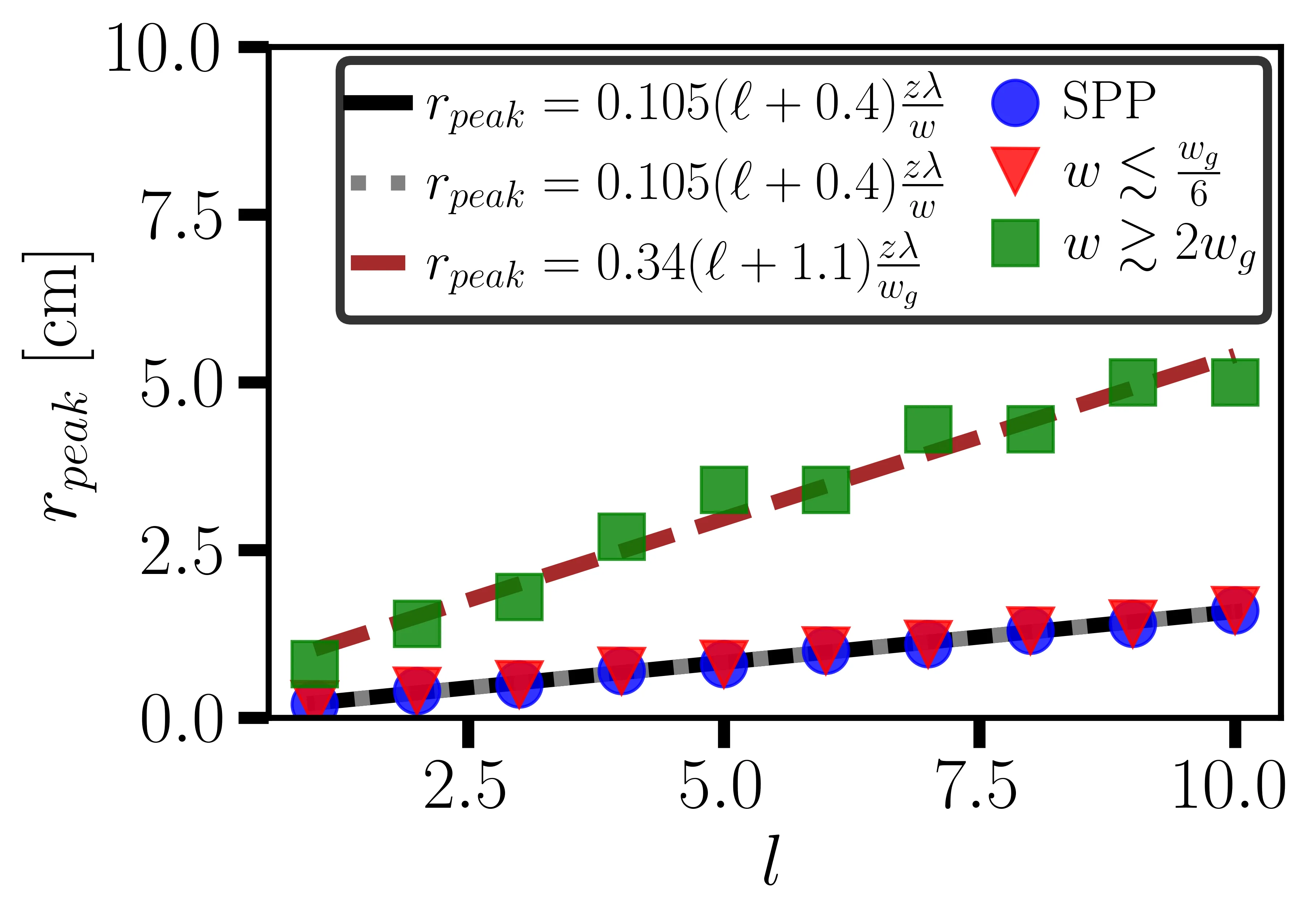
The radius of this ring is directly related to the transverse extent of an individual neutron's wave packet. The ring's thickness, on the other hand, is related to the coherence length — the distance over which the waves still march in step. The measurements yielded a striking result: the extent of a single neutron was at least two micrometers, while the coherence length was only about 180 nanometers. The particle turned out to be about ten times wider than its coherent shadow.
Such a gap is direct evidence that 'wave packet size' and 'coherence length' in quantum mechanics are distinct physical quantities. The ring on the detector, like a spiral imprint, allowed this difference to be seen for the first time. Now, with precise numbers in hand, we can build more sensitive neutron interferometers and better understand how particles behave at the boundary between the classical and quantum worlds.
In this experiment, the neutron's wave packet was comparable to the size of a small bacterium, about two micrometers, even though the neutron itself is thousands of times smaller than an atomic nucleus.
In Neal Stephenson's novel 'Anathem', quantum states are separated using complex interferometers — much like how the spiral front separated the particle's size from its coherence here.