A Modular Rig for Turning Heat into Electricity express
Heat is all around us: from a car's exhaust pipe to the casing of a running laptop. Thermoelectric materials could turn that waste heat into electricity. But to find truly efficient ones among hundreds of compounds, you need to quickly and accurately measure two key parameters: how well the material conducts electricity and how strongly it generates voltage when there's a temperature difference (the Seebeck coefficient).
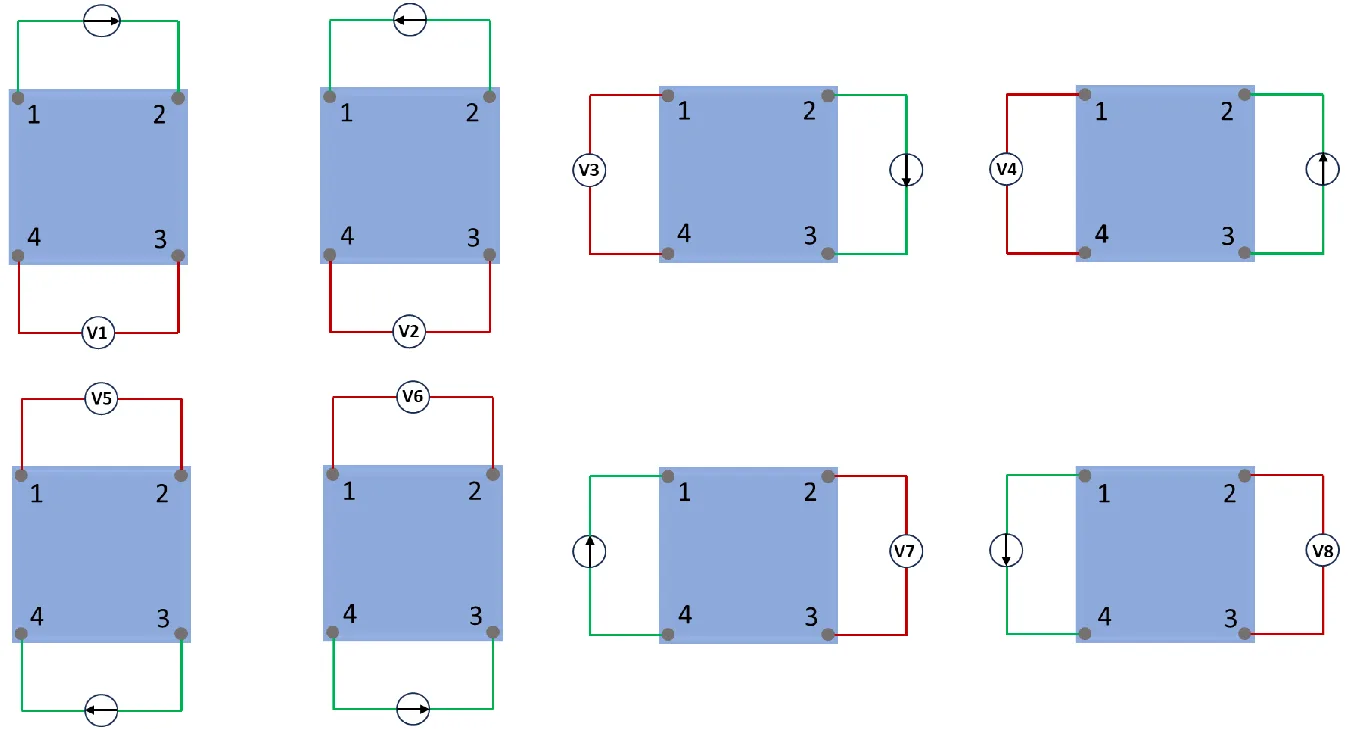
The new setup tackles this like a Swiss Army knife: one instrument, several swappable modules, and all measurements happen automatically, without rewiring contacts. It works in the van der Pauw configuration, a method where four thin wires are attached to the edges of a sample, allowing very precise resistance measurements regardless of the sample's shape. The temperature range spans from 25 to 600°C — from a hot summer day to a red-hot furnace.
The setup is controlled by a LabVIEW program that cycles the heater, reads digital voltmeters, and plots the results. At room temperature, you can even measure the Hall effect: that is, learn how charge carriers move in a magnetic field. Everything except thermal conductivity is captured in a single run. This modular "construction set" easily adapts to different samples, from brittle ceramics to flexible films.
The Seebeck coefficient is named after Thomas Seebeck, who in 1821 noticed that a compass needle deflects when one junction of two different metals is heated. He thought he had discovered the magnetic action of heat, but in fact an electric current was flowing in the circuit.
In Andy Weir's novel The Martian, the astronaut uses a radioisotope thermoelectric generator to keep warm in the Martian desert — a device that directly converts the heat from plutonium decay into electricity, working on the very principles this setup measures.